
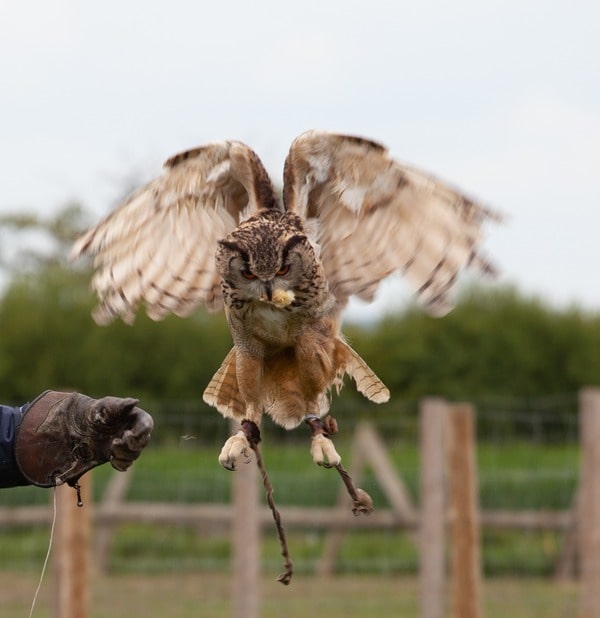
Owls are powerful hunters, but their carrying strength is much lower than most people expect. In real field studies and wildlife rehabilitation records, owls generally manage to lift only a quarter to half of their own body weight. Even the strongest species, like the Great Horned Owl, rarely carry more than 3–4 pounds (1.3–1.8 kg) in flight. Smaller owls, including Barn Owls, stay closer to 150–250 grams of carry weight.
This difference between strength and carrying ability is important. Their talons are strong enough to subdue prey heavier than themselves, but flight adds aerodynamic limits wings can only support so much extra weight. So owls may kill something large on the ground, yet be unable to lift it even a few feet.
Biologists piece together an owl’s lifting capacity from three places:
actual prey records, wing-loading measurements, and talon-pressure studies. Across these sources, the pattern is consistent: owls are efficient predators, not load-bearing flyers.
How Strong Are Owls Compared to Their Size?
Owls may look light and silent in the air, but up close they are surprisingly solid birds with compact muscles and powerful feet. Their strength becomes most clear when you compare their body weight to the prey they can subdue. In studies of hunting behavior and documented prey records, owls often show a level of force that feels almost unexpected for their size.
Researchers consistently observe that owls have strong gripping power which helps them control prey quickly, yet that same strength does not translate directly into lifting ability. Their wings place natural limits on how much extra weight they can keep airborne, and these limits appear repeatedly in field notes from biologists and licensed rehabilitators.
Here is what real observations show.
• Many owls are capable of overpowering prey that weighs as much as they do or occasionally slightly more, especially during ground based struggles where lift is not required.
• Once flight is involved, their capabilities drop because carrying extra weight demands much more energy than simply holding prey with their feet.
• Great Horned Owls which are among the strongest owls studied usually stay within the range of three to four pounds when carrying prey in flight and this upper limit appears consistently in documented transport cases.
• Barn Owls, which rely on precision and agility rather than raw strength, seldom carry more than two hundred to two hundred fifty grams during flight according to prey weight studies from nesting sites.
These patterns show that owls are undeniably strong hunters, but their real power is expressed on the ground during the capture rather than in the air. Once they take off, the physics of wings, body weight and lift become the deciding factors, not the strength of their talons.
What Limits an Owl’s Carrying Power? The Real Factors Behind Their Strength Explained Simply
Even the strongest owl has clear physical boundaries that determine how much weight it can lift. These limits are not about determination or hunting skill. They come from the way an owl’s body and wings are built and from the conditions it faces during a lift. When biologists study owls in the field, the same influences appear again and again.
Owls rely on broad wings and efficient muscles for silent flight, but these features are tuned for stealth and control rather than raw lifting strength. Once extra weight is added, the balance shifts quickly and the owl has far less room to compensate.
Below are the factors that consistently shape an owls carrying capacity.
• Wing loading
This refers to how much body weight and additional load the wings must support. If the total becomes too heavy, the owl cannot generate enough lift to take off or remain stable in the air. Wing loading is one of the most dependable predictors of carrying limits across all bird species.
• Body mass and muscle strength
Although larger owls have stronger muscles, they also carry more of their own weight. This means that any extra load pushes them closer to the edge of what their wings can support. The increase in mass does not scale evenly with lifting ability.
• Prey shape and resistance
A compact animal is much easier for an owl to lift. Prey with long limbs, wide wings or a struggling body creates drag, which reduces lift and may prevent takeoff altogether. Observations from wildlife rehabilitators show that struggling prey often makes carrying impossible even when the weight is within limits.
• Takeoff conditions
Owls lift more successfully from a perch because they can drop forward and use gravity to build initial speed. From flat ground they must generate all lift from a standing start which sharply reduces how much weight they can carry.
These limits highlight an important truth. Owls are built for precise, silent hunting, not heavy transport. Their ability to capture prey is impressive, but once they leave the ground the physics of flight becomes the controlling force.
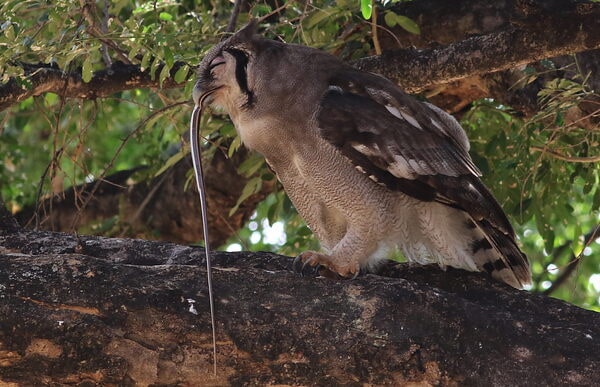

Why Owls Can Catch Animals They Can’t Lift: A Practical Look at Strength vs. Flight Limits
A common misunderstanding about owls comes from assuming that anything they can kill, they can also carry away. In reality, these are two very different abilities. The gripping force that allows an owl to subdue prey does not reflect the amount of weight its wings can lift once it tries to take off. Researchers who study predation events have noted this distinction repeatedly in the field.
Owls rely heavily on their talons during the actual capture. The pressure they generate is strong enough to immobilize animals that may weigh as much as the owl itself or even more in some cases. But once the struggle is over, a new challenge appears. Flight demands far more power and balance than the initial grip, and this distinction helps explain Are Owls Raptors in terms of how their predatory anatomy is optimized for seizing prey rather than transporting heavy loads over long distances.
Below are the reasons owls can kill prey they cannot lift.
• Talons produce enough force to subdue prey heavier than the owl, but the wings are not designed to support that same weight during flight. The muscles and joints in the wings have a strict upper limit that cannot be exceeded.
• The capture happens on the ground where the owl uses leverage, body weight and talon strength to control the prey. Carrying weight depends entirely on the wings and the air moving around them, which introduces very different physical requirements.
• Larger prey creates drag, especially when the body is not compact or when the animal struggles. This additional resistance reduces lift and often prevents takeoff even if the raw weight seems manageable.
These factors explain why documented observations include owls killing large hares and in rare situations even small foxes, yet none of these events involve the owl flying away with the animal. The deciding force is not how strong the talons are but what the wings can realistically support once the bird leaves the ground.
From Barn Owls to Great Horned: Owls How Carrying Capacity Changes by Species
Not all owls are built the same. Each species has its own combination of body size, wing shape and hunting behavior, and these differences play a large role in how much weight the bird can lift. When biologists compare species side by side, the variation becomes very clear. Some owls specialize in light and agile flight, while others rely on strength and broad wings. Together these traits create predictable carrying limits.
Below is a factual and easy to understand comparison based on average body weight and typical prey weights observed in flight.
Barn Owl
Average body weight between four hundred and six hundred grams
Typical carry weight between one hundred fifty and two hundred fifty grams
Barn Owls focus on precision rather than power. Their light bodies and long wings are built for low energy flight which keeps their carrying range small.
Barred Owl
Average body weight between six hundred grams and one kilogram
Typical carry weight between three hundred and five hundred grams
Barred Owls often take larger prey than Barn Owls, but their lifting ability still remains within a moderate range because of their relatively high wing loading.
Snowy Owl
Average body weight between one point six and three kilograms
Typical carry weight between one and one point five kilograms
Snowy Owls are larger and more robust birds. Their strength allows them to lift heavier prey, especially in open environments where wind flow is smooth.
Great Horned Owl
Average body weight between one and two point five kilograms
Typical carry weight between one point three and one point eight kilograms which equals roughly three to four pounds.
The Great Horned Owl has one of the highest carrying capacities ever documented among common owls, yet even this powerful species stays far below its own body weight when airborne.
Across all species, one pattern stands out clearly. Larger owls can lift more weight, but none come close to carrying prey that matches their own size. Their biology and flight mechanics simply do not allow it.
How Wildlife Biologists Measure an Owls Strength And What Those Numbers Reveal
Understanding how strong an owl truly is requires more than observation. Biologists rely on structured and repeatable methods to measure both lifting ability and killing strength. These techniques are used in field studies, nest monitoring and rehabilitation facilities and they create a clear picture of what owls can realistically carry.
When researchers work to answer questions such as How Much Can A Owl Carry, they do not estimate or speculate. They use data points that can be measured, repeated and compared across species. This is why the numbers gathered from different locations almost always point to the same limits.
Below are the methods commonly used to assess owl strength.
• Prey transport observations
Biologists record the prey items owls successfully lift and carry. These direct observations provide the most reliable evidence of real world carrying limits.
• Wing loading calculations
This calculation compares body weight to total wing area and shows how much weight an owl can support in the air. It is one of the strongest predictors of carrying ability across all bird species.
• Talon pressure studies
These tests measure the force owls apply when gripping. Talon pressure reflects killing strength which is usually much higher than their ability to lift prey during flight.
• Controlled lift tests in rehabilitation centers
When injured owls recover, specialists sometimes measure how much weight they can raise vertically in a safe and controlled setting. This helps confirm practical limits observed in the wild.
What these measurements consistently reveal
• Most owls do not carry more than fifty percent of their own body weight during flight.
• Even the strongest species such as the Great Horned Owl level off at about three to four pounds when transporting prey.
• Talon force is significantly higher than lift capacity which is why owls can subdue large animals they cannot carry away.
• No verified evidence supports the idea that owls lift pets or other animals close to their own size.
Together these findings show a simple truth. Owls are exceptionally skilled predators with powerful feet and precise hunting behavior, but they are not designed for heavy lifting. Flight mechanics set clear boundaries that even the strongest owls cannot exceed.
Watch This Video Owl How Attack in Slow Motion
Related Post
- Flammulated Owl : A to Z Guide
- Rufous Legged Owl : Everything You Need To Know
- Greater Sooty Owl : A to Z Guide
- Do Owls Eat Birds : Let’s Understand Why
- Rufous Owl : A to Z Guide
- Baby Great Horned Owl – A to Z Guide
- Do Owls Blink – Lets Understand The Science Behind It