
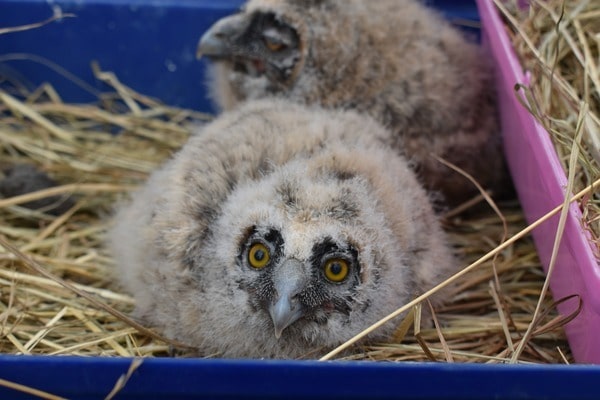
Baby Short-Eared Owls begin life in a landscape many birds avoid: wide, open grasslands with very little shelter. Their nest is nothing more than a shallow scrape lined with grass, so from the moment they hatch, every part of their body and behavior is shaped by the need to stay hidden, stay warm, and stay fed. These chicks rely on camouflage, insulation from their down, and constant food from their parents to make it through their first weeks-a period when most losses occur.
Understanding how these young owls grow helps explain why they behave differently from many other owls. They leave the nest on foot long before they can fly, they respond immediately to changes in prey numbers, and their chances of survival depend heavily on the condition of the grassland around them. When prey is plentiful and the habitat is stable, broods grow quickly. When the land is disturbed or prey collapses, even attentive parents struggle to raise their young.
This guide breaks down what a baby Short-Eared Owl looks like, how its body changes week by week, why down feathers matter so much in windy terrain, and what field researchers have learned about fledging success as climates and grassland ecosystems shift. It’s meant to give you a clear, reliable picture of how these vulnerable chicks make it through their earliest days-and what determines whether they thrive or disappear.
Why Short-Eared Owl Chicks Begin Life Entirely on the Ground
Short Eared Owls are one of the few owls that place their entire trust in open country. Instead of looking for trees or rock crevices, the female settles right into the grass and shapes a small hollow with her body. She lines it with a bit of dried vegetation and that becomes the nest. This simple choice reflects how closely the species is tied to grasslands and marshes. These areas hold the small mammals they hunt most often, especially voles, so staying low to the ground keeps the adults right where the food is.
For a newly hatched chick, this ground level beginning shapes every part of its early life. There is no thick branch or sheltered cavity to hide in, only grass and the ability to remain unseen. Their downy bodies are mottled in pale, natural tones that match the surrounding vegetation. When they stay still, they almost disappear into the landscape. This natural camouflage gives them a fighting chance against the many predators that move through these wide open habitats, from foxes on the ground to harriers and gulls searching from above.
What looks like a risky place to raise a family is actually a finely tuned strategy built around the environment these owls depend on. Starting life on the ground is simply the most practical way for Short Eared Owls to stay close to food and remain part of the landscape they have evolved to match.
Physical Traits That Help These Chicks Survive Open Grasslands
A baby Short Eared Owl looks delicate, but its body is shaped by the open terrain it grows up in. Its pale, mottled down blends naturally with dry grasses, allowing a still chick to disappear into the background when danger approaches. This camouflage is its first line of defense in a habitat with little cover.
Chicks also stay low to the ground and instinctively flatten themselves when alarmed, making them even harder to spot. As they grow, they begin moving on foot long before they can fly, a behavior that helps spread siblings out so a predator is less likely to find the whole brood.
Their quick growth, especially in years when voles are abundant, supports this early independence. Each of these traits reflects the realities of surviving in wide, open landscapes where staying hidden is often the key to staying alive.
How a Short-Eared Owl Chick’s Body Develops Week by Week
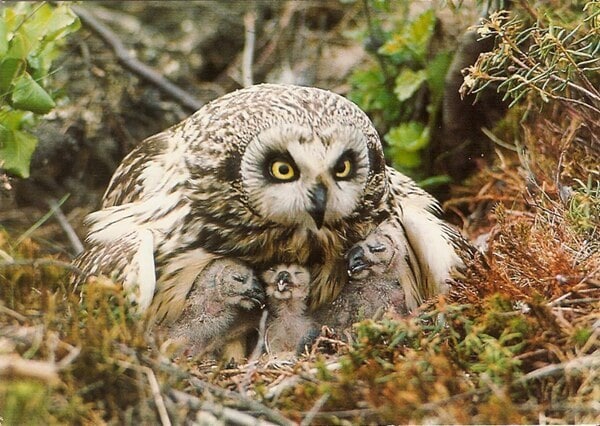
A Short Eared Owl chick changes quickly in its first month of life, and the pace of that growth often mirrors what is happening in the grassland around it. In years when voles are plentiful, the adults can bring in enough food for the chicks to gain weight steadily, which means they reach each developmental milestone with a little more confidence and energy. When prey is scarce, progress slows, and every stage becomes more of a challenge.
During the first week after hatching, the chick is wrapped in pale down and still very dependent on the warmth and protection of the female. Its eyes open within a few days, giving it its first sense of the open world it will grow up in. Movement is limited, but the feeding response is strong, and most of the chick’s energy goes into keeping up with the rapid changes happening inside its small body.
By the second week, the down has thickened, and the chick begins to explore short distances on foot. It is still far from flying, but this early mobility is important. As the parents bring in frequent meals, the chick grows quickly and becomes more aware of the space around the nest.
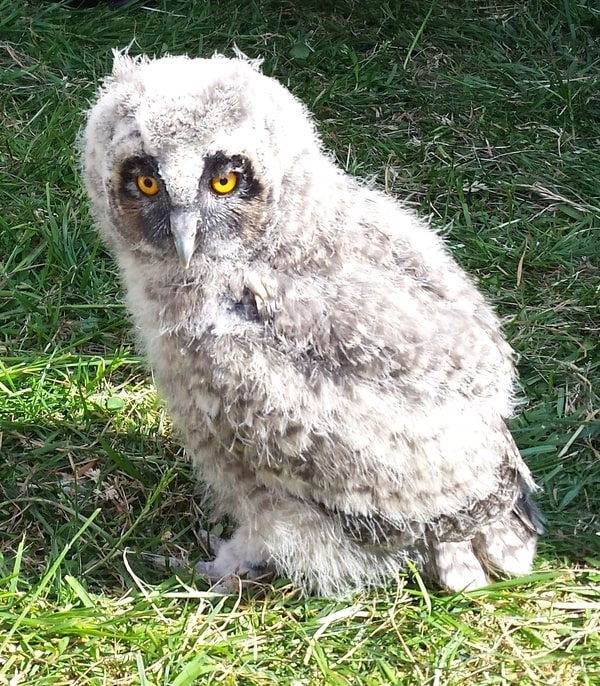
The third week is when the first signs of real independence appear. New feathers start to break through the soft down, giving the chick a slightly scruffier look. It begins to wander farther from the nest scrape, often settling in nearby vegetation where it relies on camouflage and distance from its siblings to avoid drawing attention from predators.
By the fourth week, wing feathers have grown enough for the chick to make its first short hopping flights. These are not true flights yet, more like practice lifts, but they mark the beginning of a new stage. The chick spends less time at the nest site and more time testing its wings and learning how to balance and maneuver.
Around the fifth or sixth week, fledging begins. The wings are now long enough to carry the chick on short but genuine flights. It is not ready to hunt on its own, so the adults continue to feed it while it strengthens its wings and refines the skills it will need to survive. This period is also when the earlier wandering behavior proves its worth, because chicks spread out across the landscape are less likely to be discovered all at once.
This progression from down covered hatchling to fledgling is quick, but every step fits the realities of life on the ground. Early movement, fast growth, and scattered broods are all part of a strategy that helps Short Eared Owls raise their young in open habitats where the dangers are clear and the margin for error is small.
How Down Feathers Help Hatchlings Survive Open, Windy Habitat
Short Eared Owl chicks grow up in some of the most exposed nesting conditions of any owl, and their first coat of down is what makes that possible. Grasslands and marsh edges are open to wind, sudden temperature drops, and early morning cold, so the chick’s survival depends on insulation rather than shelter. The down that covers a newly hatched chick is soft and light, but it is also incredibly effective at trapping warm air close to the skin. This natural layer works almost like a tiny thermal blanket, helping the chick hold on to body heat long before its true feathers appear.
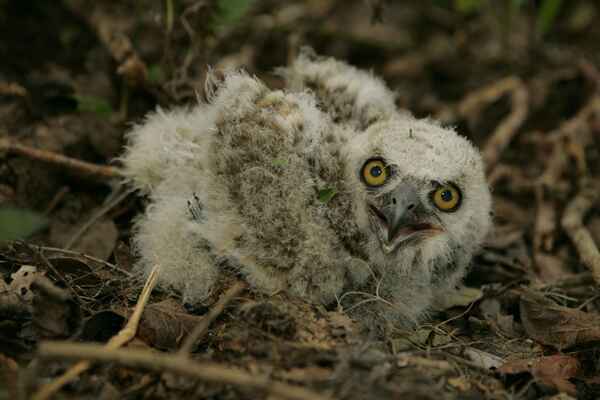
The down also acts as part of the chick’s camouflage. Its pale, uneven coloring blends with the grasses and bare ground around the nest, allowing a still chick to go unnoticed even when the nest itself offers almost no protection. As the days pass, this same down keeps the chick steady through changing weather, giving it the stability it needs to grow until the stronger flight feathers begin to emerge.
Because the nest is nothing more than a shallow scrape on the ground, the chick’s insulation is not optional. It is one of the first and most important defenses the bird has, allowing it to survive the unpredictable conditions of the open habitat it is born into.
What Field Studies Show About Fledging Success in Changing Climates
Researchers who follow Short Eared Owl broods year after year have noticed something consistent. The chances of a chick reaching fledging age rise and fall with the land beneath them. In seasons when voles are abundant, the adults can make frequent hunting trips and deliver enough food for the young to grow quickly. Broods are usually larger, and most chicks leave the nest in good condition. When prey numbers drop, the entire rhythm of growth slows, and fledging becomes uncertain. Even attentive parents cannot make up for a landscape that suddenly offers too little to hunt.
Habitat quality plays an equally important role. Grasslands that are kept intact, whether through conservation or low disturbance, tend to support healthier broods. In contrast, areas with regular mowing, agricultural conversion, or heavy human activity see more nest failures. A ground-nesting bird has little protection from machinery or disturbance, and a single disruption at the wrong time can put a whole brood at risk.
Climate shifts have added another layer to this pattern. Earlier springs in some regions have changed the timing of breeding, and warming or irregular seasons can disrupt the natural cycles of the small mammals these owls depend on. When prey peaks do not align with the chicks’ most demanding growth period, fledging success drops. Field notes from multiple study sites show that the timing of food availability now matters just as much as the amount.
Together, these observations reveal how closely the life of a young Short Eared Owl is tied to its environment. Fledging is not just a milestone in growth. It is the final test of whether the season, the habitat, and the prey cycle have aligned well enough to carry the chick from a hidden lump of down to a bird capable of flight.
Related Post
- Rufous Owl : A to Z Guide
- Baby Great Horned Owl – A to Z Guide
- Rufous Legged Owl : Everything You Need To Know
- Greater Sooty Owl : A to Z Guide
- Baby Screech Owl : Everything You Need To Know