
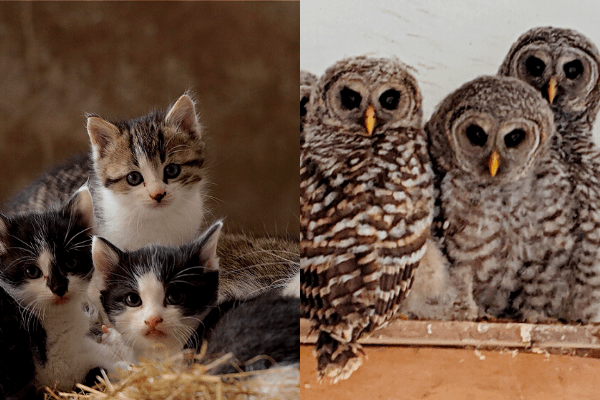
Yes – in rare situations some large owl species are capable of attacking and sometimes killing small or young cats, but cats are not a regular or typical food source for most owls. Large, powerful owls are opportunistic predators and will sometimes take an easy, suitably sized animal if the circumstances line up.
Which Owl Species Are Capable of Attacking a Cat
The species most commonly implicated in verified reports are the Great Horned Owl (Bubo virginianus) and other very large owls like the Eurasian Eagle-Owl (Bubo bubo). These are large, muscular owls with talons and bite force capable of subduing animals significantly bigger than the rodents and small birds that make up most owl diets; there are documented cases and field reports of Great Horned Owls taking surprisingly large prey (including skunks, raccoons, and on rare occasions, domestic cats).
Smaller owl species, for example Barn Owls (Tyto alba), screech owls, and many tropical small owls typically hunt rodents, shrews, and small birds and are very unlikely to be able to kill a healthy adult cat. Their body size and prey-handling ability usually limit them to small mammals, which is why questions about whether are owls dangerous to larger pets often need to be answered with proper context.
How Common Are Owl Attacks on Cats in Real Life
Wildlife organizations and owl centers state that attacks on pets are rare but do happen, especially involving large owls. Rehabilitation centers commonly see injuries from raptor encounters, and educational organizations flag large owls as a possible threat to small outdoor pets but they also emphasize that such incidents are not commonplace. In short: the risk exists, but it’s low for typical adult house cats.
Why Most Owl-Cat Incidents Are Rare but Still Possible
Several consistent explanations appear in reports and case records:
Prey preferences and energy economics: Owls generally hunt familiar wild prey (rodents, rabbits, birds). Targeting a cat is risky cats fight back so owls usually avoid such encounters unless there’s a strong incentive.
Opportunism during scarcity: When small prey is scarce (e.g., harsh winters, local population dips), a hungry large owl may take riskier or atypical prey.
Vulnerable cats: Kittens, elderly, sick, or injured cats are slower and more vulnerable and therefore disproportionately represented in reported incidents.
Territorial/defensive behavior: Occasionally an owl attacks to drive a perceived threat away from a nest or fledglings rather than to eat the animal.
Because these conditions are relatively uncommon and localized, most owned adult cats that spend nights indoors never encounter these risks.
Are Cats a Natural Part of an Owl’s Diet?
No- cats are not a natural, regular part of any owl’s diet. Owls evolved to hunt small mammals, birds, and invertebrates they can handle reliably. Large owls will take larger prey opportunistically, but domestic cats are an atypical target and not necessary for an owl’s normal nutritional needs. Conservation and owl-education groups explicitly say keeping cats indoors also protects owls and local wildlife.
Documented Cases of Owls Attacking Pets
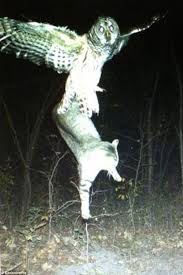
Documented incidents exist but are scattered: wildlife agency reports and regional news have described unusual episodes where a single owl attacked multiple pets or where residents found a pet taken by a raptor. For example, regional wildlife reports have recorded cases of Great Horned Owls attacking pets in North America, and news / rehab stories occasionally surface showing attacks on kittens or very small outdoor pets. These cases confirm the possibility without implying high frequency.
(Important caveat: some online anecdotes are misidentified a dead pet may be assumed to have been taken by an owl when other predators or accidents were responsible. Verified cases from wildlife agencies and rehab centers are the most reliable sources.)
If you want to read about case – Click Here
Could a Cat Ever Scare Off an Owl? The Rare but Real Encounters
Yes. Cats have strong claws and teeth, and many owls will avoid fighting an animal that can inflict injury. An adult, alert cat can often defend itself or scare an owl away. Some reports even describe cats injuring or killing small owls. So while owls can be dangerous to vulnerable cats, the opposite cats scaring or harming owls is also real and part of the reason many wildlife groups recommend keeping cats indoors to protect both parties.
Practical, Evidence-Based Tips to Keep Cats Safe (Backed by Wildlife Groups)
Keep cats indoors from dusk to dawn. Owls hunt primarily at night; keeping pets inside overnight eliminates most risk. Wildlife educational groups explicitly advise this as the best protection.
Supervise outdoor time or use a secure cat enclosure (catio). A roofed enclosure prevents aerial attacks while letting cats enjoy fresh air.
Remove outdoor food and tidy up yards. Reducing rodents (owl prey) around your home makes your yard less attractive to hunting owls.
Trim tall branches and limit roosting spots near yards. Fewer perches close to cat areas reduces ambush opportunities.
Supervise kittens and vulnerable cats strictly. Young or injured animals are most at risk; keep them indoors until larger and more agile.
Real Video of an Owl Going After Cats
Related Post
- Rufous Owl : A to Z Guide
- What Does A White Owl Mean : A to Z Explanation
- Do Owls Eat Birds : Let’s Understand Why
- Baby Great Horned Owl – A to Z Guide
Resources
- kidadl.com
- www.tuxedo-cat.co.uk
- www.catological.com