
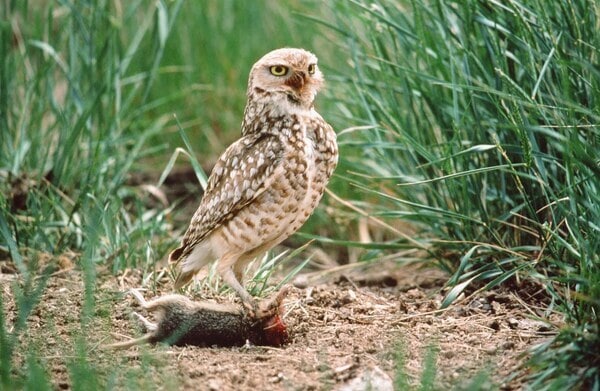
The Burrowing Owl has a remarkably flexible and varied diet, shifting based on season, location, and prey availability. Their primary food items often include large insects and small mammals, though they also consume reptiles, amphibians, small birds, and occasionally even fruits or seeds in some regions. Hunting techniques vary depending on prey type from swooping down or grabbing insects mid-air, to stalking small prey on the ground.
Young owls are fed by their parents, starting with easily digestible prey, and gradually transitioning as they grow. Over the course of the year and across different habitats, the diet of Burrowing Owls adjusts, showing their adaptability and opportunistic feeding behaviour. The article will explore each of these aspects: what adults eat, what young owls eat, how they catch food, and some of the more unusual items documented by researchers.
Understanding the Diet of Burrowing Owls
Research consistently shows that Burrowing Owls are opportunistic feeders with a diet that reflects whatever prey is abundant in their environment. According to the Cornell Lab of Ornithology and U.S. Fish & Wildlife Service reports, their primary foods include insects especially grasshoppers, crickets, beetles, and moths and small mammals such as mice, voles, gophers, and shrews. In many grassland regions, insects make up the majority of their diet during warmer months, while rodents become more important in winter when insect populations drop.
They also consume reptiles and amphibians, including small snakes, lizards, and frogs where available. In some locations, particularly in the southwestern United States and parts of Central America, Burrowing Owls have been observed eating small birds, especially sparrow-sized species. Although their diet is broad, the consistent theme across studies is flexibility: they take whatever the landscape provides.
What Young Burrowing Owls Eat While Growing
The diet of young owlets is driven by what their parents can deliver to the nest and what the chicks are capable of digesting. Early in development, adult Burrowing Owls provide soft-bodied insects such as crickets, caterpillars, and beetles. These prey items are easier for young owls to swallow and digest compared to mammals.
As the chicks grow, the parents gradually bring larger prey. Studies from field researchers and observations recorded in Birds of the World show that mammals such as mice and voles become more frequent in the diet as chicks near fledging age. Parents sometimes stockpile extra prey near the burrow, allowing the young to feed even when adults are not present. This caching behavior has been documented in multiple breeding populations.
How Burrowing Owls Hunt for Their Meals
Burrowing Owls are unusual among owls because they rely less on silent nighttime ambushes and more on versatile, ground-based hunting techniques. Research from the U.S. Geological Survey and the Cornell Lab of Ornithology shows that they are active both during the day and at night, adjusting their hunting style depending on the prey they’re targeting and the conditions around them.
In open landscapes grasslands, deserts, prairies, and agricultural fields Burrowing Owls use a mix of patience and speed. Their long legs give them an advantage over many other owl species, allowing them to run quickly across the ground after moving insects. Field observations frequently describe owls sprinting after grasshoppers or crickets in short bursts, similar to small raptors chasing prey on foot.
They also use low-level flight when hunting. Researchers have documented Burrowing Owls hovering just above the ground to spot insect movement, especially at dawn and dusk when insects are more active. From this low hover, they either drop straight down on prey or dive at a shallow angle to catch it mid-movement.
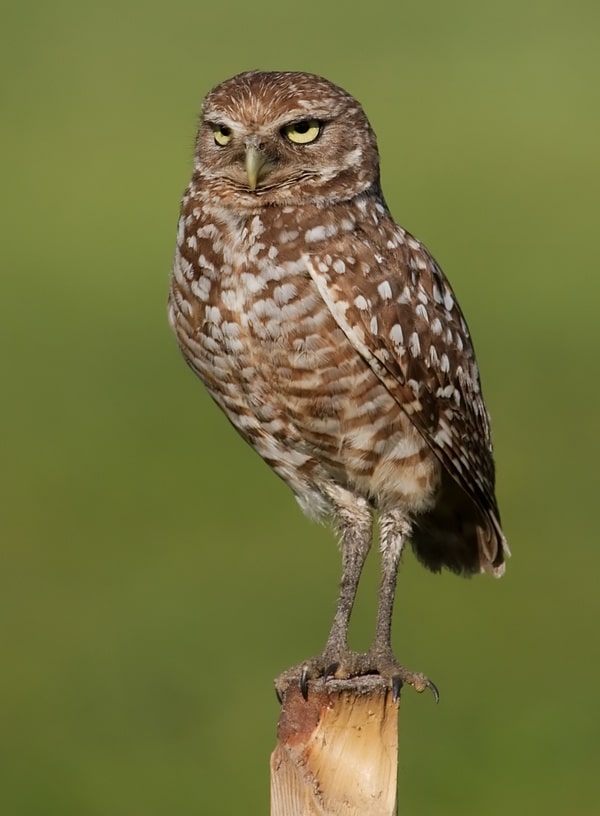
When mammals like mice or voles are the target, Burrowing Owls switch to a more traditional perch-and-pounce strategy. They stand upright on a mound, fence post, or even near the entrance of their burrow, scanning the ground for slight movement. Once they spot a rodent, they launch in a swift, direct attack. Studies of their hunting behavior show that these short, controlled flights are highly accurate, often resulting in a quick capture.
This combination of ground pursuit, low-hover flights, and classic owl pouncing makes Burrowing Owls remarkably adaptable hunters. Their choice of technique depends on what’s available, which is one reason they thrive in open, unobstructed habitats where movement is easy to detect from a distance.

Occasional Foods Documented by Researchers
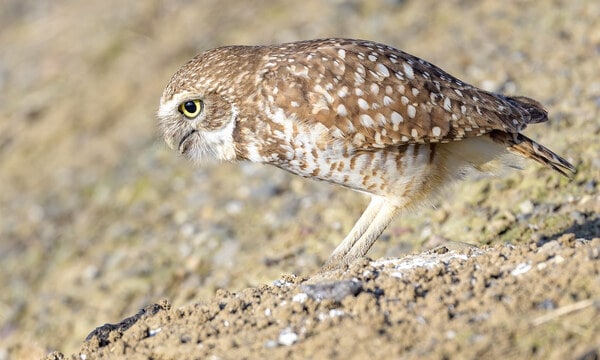
While insects and small mammals make up the core of a Burrowing Owl’s diet, decades of field research show that these owls are far more flexible eaters than most people realize. Their willingness to take unusual or less frequent food items often reflects what is available in a particular habitat or season.
In desert regions, for example, researchers have documented Burrowing Owls capturing small snakes, juvenile lizards, and even scorpions when insect numbers drop. These prey items require precise timing and careful handling, yet the owls take advantage of them when other foods are limited.
In wetter environments or during rainy seasons, amphibians such as frogs and toads become more common in their diet. Field notes from breeding territories in the western United States frequently mention adults bringing frogs back to the burrow after heavy rains.
Small birds also appear occasionally in diet studies, particularly in open shrublands and grassland edges where sparrow-sized species are abundant. These events are not common, but they are consistently recorded enough to confirm that the species will take small birds when the opportunity arises.
A handful of studies have also noted Burrowing Owls consuming plant material, including seeds, berries, and small fruits. Although this is not a regular part of their feeding behavior, it tends to occur in habitats where animal prey is scarce or during periods of environmental stress.
These unusual food items rarely make up a large percentage of their overall diet, but they highlight the owl’s remarkable adaptability. When resources fluctuate, Burrowing Owls adjust quickly, widening their menu to survive in landscapes that can change dramatically from season to season.

What Do Burrowing Owls Eat In The Winter?
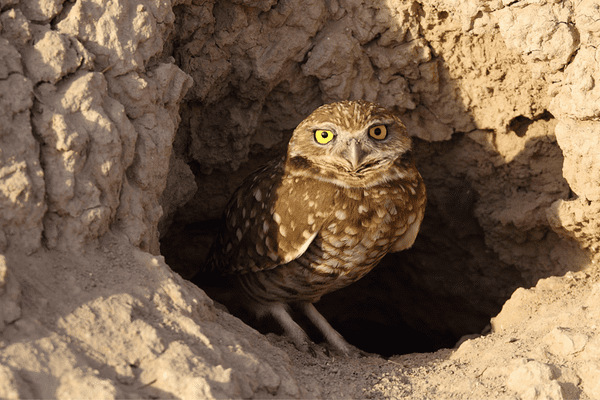
In the winter, burrowing owls may have fewer prey options than they do in the warmer months. Insects, which make up a significant portion of their diet, may be less abundant in the winter due to the colder temperatures. However, burrowing owls are resourceful hunters and will adapt their diet to the available food sources.
One common prey item for burrowing owls in the winter is small mammals, such as voles, mice, and shrews. These animals are active throughout the winter and can provide a reliable food source for burrowing owls. Additionally, burrowing owls may also feed on birds, such as sparrows, finches, and doves, which can be found in the winter in areas where there are bird feeders or other food sources.

In some areas, burrowing owls may also feed on reptiles in the winter, such as lizards or snakes, which are active even in cooler temperatures. They may also hunt for insects in areas where they are still present, such as in microhabitats like leaf litter or under bark.
Overall, burrowing owls are adaptable hunters and will adjust their diet to the available food sources in the winter. While insects may be less abundant, they can still rely on small mammals, birds, reptiles, and other prey items to survive the colder months. This dietary flexibility often leads people to ask Are Owls Omnivores, even though these small but mighty birds remain specialized predators that play an important role in their ecosystems as controllers of small animal populations.
What do Burrowing Owls Eat during Spring and Summer?
During the spring and summer, burrowing owls have access to a wide variety of prey items, as many animals become more active during the warmer months. Insects are a common food source for burrowing owls during this time, and they may feed on a variety of insects, including grasshoppers, beetles, and crickets. Insect abundance can vary depending on the region and the amount of rainfall, but in general, burrowing owls are able to find plenty of insects to eat during the spring and summer.
Small mammals are also an important food source for burrowing owls during the spring and summer. They may prey on rodents such as mice, voles, and ground squirrels, which are active during the day and night. In some areas, burrowing owls may also prey on rabbits or hares, which are larger animals that provide a substantial amount of food.
Birds can also be a food source for burrowing owls during the spring and summer. They may prey on birds that are nesting on the ground, such as sparrows, finches, and doves. Additionally, they may also feed on young birds that have recently fledged and are still learning to fly.
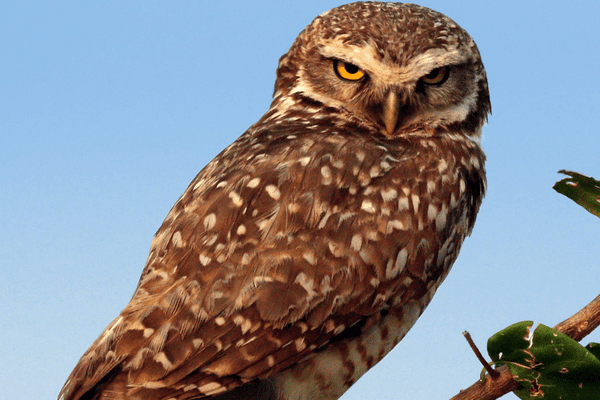
Reptiles, such as lizards and snakes, are another potential food source for burrowing owls during the spring and summer. These animals are more active during the warmer months and can provide a reliable food source for burrowing owls.
Overall, burrowing owls are adaptable hunters and will adjust their diet to the available food sources during the spring and summer months. They are able to find plenty of prey items, including insects, small mammals, birds, and reptiles, to sustain themselves and their young. These small but mighty birds are fascinating to watch and study, and they play an important role in their ecosystems as predators of small animals.
What do baby Burrowing Owls eat?
Baby burrowing owls, also known as owlets, have specific dietary needs that are different from adult burrowing owls. As they grow and develop, their diet will change to reflect their changing nutritional needs.
When owlets hatch, they are completely dependent on their parents for food. Initially, they are fed a diet of small insects such as grasshoppers, crickets, and beetles, as well as spiders and other arthropods. As they grow, their diet will gradually shift to include larger prey items, such as small mammals, birds, and reptiles.
As they get older, owlets will begin to hunt for their own food, although they may still be fed by their parents for a period of time. They will start by hunting insects and small prey items before moving on to larger prey as they become more skilled hunters.
It’s important to note that baby burrowing owls have specific nutritional requirements, and they need to receive a diet that is high in protein and other essential nutrients to support their growth and development. In the wild, their diet will vary depending on the availability of prey items in their environment.
Overall, baby burrowing owls eat a diet that is similar to adult burrowing owls but with a greater emphasis on small insects and arthropods early on in their development. As they grow and develop, they will gradually shift to larger prey items and begin to hunt for themselves.

Related Post :
- Do Owls Eat Fish : Read The Explanation
- Do Owls Eat Birds : Let’s Understand Why
- Do Hawks Eat Owls – Explanation
- Do Owls Eat Chickens – Explanation
- Do Owls Eat Squirrels – Explanation A To Z
- Leucistic Owls: Understanding a Rare Genetic Phenomenon
- Do Barred Owls Eat Squirrels : Uncovering the Truth
- Barn Owl Skull: A Look into Nature’s Design
- Barn Owl Feet: Understanding the Unique Anatomy
- Tawny Fish Owl: Facts, Habitat, and Conservation Efforts
- Rufous Owl : A to Z Guide
- What Does A White Owl Mean : A to Z Explanation
- Do Owls Eat Birds : Let’s Understand Why
- Baby Great Horned Owl – A to Z Guide
- Flammulated Owl : A to Z Guide