
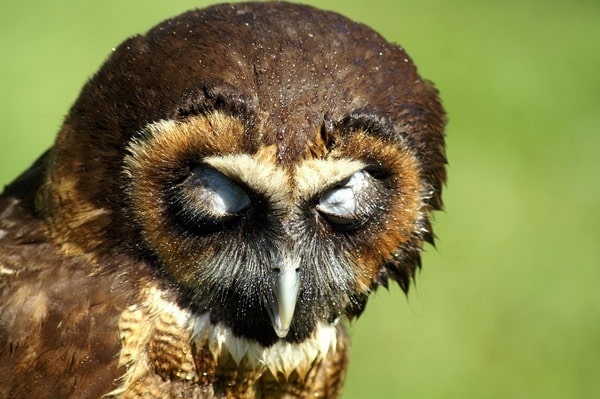
Owls sleep during the day, but their rest never looks careless or deep. When an owl settles to sleep, it first finds a place where wind, light, and attention are minimal. Once it chooses a spot, the bird draws itself inward. The feathers loosen slightly, the body narrows against the tree or roost surface, and the eyes close in slow intervals before the owl finally commits to sleep. Their sleep is light because they remain partly aware of movement and sounds around them. This is normal for an animal that spends the day exposed to other birds, predators, and changing weather.
Owls pause often between sleep cycles. Their heads might turn in small adjustments, or their feathers may fluff for warmth. Even while dozing, they remain more aware than most birds, which helps them stay safe while resting in open spaces or partially sheltered cavities. Their bodies act almost automatically, keeping them steady, hidden, and ready to respond if something nearby shifts or calls out.
Light sleep, frequent adjustments, and careful posture come together to form a style of rest adapted to a life lived in the open. It is simple, efficient, and built to protect the bird during daylight hours.
How Owls Manage to Sleep Upright Without Falling
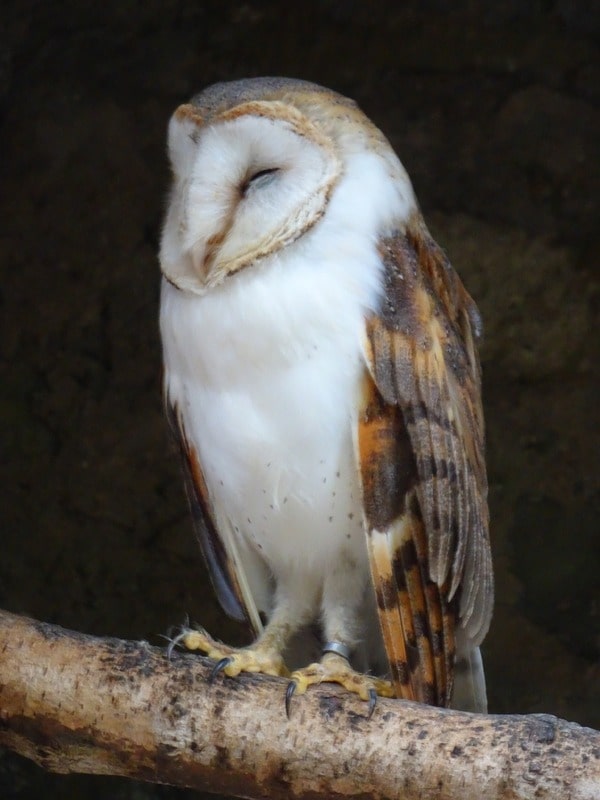
It often surprises people that an owl can fall asleep while perched high above the ground without losing its balance. The reason this works is simple biology. When an owl settles its weight onto a branch and bends its legs into a resting position, a set of tendons inside the feet tightens automatically. This natural tightening locks the toes around the perch and keeps them in place without the bird having to use any strength. It is the same mechanism other birds of prey rely on, but in owls it works especially smoothly because their legs and feet are built for long periods of stillness.
This automatic grip means the owl does not need to stay tense or alert to avoid falling. Even strong gusts of wind rarely break the hold. The owl’s center of gravity helps too. Most of its weight sits low and close to the branch, and its posture lines the body directly above the feet. Once the grip is set, the bird only needs occasional small adjustments, often using the sense of touch in the toes rather than vision.
When everything settles into place, the owl can rest with surprising ease. The feet anchor the bird, the body relaxes over the perch, and the head shifts gently as the owl finds a comfortable angle. What looks effortless from the outside is actually a combination of anatomy and instinct working together to keep the owl safe while it sleeps.
Where Owls Choose to Sleep During the Day and Why It Matters
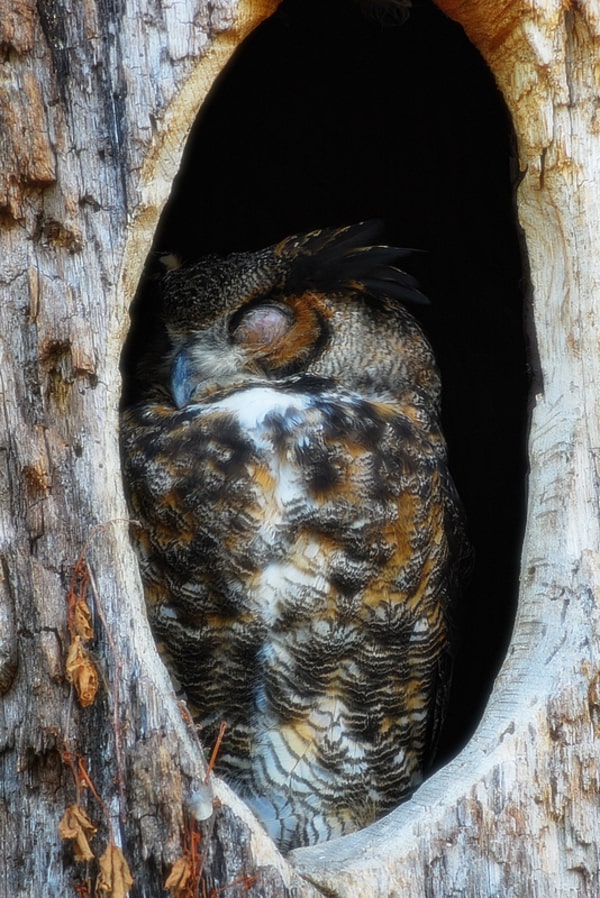
Owls do not sleep just anywhere. Because they rest during the brightest hours of the day, they need places that offer shade, safety, and a sense of stillness. Many species tuck themselves deep inside trees, on sheltered branches, in barn rafters, along cliff ledges, or inside thick vegetation. These spots soften the light, protect them from wind, and make it harder for other animals to notice them. A good roost gives an owl the chance to settle into its daytime rhythm without constant interruptions.
Choosing the right place also helps the owl save energy. Shade prevents the bird from overheating, and a stable surface allows it to perch without repeatedly adjusting its balance. In open country, owls rely heavily on camouflage. Their feathers blend into bark, leaves, or rock, letting them disappear into the landscape even while sitting in plain view. This is important because many small birds will mob an owl if they find it exposed. A hidden resting place reduces stress and keeps the owl from burning energy defending itself.
Every roosting choice reflects survival. The place an owl sleeps influences its comfort, its temperature, and how quickly it can react if something moves nearby. By selecting a quiet and protective spot, the owl preserves strength for the night ahead, when hunting demands focus and energy.
How Baby Owls Sleep Compared to Adults and What Changes With Age
The way baby owls sleep is one of the most charming and unexpected parts of their early life. Owlets are not born with the balance or muscle strength that adult owls rely on. Their bodies are round and heavy toward the head, their legs are still gaining strength, and their necks cannot yet hold them upright for long. Because of this, young owls sleep lying down. They often rest with their stomachs against the nest floor and their heads turned gently to the side, or propped against a nest mate or the rim of the Owl Nest. This posture keeps them stable and comfortable while they grow.
As the weeks pass, the changes are gradual but easy to see. First the leg muscles strengthen, giving the owlet the ability to push itself into a more upright position. Then the tendons in the feet begin to work the way they do in adults, creating the natural locking grip that allows older owls to perch without effort. Once this mechanism starts working, young owls practice standing more often, and their sleep slowly shifts from lying down to the upright stance seen in fully grown birds.
Watching this progression makes it clear that owl sleep is closely tied to physical development. Balance, tendon strength, and posture all evolve together, preparing the young bird for the life it will lead once it begins exploring beyond the nest.
How Owls Use Their Feet and Feathers to Rest Safely
An owl’s sleep depends heavily on the coordinated use of its feet and feathers. While the feet secure the owl in place, the feathers manage comfort, warmth, and camouflage. Before settling, an owl fluffs its feathers to create a layer of insulating air. This protects the bird from heat loss and helps maintain body temperature during long periods of stillness.
The feathers also help the owl blend into its surroundings. By narrowing its profile and aligning its body with the trunk of a tree, the owl becomes nearly invisible. During sleep, the feathers shift in small waves as the bird regulates heat or responds to minor disturbances.
The feet and feathers work together to keep the owl grounded and hidden. The feet provide stability. The feathers provide protection from temperature and unwanted attention. These simple but effective adaptations allow an owl to sleep safely in environments where other animals remain active and alert.
The First Time I Ever Watched an Owl Sleep
The first time I saw an owl sleeping was during a quiet morning in northern Colorado. I was walking a trail near a stretch of old cottonwoods, mostly trying to wake up and convince myself the day had already started. As I passed one of the trees, I noticed a pale lump pressed against the trunk. My first thought was that someone had stuck a forgotten mitten to the bark. My second thought was that it might be a very round mushroom.
Neither was correct.
The lump shifted, extremely slowly, and revealed itself as a sleeping owl. It was tucked so tightly against the tree that it looked like it had spent years practicing the art of becoming bark. Its eyes were closed in a soft, half-aware way, the kind of look you have when you know you should get up but decide the world can wait a few more minutes. Every so often it made a tiny adjustment, the kind of sleepy wiggle people make when trying to find the cold side of the pillow.
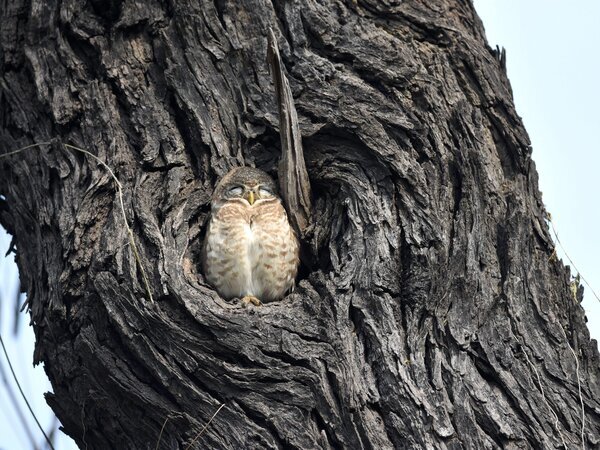
What impressed me most was how confidently it balanced on a branch that looked too thin to support anything heavier than a squirrel. Its feet held on without effort, its body sank into a comfortable lean, and the morning light drifted around it like a warm blanket. The owl was clearly more prepared for the day than I was.
Watching it rest made me appreciate how perfectly these birds are designed for daytime stillness. The branch stayed steady, the owl stayed hidden, and I stood there quietly, feeling as if I had accidentally walked in on the forest’s sleepiest secret.
It was peaceful, a little funny, and surprisingly memorable. Mostly because it was the first time I realized that an owl can look more comfortable asleep on a thin branch than I do on my own couch.
Related Post
- Rufous Owl : A to Z Guide
- What Does A White Owl Mean : A to Z Explanation
- Do Owls Eat Birds : Let’s Understand Why
- Baby Great Horned Owl – A to Z Guide