
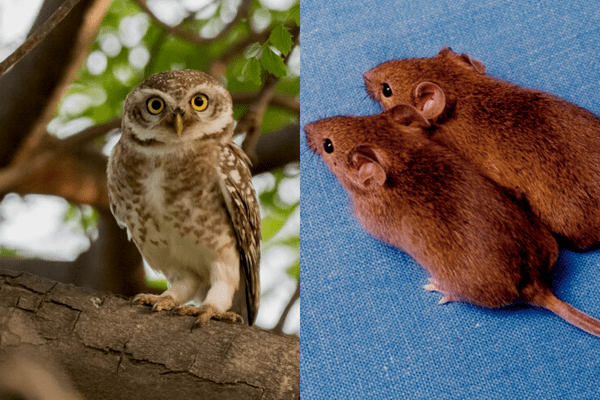
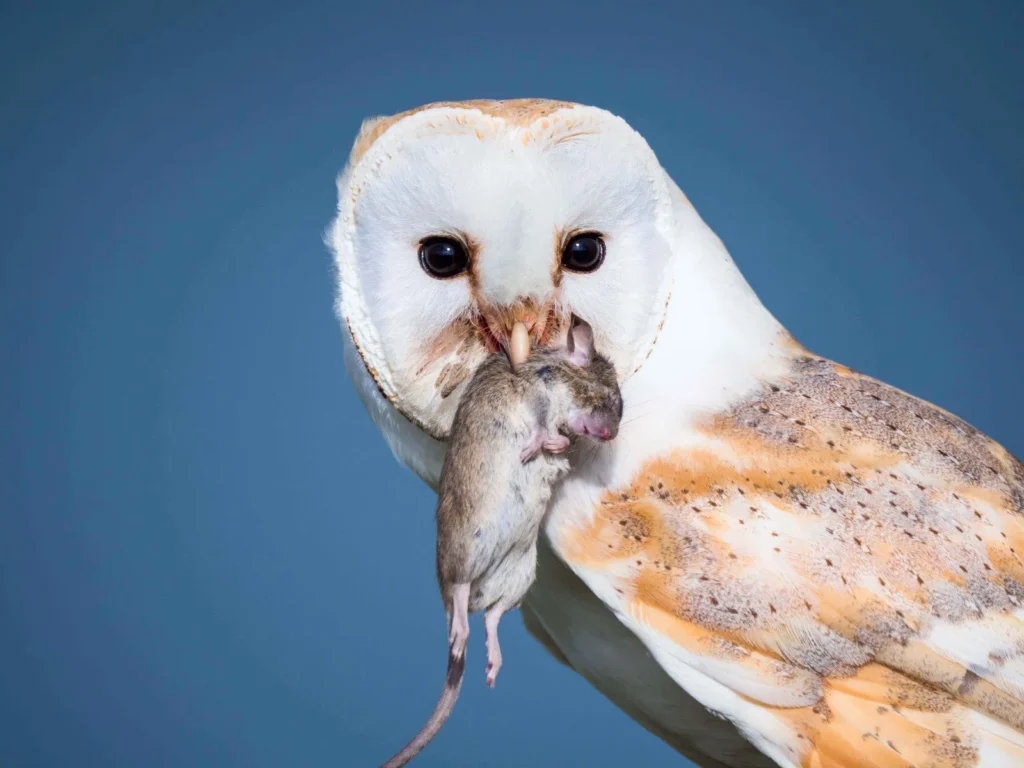
Most owl species Do Eat Mice, and for many of them, rodents are one of the most important and frequently consumed food sources confirmed through pellet studies and field research. Species like Barn Owls, Screech Owls, and Tawny Owls rely heavily on small mammals such as mice, voles, and shrews because these animals are abundant, active at night, and provide high nutritional value. Scientific diet analyses show that some owls consume thousands of rodents in a year, illustrating how central mice are to their survival.
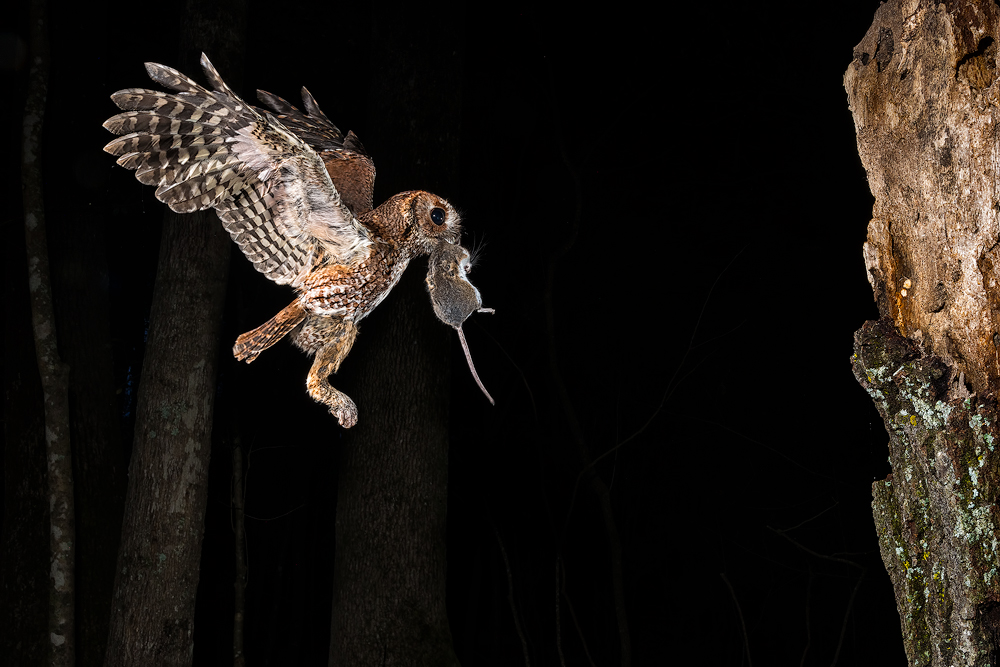
Owls catch mice using their exceptional hearing, silent flight, and low-light vision, and they usually swallow small rodents whole before later regurgitating pellets that contain bones and fur. Overall, research clearly shows that mice are a natural, essential, and common part of the diet for many owl species.
Why Owls Commonly Hunt Mice: The Scientific Reason
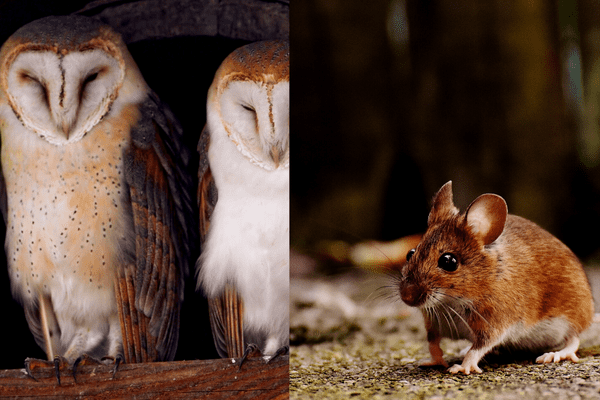
Owls hunt mice because rodents are abundant, nutritious, and active during the same nocturnal hours when owls naturally feed. Scientific pellet analyses across North America, Europe, and Asia consistently confirm that mice and voles form the largest portion of many owl diets, especially in Barn Owls, Screech Owls, Tawny Owls, and other mid-sized species.
Owls are physically designed for rodent hunting: silent wings reduce sound by up to 90%, their facial discs funnel sound directly to the ears, and their low-light vision allows them to strike accurately even in near darkness. Together, these adaptations make mice a high-benefit, low-effort food source in most habitats.
Key Points:
- Pellet studies show mice are the most common prey for many owls.
- Owls’ hearing and silent flight give them an advantage over rodents.
- Rodents are active at night, matching an owl’s hunting schedule.
Do All Owl Species Eat Mice? A Species-by-Species Breakdown
Although most owls do eat mice, the dependency level changes by species and habitat. Field research shows that Barn Owls may rely on rodents for up to 90% of their diet, making them one of the strongest rodent specialists. Tawny Owls in Europe frequently hunt wood mice and voles, while Screech Owls eat mice regularly but supplement their diet with insects depending on seasonal availability.
Larger species like the Great Horned Owl also eat mice but often choose bigger prey. Across ecosystems, the data consistently shows that mice are a natural and significant part of the diet for a wide range of owl species.
Key Points:
- Screech Owls: Eat mice regularly when available.
- Barn Owls: Rodent-heavy diet based on pellet studies worldwide.
- Tawny Owls: Commonly eat mice in woodland habitats.
Why Mice Are Important in an Owl’s Diet
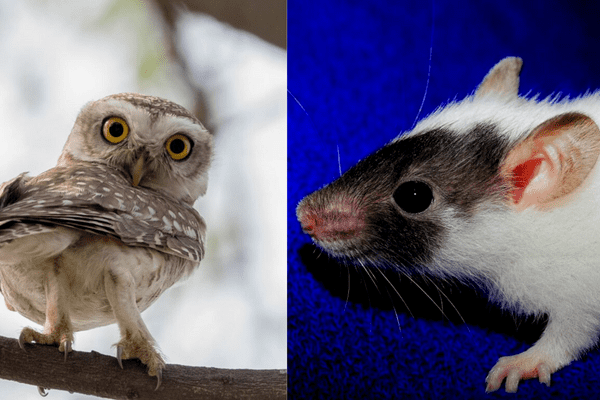
Mice are one of the most valuable prey sources for owls because they combine high nutritional content, constant availability, and easy handling, making them an ideal match for an owl’s biological needs. Scientific pellet analyses and field studies show that mice and voles make up a major portion of the diet for species like Barn Owls, Tawny Owls, and Screech Owls.
A single Barn Owl pair can consume 2,000–3,000 rodents annually, proving how essential rodents are for maintaining energy levels, supporting growth, and raising chicks successfully.
What makes mice especially important is their rapid reproductive cycle, producing multiple litters per year meaning owls rarely face shortages in suitable prey. This steady supply allows adult owls to feed themselves while providing constant nourishment for developing chicks, which require several meals every night. Additionally, mice are small and soft-bodied, allowing owls to swallow them whole without expending unnecessary energy.
Their digestive system efficiently breaks down muscle and organs while compressing bones and fur into pellets, a behavior documented across nearly all owl species. Because of this combination of nutrition, abundance, and compatibility with an owl’s natural feeding mechanism, mice remain one of the most crucial prey items in owl ecology.
Key Points
- Mice supply high protein and fat levels that support hunting stamina and chick growth.
- Rodents reproduce quickly, ensuring a steady prey supply year-round.
- Stable mouse populations allow owls to raise multiple chicks successfully.
Can an Owl Swallow a Mouse Alive?
Owls are built to consume small prey in the most efficient way possible, and swallowing a mouse whole is a completely natural part of their feeding behavior. In many documented cases, owls grab a mouse and swallow it almost immediately, but that doesn’t always mean the rodent is alive during the process.
Wildlife studies show that owls usually deliver a powerful, precise bite to the skull or neck as soon as they strike, which kills or incapacitates the mouse instantly. This makes swallowing easier and prevents injury to the owl.
Once the mouse is swallowed, the owl’s digestive system gets to work. Their stomach quickly breaks down soft tissues like muscle and organs, extracting nutrients the owl needs for energy and survival. The parts they can’t digest such as bones, teeth, and fur are tightly compressed into a dry, oval pellet.
These pellets are later coughed up, a behavior seen in virtually every owl species and widely used in scientific studies to analyze their diet. Because owls lack teeth and cannot chew, swallowing prey whole is not only normal but one of the most efficient ways for them to consume food in the wild.
Key Points
- Owls typically kill or disable prey instantly before swallowing.
- Small rodents are consumed whole, usually head-first for easier passage.
- Pellets contain undigestible parts like bones and fur expelled hours later.
Source- Link
How Owls Help Control Rodent Populations Naturally
Owls are one of the most effective natural rodent-control predators. In farming areas, Barn Owls are especially valuable because one family can consume thousands of rodents per year, reducing crop damage and limiting the spread of rodent-borne diseases. Many farmers use owl nest boxes as an eco-friendly alternative to toxic rodent poisons, which can harm pets, wildlife, and even the owls themselves. While people often ask Do Owls Eat Birds, scientific research shows that regions with active owl populations experience significantly lower rodent activity, proving their importance in maintaining ecological balance.
Key Points
- A Barn Owl family can remove thousands of rodents annually.
- Farmers install nest boxes to reduce poison use.
- Owls help stabilize ecosystems by preventing rodent overpopulation.
Owl hunting photos and action shots:
Video Available to Watch
Related Post
- Leucistic Owls: Understanding a Rare Genetic Phenomenon
- Do Barred Owls Eat Squirrels : Uncovering the Truth
- Barn Owl Skull: A Look into Nature’s Design
- Barn Owl Feet: Understanding the Unique Anatomy
- Tawny Fish Owl: Facts, Habitat, and Conservation Efforts
- Rufous Owl : A to Z Guide
- What Does A White Owl Mean : A to Z Explanation
- Do Owls Eat Birds : Let’s Understand Why
- Baby Great Horned Owl – A to Z Guide
- Flammulated Owl : A to Z Guide