
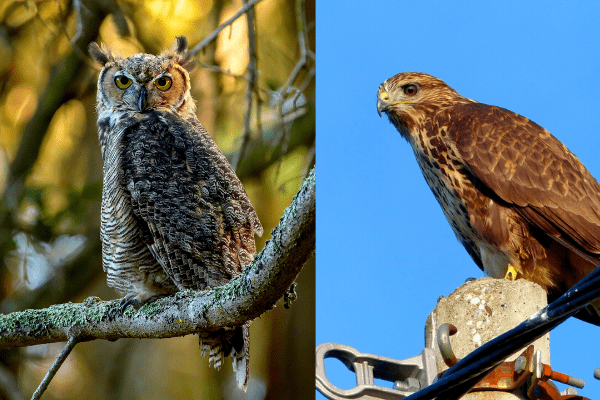
Hawks can eat owls, but it happens far less often than people assume. Most hawks do not hunt owls intentionally, yet larger hawks-such as red-tailed hawks, goshawks, and Cooper’s hawks have been documented preying on small owl species or young owlets when territories overlap or nests are threatened. Adult medium and large owls are rarely targeted because they are powerful birds that can seriously injure a hawk. The relationship also works the other way: large owls, especially great horned owls, can prey on hawks during nighttime hours.
Overall, hawk–owl predation is real but uncommon, driven mainly by size differences, nest defense, and ecological pressures, not regular hunting behavior.
How Hawks and Owls Cross Paths in the Wild
In most places, hawks and owls live side by side without noticing each other for much of the day. Their daily rhythms keep them apart. Hawks wake with the sun and search the landscape in bright light, while owls settle into shaded roosts and become active again only as the day fades. Even with this separation, their worlds still touch in small but important ways.
The overlap usually happens in the quiet edges of habitats such as forest borders, open fields, and mixed woodland where both predators find dependable prey and safe perches. A hawk beginning its morning flight may pass close to an owl returning from a night of hunting. An owl moving through low branches at dusk may cross the same territory a hawk defended only hours earlier.
Certain situations increase the chances of contact:
• Early morning, when owls are heading to roost and hawks are beginning to hunt
• Late evening, when hawks are settling down and some owls start to move
• Areas where tree cavities or tall nesting sites are limited
• Open ground where small owls become more visible to soaring hawks
These moments do not guarantee conflict, but they create the brief windows in which predation or defensive behavior becomes possible.
Why Smaller Owl Species Face More Risk From Hawks
Hawks rarely challenge owls that match them in strength. Medium and large owls are simply too dangerous for most hawks to approach. However, small owl species fall within a size range that hawks are already adapted to hunt. This makes them more vulnerable when circumstances align.
Species such as screech owls, pygmy owls, burrowing owls, and saw whet owls move in ways that resemble the small birds and mammals hawks regularly target. They also tend to perch lower to the ground and may cross open spaces where hawks have a clear advantage.
Several factors contribute to the higher risk for small owls:
• Their size is similar to the typical prey of many hawks
• Their movements are easier for hawks to track in open areas
• They are active during dawn transitions, when hawks are already hunting
• They lack the physical power that protects larger owls
Even with these risks, hawks do not actively seek out owls. Most encounters that lead to predation are opportunistic rather than intentional.
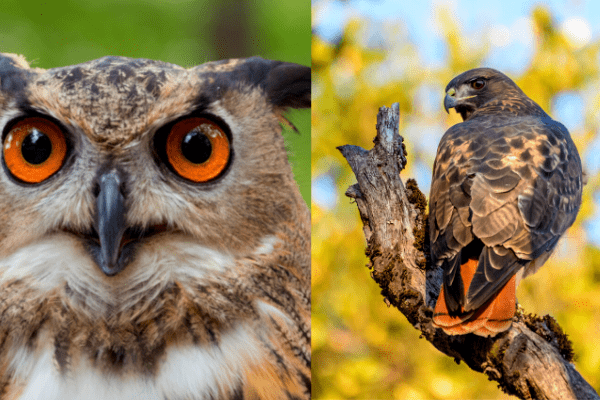
The Ecological Pressures That Bring Hawks and Owls Into Dispute
When hawks and owls come into conflict, the cause is often ecological rather than predatory. Both birds rely on many of the same small mammals and small birds for food. They also value similar perching sites, nesting areas, and stretches of open hunting ground. When these resources become limited, competition increases.
A hawk guarding its nest reacts strongly to any predator in its vicinity, and this includes owls. An owl returning to its daytime roost may unknowingly pass close to a hawk’s territory during the breeding season, which heightens the chances of aggression. These encounters often raise questions about predator hierarchy and whether Are Owls Raptors, especially during years when reduced prey availability pushes hawks to take risks they would normally avoid, including targeting smaller owl species.
Common ecological triggers include:
• Competition for hunting grounds that hold reliable prey
• Nest protection, especially during the early breeding season
• Habitat loss or fragmentation that forces birds into closer quarters
• Seasonal scarcity of food that alters hunting decisions
These pressures shape the encounters between hawks and owls far more often than intentional hunting does.
What Field Biologists Notice During Rare Hawk Owl Interactions
Researchers who observe raptors in the field describe hawk and owl encounters as uncommon but memorable. These meetings are usually brief and shaped by the individual species involved. Time of day, territory boundaries, and the presence of nests all influence how each bird reacts.
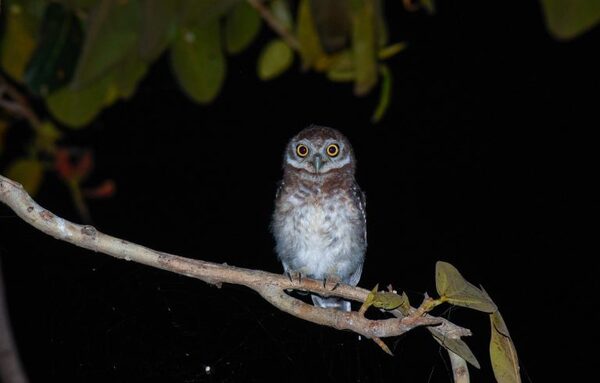
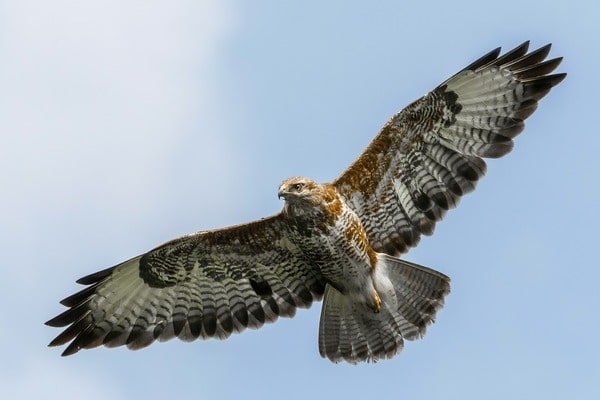
Field reports reveal certain patterns. Hawks are more likely to initiate aggression during daylight, especially near their nest trees. Owls tend to avoid open sky when hawks are active, using dense cover to move quietly between roosting sites. When predation does occur, it almost always involves small owls or young birds that have not yet developed strong defensive behavior.
Observers also note that the balance of power can shift. Large owls like the great horned owl become the dominant predator at night, and there are documented cases of these owls taking hawks as prey.
Across many studies and field journals, the same conclusion appears. Hawks and owls do not treat each other as regular prey. Their interactions reflect the complicated dynamics of territory, competition, and timing rather than routine hunting.
Watch Red-Tail Hawk and Great Horned Owl Confrontation Video
Related Post
- Rufous Owl : A to Z Guide
- What Does A White Owl Mean : A to Z Explanation
- Do Owls Eat Birds : Let’s Understand Why
- Baby Great Horned Owl – A to Z Guide
Resources
- aphis.usda.gov
- wildlifefaq.com