
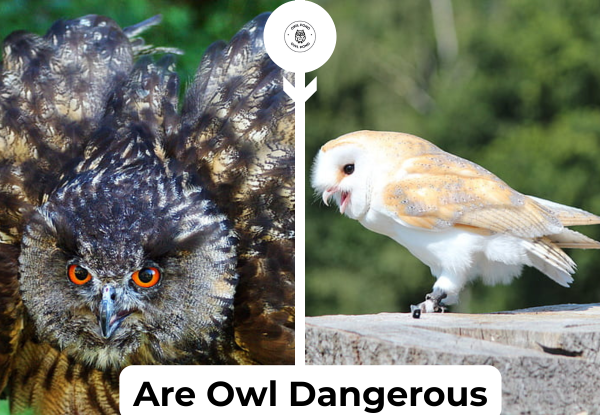
Owls are birds, specifically birds of prey. They belong to the same broad group as hawks and eagles, though their habits are very different. Feathers, wings, egg-laying, and flight place them firmly among birds, even though they are sometimes loosely described as animals in everyday language. What defines owls is not danger, but specialization. Their bodies are adapted for quiet movement, careful observation, and precision hunting rather than confrontation.
This article looks at owls in general terms and asks whether they are dangerous as a group, based on how they typically behave in the wild. It focuses on patterns seen across species rather than isolated events. For readers interested in a closer examination of specific encounters and documented incidents, a separate article titled Do Owls Attack Humans explores that subject in more detail, using recorded observations and reported cases.
Species Differences in Owl Aggression
Not all owls behave the same way. Across the more than 250 known owl species, levels of defensive behavior vary widely and are shaped by body size, habitat, and breeding strategy. Most small and medium-sized owls rely almost entirely on concealment and avoidance. Remaining unseen is their primary defense, and confrontation is rare.
A few larger species are more noticeable when defending territory, particularly during breeding season. These owls may respond more quickly to disturbance near nests or fledglings, but this behavior is defensive rather than aggressive in a predatory sense.
Outside of nesting periods, even these species return to largely evasive behavior. Field biologists emphasize that aggression in owls is context-dependent, not a consistent trait of any species.
Behavioral Differences Between Urban and Forest Owls
Owls living in forested habitats tend to keep significant distance from disturbance. Dense cover and low human presence allow them to withdraw quietly long before being detected. In these environments, encounters are rare and often go unnoticed.
Urban and suburban owls live under different conditions. Habitat fragmentation and steady prey availability bring them closer to buildings, parks, and open spaces. This proximity can make their defensive responses more visible, especially during nesting season.
However, studies show that urban owls are not inherently more aggressive. Instead, limited escape routes and frequent disturbance increase the likelihood of brief defensive behavior being observed. The underlying instincts remain the same; only the setting has changed.
Why Owls Are Rarely Classified as Dangerous Wildlife
When wildlife agencies decide whether an animal is dangerous, they look for patterns. They ask whether injuries happen often, whether those injuries are serious, and whether the behavior repeats over time. Owls simply do not show those patterns. Reports collected by park services and conservation groups describe encounters as uncommon and, in most cases, minor.
Part of the reason lies in how owls are built. They are not apex predators, and they are not suited for prolonged conflict. Their talons and beaks are designed for catching small prey, not for sustained defense, which helps explain why people ask Do Owls Attack Humans and why such incidents are extremely rare.
When an owl does react defensively, it tends to be brief and closely tied to nesting or seasonal pressures. Outside of those periods, owls return to avoiding disturbance altogether. For this reason, biologists generally regard owls as low-risk predators whose behavior reflects timing and habitat, not aggression.