
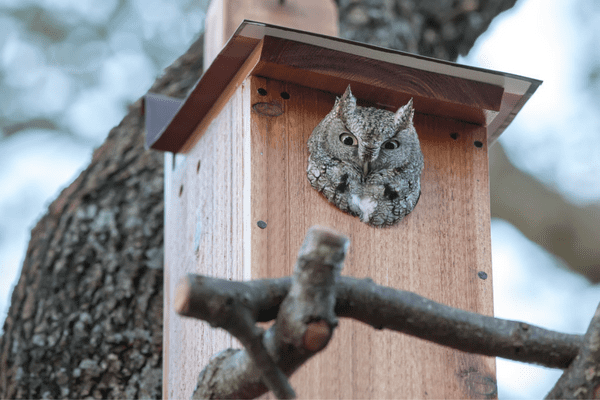
Before asking how to attract owls, it is worth asking why. If the goal is to support wildlife, protect habitat, and contribute to owl conservation in a meaningful way, then creating owl friendly conditions makes sense. If the goal is to have an owl in the backyard as a novelty or something to show off, it is unlikely to help the birds, and it may not work anyway. Owls are not decorative wildlife. They are cautious predators that settle only where conditions already suit them.
Owls do not arrive because a person wants them to. They appear when an environment quietly meets their needs. These needs include prey availability, safe nesting options, low disturbance, and intact nighttime conditions. This is why many well intentioned efforts such as installing nest boxes or playing owl calls often fail. Without the right habitat beneath those actions, owls simply ignore them. Wildlife agencies and long term studies consistently show that owls are better understood as responding to ecosystems rather than human invitations.
Attracting owls, when it happens at all, is usually a side effect of doing something else right. Managing land responsibly, avoiding poisons, allowing natural processes to exist, and being patient all matter. In that sense, owls are less a goal and more a signal. If they show up, it usually means the environment is already doing something right, with no applause required and no guarantees.
Is It Actually Possible to Attract Owls to a Yard?
In a limited sense, yes, owls can begin using a yard. But it almost never happens because someone set out to attract them. Owls are not curious visitors, and they do not respond to invitations the way many familiar backyard birds do. They do not follow feeders, they do not arrive because a call was played, and they do not explore new places just to see what is there. Their movements are shaped by survival, not interest.
When owls start appearing around homes, it usually happens quietly and over time. The yard does not suddenly become attractive. It simply becomes usable. Sometimes this is because the space falls within an owl’s existing hunting range. In other cases, nearby land changes, a field grows wilder, development pushes prey into new areas, or disturbance drops just enough to make the space tolerable. From the owl’s perspective, nothing special happened. The risk level just fell below a threshold.
Short Answer
Yes, but not in the way most people expect. Owls do not respond to invitations. They appear only when a space quietly meets their needs over time.
Long-term monitoring of owl behavior shows a consistent pattern. Owls begin to use areas where food is predictable, movement feels safe, and nights remain relatively dark and quiet. They do not move in because conditions look perfect. They move in because conditions stop being hostile. That difference matters. It explains why people often believe they attracted an owl, when in reality they removed something that had been keeping owls away.
Seen this way, owl presence is not a response to effort but to suitability. A yard does not call owls in. It simply stops giving them reasons to avoid it.
Why Most Yards Fail to Meet Owl Habitat Requirements
Owls avoid most yards not because homeowners fail to care, but because modern yards are built around human comfort, not wildlife survival. Neat lawns, bright lighting, constant activity, and chemical maintenance create environments that feel predictable and safe to people but hostile to nocturnal predators. From an owl’s perspective, many residential spaces are exposed, noisy, and risky places to linger.
Quick Reality Check
Putting up an owl box and waiting for an owl to move in is a bit like putting a chair outside and expecting a stranger to sit down because it looks comfortable.
Ecologically, a typical yard often functions as empty space. It may look green and well kept, but it supports very little of what owls actually need. Closely trimmed grass provides poor cover for rodents. Pesticides and rodent control reduce or contaminate prey. Outdoor lighting interferes with nighttime hunting, while regular human and pet movement makes resting or hunting unpredictable. Without prey and without cover, there is no reason for an owl to spend energy investigating the area.
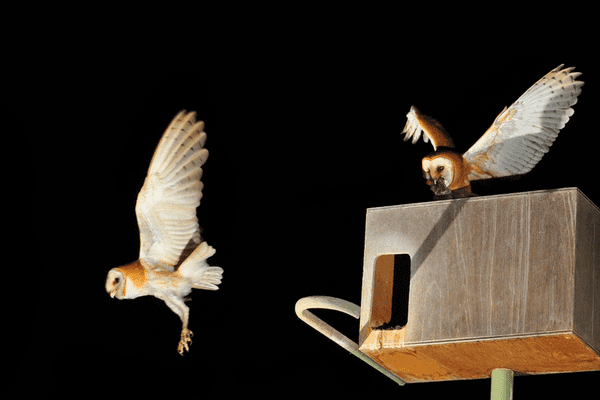
Field studies of owl habitat use show that owls consistently favor landscapes with structure and variation. This means uneven vegetation, edges between open and covered areas, and places where movement is limited after dark. Yards that are simplified for aesthetics remove those features. In doing so, they unintentionally signal danger rather than opportunity. Owls are not being selective. They are responding logically to environments that do not meet their basic requirements.
In most cases, owls are not avoiding yards out of preference. They are avoiding them because, biologically, there is very little there for an owl to work with.
How Nest Site Availability Influences Owl Settlement
For certain owl species, nesting sites can be a genuine limiting factor, but only after everything else is already in place. A nest site does not attract an owl by itself. It becomes relevant only when the surrounding landscape already supports hunting, movement, and safety. This is where nest boxes are often misunderstood. They can be helpful for cavity nesting species like Barn Owls or Screech Owls, but they do not create habitat. They simply offer a place to settle once an owl has already decided the area is worth using.
Long term conservation projects provide a consistent lesson. Nest boxes tend to succeed in places where owls are already present or where nearby habitat is actively being used. In areas that lack prey or experience regular disturbance, boxes may remain untouched for years. This is not because the box is poorly built or poorly placed. It is because owls assess the landscape first and the nest second.
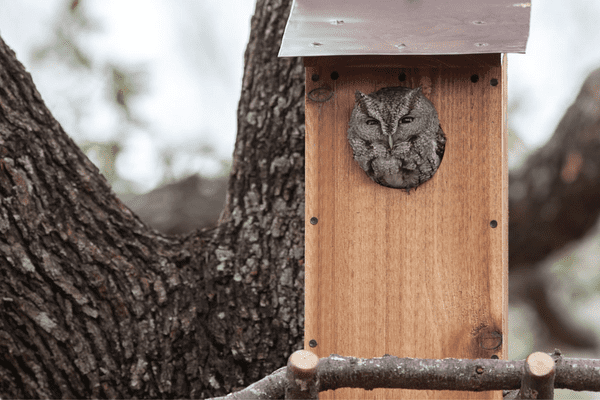
When an owl considers a nesting site, it is making a cautious decision with long term consequences. The site must sit within a reliable hunting area. It must allow adults to move in and out without repeated disturbance. It must offer protection from weather and predators. Even details such as height and orientation matter, not because owls are picky, but because survival during breeding depends on them.
Seen through this lens, nest sites do not invite owls in. They only remove one of the final barriers once an owl has already found a reason to stay.
Why Owls Are Indicators of Healthy Rodent Control, Not a Solution
Owls do eat rodents, and because of that, they are often described as natural pest control. The idea sounds neat, but it oversimplifies how ecosystems actually work. Wildlife agencies are careful with this topic because owls do not show up to fix a problem. They show up after conditions have already stabilized. If rodents are out of balance or being aggressively suppressed, owls usually stay away.
Field studies make this pattern clear. Owls help regulate prey numbers in the areas they hunt, but they do not eliminate rodents and they are not meant to. A stable owl population depends on a steady supply of prey over time. When rodent populations collapse due to poisoning, habitat loss, or heavy control measures, owls often disappear as well. From an ecological standpoint, this is not failure. It is feedback.
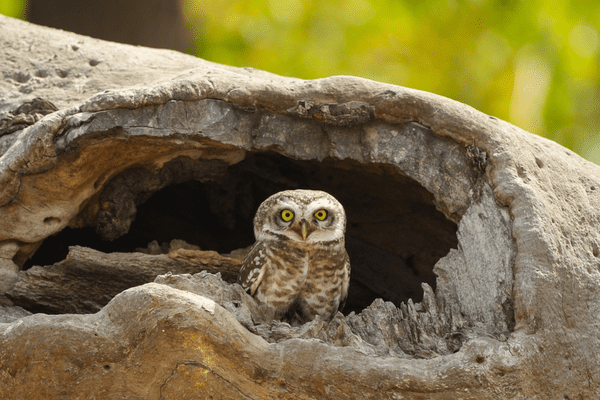
Because of this, conservation organizations describe owls as indicators rather than tools. Their presence suggests that prey populations exist in sustainable numbers and that the food web is functioning without heavy chemical interference. When owls are active in an area, it usually means multiple layers of the ecosystem are intact, from insects to small mammals to predators. When they are absent, it often points to a deeper imbalance rather than a missing solution.
In that sense, owls are less like pest managers and more like quiet witnesses. They reflect what is already happening on the ground, not what humans hope will happen next.
Supporting Owls by Managing the Entire Backyard Ecosystem
The most effective way to support owls is to stop thinking about owls as the starting point. Wildlife agencies consistently emphasize this because owls sit at the top of a long ecological chain. If the lower layers of that chain are missing, the owl cannot remain, no matter how welcoming the space might seem.
When parts of a yard are allowed to function more naturally, small changes ripple outward. Insects increase where chemicals are absent. Rodents and small birds follow where insects and cover exist. Native plants provide shelter, hunting edges, and seasonal food that non native landscaping often lacks. Darkness matters too. Artificial lighting can disrupt nocturnal movement and hunting, while darker spaces allow owls to move and hunt with less risk.
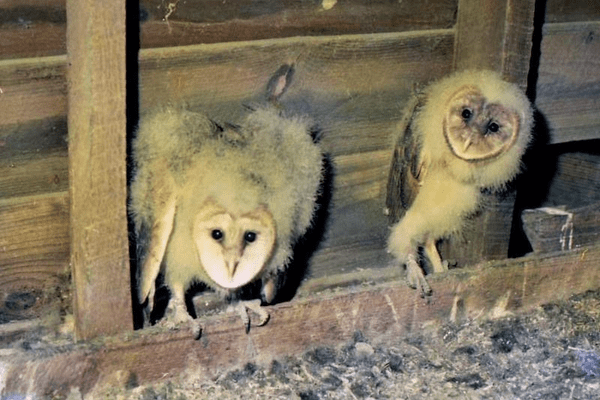
Over time, these conditions can turn a yard from a decorative space into a functioning one. Nothing dramatic happens. There is no moment where an owl arrives because it was invited. Instead, the environment becomes usable. From an owl’s perspective, this is the only thing that matters. The habitat works, so the owl stays.
This ecosystem based approach is why conservation organizations focus on reducing poisons, preserving mature vegetation, and limiting disturbance rather than promoting direct attraction methods. Supporting owls, in practice, means supporting everything beneath them first.
Is Attracting Owls Encouraged by Wildlife and Conservation Agencies?
Wildlife and conservation agencies generally support actions that improve habitat, but they are careful about how those actions are framed. The goal is not to attract owls in the sense of drawing them in for human enjoyment. Instead, official guidance focuses on coexistence, ethical land management, and reducing disturbance so wildlife can make its own choices.
Agency Perspective
Wildlife and conservation agencies support habitat improvement, not the direct attraction of owls. Official guidance focuses on ethical land management, minimal disturbance, and allowing owls to choose suitable areas on their own.
When agencies promote tools like nest boxes or habitat restoration, they do so within a conservation context. These efforts are presented as ways to replace lost nesting sites or improve degraded landscapes, not as guarantees that owls will appear. Agencies consistently emphasize that owls are protected wildlife. They should not be baited, fed, or pressured to settle in places that do not meet their needs. Practices such as playing recorded owl calls are often discouraged because they can cause stress or disrupt normal behavior, particularly during breeding seasons.
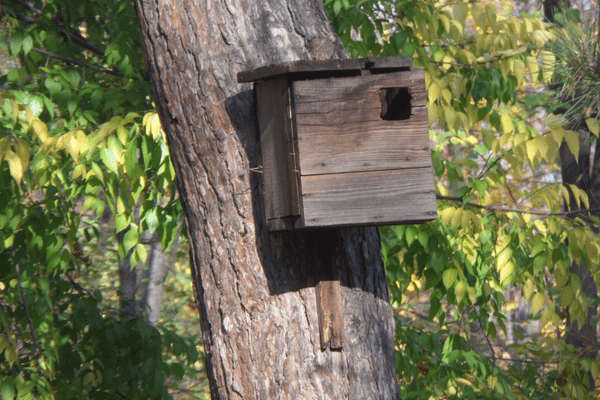
From a policy perspective, owl presence on private land is treated as a positive outcome, not a target. If owls benefit from improved habitat, it suggests that the land is functioning well ecologically. That distinction matters. Conservation agencies are not trying to move owls into backyards. They are trying to ensure that, if owls arrive on their own, the environment is safe enough for them to stay.
Related Post
- Do Owls Have Tongue: Facts and Insights
- Leucistic Owls: Understanding a Rare Genetic Phenomenon
- Do Barred Owls Eat Squirrels : Uncovering the Truth
- Barn Owl Skull: A Look into Nature’s Design
- Barn Owl Feet: Understanding the Unique Anatomy
- Tawny Fish Owl: Facts, Habitat, and Conservation Efforts
- Rufous Owl : A to Z Guide
- What Does A White Owl Mean : A to Z Explanation
- Do Owls Eat Birds : Let’s Understand Why
- Baby Great Horned Owl – A to Z Guide
- Flammulated Owl : A to Z Guide