
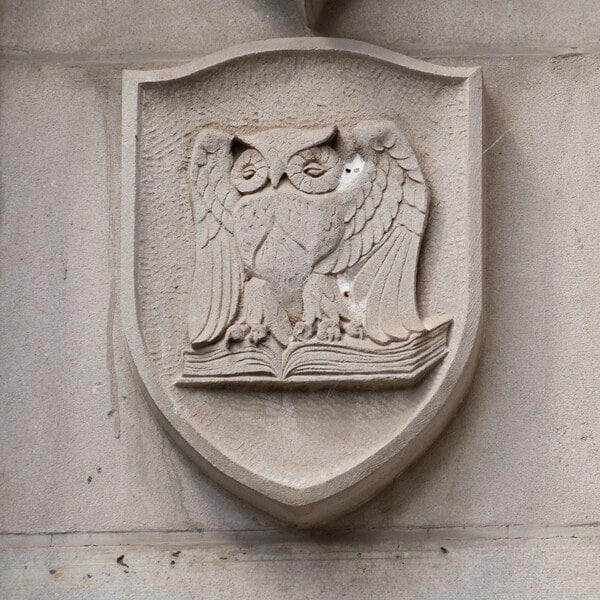
Owls don’t symbolize one single thing. What they represent depends on where you are, when you’re living, and how much you know about them. Across cultures, owls have been linked to wisdom, death, protection, warnings, and spiritual awareness-but those meanings didn’t come from imagination alone.
For most of human history, owls were encountered at night, when people were already cautious and alert. Their ability to fly silently, see in low light, and appear suddenly made them noticeable in a way few animals were. People naturally attached meaning to those encounters. In some societies, that led to owls being respected as symbols of knowledge or watchfulness. In others, they became associated with death or bad news-not as villains, but as signs that something serious or uncertain was near.
Once science explained owl behavior, many of the darker interpretations faded. Still, owls remain symbolic because they sit at the edge of human comfort-active when we aren’t, observant, and hard to read. In the end, owl symbolism tells us less about owls and more about how humans react to the unknown.
Why Seeing an Owl at Night Once Meant Something
For most of human history, night was not a comfortable time. People worked, traveled, and gathered during daylight because that was when the world felt predictable. Once darkness fell, vision faded and familiar places felt uncertain. Owls stood out because they were active when humans were not. Hearing an owl call in the middle of the night or seeing one pass overhead was uncommon enough to leave a strong impression.
Owls also moved in ways people were not used to. Their flight made almost no sound, and their calls carried clearly through quiet nighttime air. An owl could appear without warning and disappear just as quickly. Without scientific knowledge, this behavior did not seem accidental. It felt intentional, as if the bird was aware of things humans were not.
Over time, people noticed that owls often appeared during moments when emotions were already heightened. Long nights, illness, grief, or solitude made people more attentive to their surroundings.
The meaning attached to owls grew from those repeated experiences. It was not fear invented out of nothing. It was the human tendency to search for meaning when the environment felt uncertain and the night offered few explanations.
Owl Beliefs Beyond Western Myth
Much of what people think about owls today comes from Western stories, books, and films. While these portrayals often focus on wisdom or fear, they represent only a small part of how owls have been understood around the world. In many regions, owl symbolism developed on its own, shaped by daily life and the local environment rather than shared mythology.
In societies that lived closely with nature, owls were often seen simply as attentive animals. Their ability to watch quietly, hunt efficiently, and remain active at night earned them respect rather than moral judgment. People did not always label owls as good or bad. Instead, they saw them as creatures that noticed things others missed.
Some communities understood owls as markers of boundaries. They appeared at the edge of daylight and darkness, near settlements but not fully within them, and during moments of change in human life. Because of this, owls came to represent transition rather than mystery. These beliefs arose wherever humans and owls shared space, showing that owl symbolism was shaped by experience, not by a single cultural story.
When Owls Symbolized Death Without Being Evil
In many cultures, owls became associated with death, but the meaning was not cruel or frightening. For much of history, death was part of everyday life. People were born and died at home, surrounded by family, and signs of illness or loss were visible rather than hidden away. Owls often lived near human settlements and were active during the quiet hours when sickness, mourning, or night vigils took place.
Because of this, owls were frequently present during moments when people were already thinking about endings. Their calls might be heard outside a home during illness or after burial rituals, not because the owl caused anything, but because it followed its normal nighttime behavior. Over time, people began to associate the bird with transition rather than misfortune.
In some traditions, owls were understood as watchers or messengers, drawing attention to change instead of bringing harm. The owl did not symbolize death itself; it symbolized awareness of life’s limits and the passage from one state to another. This perspective helps explain interpretations around What Does It Mean When An Owl Hoots, where the sound is seen as a signal for reflection rather than something to fear.
Positive Meanings Associated With Owls
Even in cultures where owls felt mysterious, they were often admired. People noticed that owls could see clearly in low light, remain still for long periods, and strike with precision when the moment was right. These traits did not suggest chaos or danger. They suggested control, patience, and awareness.
Over time, those observations turned into positive symbolism. Owls came to represent knowledge gained through watching rather than speaking, and intelligence that worked quietly instead of loudly. In societies that valued learning, planning, or strategy, the owl fit naturally into that role. It was not the strongest or fastest animal, but it succeeded by understanding its environment.
Because owls survived by noticing what others missed, they were also linked to protection and vigilance. The bird became a symbol of insight that goes beyond appearances, reminding people that careful attention can be more powerful than force. These meanings grew directly from how owls behave in the real world, not from imagination alone.

Negative Meanings Linked to Owls
Negative meanings attached to owls usually came from how people felt about the night, not from anything the bird actually did. In places where darkness was linked to danger, illness, or loss, any animal active after sunset could become a source of unease. Owls, being among the most noticeable nighttime birds, naturally absorbed that fear.
People sometimes treated an owl’s call as a warning, especially if it was heard near a home during difficult times. Others believed owls carried messages from the unseen world or represented loneliness because they were often encountered alone and in silence. These ideas grew from emotional circumstances rather than direct harm caused by the bird.
As knowledge of owl behavior increased, many of these fears began to fade. Understanding that owls hunt at night and vocalize to communicate, not to signal misfortune, weakened the darker interpretations. What remained was a reminder of how easily human anxiety can shape symbolism when explanations are limited.
What Owls Symbolize in Ancient Greece
In ancient Greece, owls were strongly connected to Athena, the goddess associated with wisdom, strategy, and careful judgment. This link did not come from mystery or fear but from how Greeks understood intelligence. The owl became a symbol of steady thinking and awareness, especially in situations where emotion could cloud decision making.
Athens adopted the owl so fully that it appeared on the city’s coins, reinforcing its association with civic identity and thoughtful leadership. The bird represented the kind of intelligence that sees clearly and waits for the right moment rather than acting on impulse.
To the Greeks, owls were not magical creatures. They were symbols of rational thought and alertness, qualities that mattered deeply in philosophy, politics, and warfare. The meaning was practical rather than supernatural, rooted in values the society actively admired.
What Owls Symbolize in Native American Traditions
There is no single Native American meaning for owls, and that is important to understand from the start. North America is home to hundreds of tribes, each with its own landscape, history, and way of relating to nature. Owl symbolism grew out of those local experiences, not from one shared belief.
In some tribes, owls were connected to protection or to the presence of ancestors. In others, hearing an owl could be taken as a warning or a reminder that life is fragile. These ideas were not meant to frighten people. They were ways of paying attention to what was happening around them.
What ties these beliefs together is respect. Owls were never treated as random or meaningless animals. When an owl appeared or called, people noticed. They thought about timing, place, and circumstance. Owl symbolism lived inside a larger understanding of the natural world, where animals were teachers, signals, and companions rather than symbols to be simplified.
What Owls Symbolize in Japanese Folklore
In Japan, owls are generally viewed in a positive light, and much of that comes from language rather than fear or mystery. The word fukurō can be read in ways that suggest freedom from hardship or good fortune, depending on how it is written. Over time, this linguistic association influenced how people felt about the bird itself.
Because of this, owls came to be seen as symbols of luck and quiet protection. They were not celebrated for power or strength, but for their calm presence and steady awareness. An owl suggested a life that moves carefully and avoids unnecessary trouble.
This connection shows how symbolism does not always come from behavior alone. Sometimes it grows from words, sounds, and the meanings people attach to them. In Japan, the owl’s image reflects how language and culture can gently shape the way an animal is understood.
What Owls Symbolize in African Cultures
Across Africa, owls do not carry one fixed meaning. Beliefs about them differ from region to region, shaped by local history, environment, and daily experience. In some communities, owls are linked to ancestors or the spirit world. In others, they are treated as signs that call for caution or attention rather than fear.
These interpretations often developed in rural areas where people lived close to wildlife. Owls were frequently heard at night near homes or fields, especially during quiet hours. Their calls stood out, and their presence became part of how people understood the world around them.
Rather than coming from a shared myth, owl symbolism in Africa grew from observation and proximity. People interpreted what they saw and heard based on lived experience. As in many parts of the world, the meaning of the owl reflected the environment people lived in and the questions they asked, not the nature of the bird itself.
Related Post
- Rufous Owl : A to Z Guide
- What Does A White Owl Mean : A to Z Explanation
- Do Owls Eat Birds : Let’s Understand Why
- Baby Great Horned Owl – A to Z Guide