
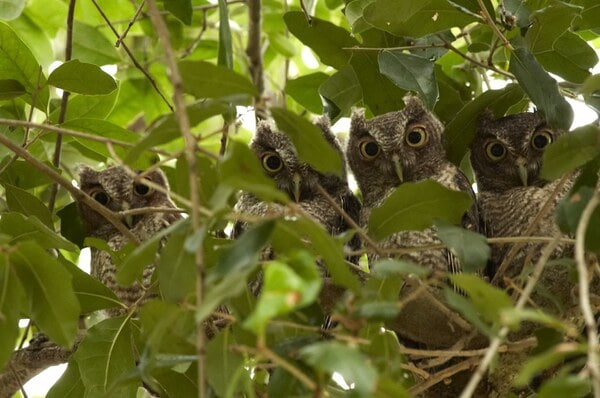
A group of owls is called a “parliament.” The name comes from old folklore that viewed owls as wise, calm, and almost council-like in the way they observe their surroundings. In nature, though, most owls don’t stay in groups-they hunt and live alone. Only a few species gather during winter or at shared roosting spots, and scientists simply call these groups roosts or aggregations, not parliaments.
So while “parliament” is the word people commonly use, the reality is that owl groups are rare, and the term mostly reflects culture and language, not everyday owl behavior.
The Meaning Behind the Word “Parliament” and How It Became Linked to Owls
The word parliament was tied to owls long before people understood their biology. Writers in medieval Europe often portrayed owls as quiet observers of the night, birds that seemed to watch the world with patience rather than noise. Their stillness and steady gaze made them appear thoughtful to humans, and that idea blended with even older beliefs from ancient Greece, where the Little Owl was closely associated with Athena, the goddess of wisdom.
As these ideas moved through literature, the image of owls sitting together like thoughtful council members began to take shape. Early English storytellers were fond of giving animals memorable collective names, and parliament felt like a natural fit for a creature already connected with wisdom and deliberation. The term resurfaced in modern culture when C. S. Lewis used it in one of the Narnia books, introducing it to a new generation of readers who embraced the idea.
Although most dictionaries now list parliament as the accepted collective noun, it is important to understand where it really comes from. The name did not grow out of scientific study, and biologists do not use it when describing owl behavior in the field. It is a creation of language and storytelling, not of ecology, and that is part of what makes it so charming.
Do Different Owl Species Form Groups? What Science Says
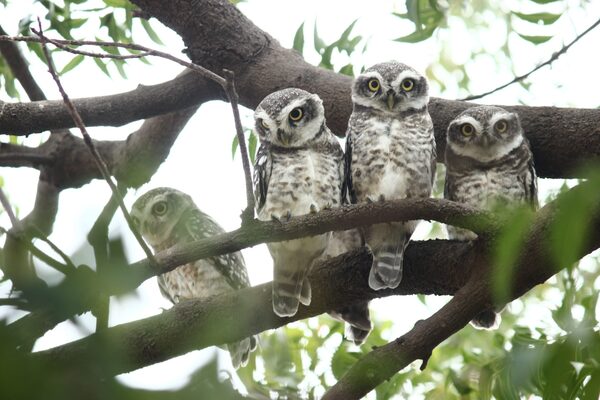
Most owls live their lives alone. They defend territory on their own, hunt without help and usually avoid unnecessary interaction once the breeding season has passed. This solitary nature is one reason people are often surprised to learn that the term parliament does not reflect typical owl behavior. In reality, groups of owls are rare and appear only under very specific conditions.
One of the best documented examples comes from the Long eared Owl. During winter, when temperatures drop and energy must be conserved, these owls sometimes gather in what biologists call communal roosts. Several individuals may rest together in the same cluster of trees because the shared shelter helps them stay warm and protected. This seasonal grouping is practical rather than social, and it does not continue once conditions improve.
Other species, such as Great Horned Owls, Barred Owls and Barn Owls, do not form long lasting groups at all. At most, young siblings might remain near each other for a brief period after leaving the nest before they disperse to find their own territories. In scientific writing, these temporary gatherings are described simply as roosts or aggregations, terms that reflect what is actually observed in the field. They also avoid suggesting that owls flock or coordinate the way geese or starlings do.
So while the image of a parliament suggests a stable and social group, the real behavior of owls paints a much quieter picture. They are solitary birds with occasional, short lived moments of proximity that are driven by weather, safety or shared resources rather than by any desire to form a group.
How Culture and Folklore Shaped the Words We Use for Owl Gatherings
Many of the names we use for animal groups grew out of storytelling rather than scientific observation, and owls are no exception. In fifteenth century England, writers enjoyed creating imaginative and poetic collective nouns that captured the personality or symbolism of different animals.
This was the same period that gave us phrases like a murder of crows and a charm of finches, so a parliament of owls fit comfortably within that creative tradition. These names were never meant to describe real behavior but were crafted to be memorable and expressive.

Owls naturally lent themselves to a term connected with discussion or decision making. Their forward-facing eyes, their steady, watchful posture, and their habit of sitting quietly for long periods made them appear thoughtful to those who observed them. Across different cultures, owls carried rich symbolic meaning. Some saw them as guides to wisdom, while others viewed them as mysterious creatures of the night who understood things unseen traits that often lead people to ask Are Owls Smart when interpreting their behavior.
The word parliament has survived for a simple reason. It is a charming, easy to remember phrase that adds a touch of personality to a bird that already fascinates people. Even though scientists rely on practical terms like roost or aggregation, the cultural name continues to thrive in everyday conversation. It lives on because it reflects the way humans have always woven stories and symbolism into the natural world.