
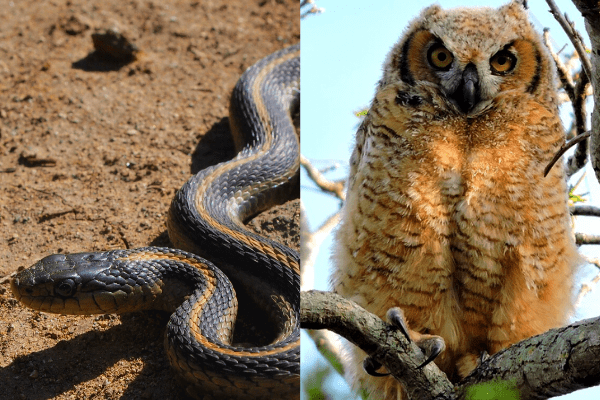
Yes-owls do eat snakes, but only certain species hunt them frequently, and snakes make up a small but important part of a diverse diet. Snake-eating behavior is opportunistic, influenced by prey availability, region, owl size, and hunting conditions. Larger owls such as the Great Horned Owl are the most capable snake predators and have been documented consuming both venomous and non-venomous species.
Owls remain highly effective nocturnal hunters, and snake predation is one more demonstration of their adaptability within the ecosystem.
Across North America and other parts of the world, documented prey analysis shows that larger owls, particularly the Great Horned Owl, are among the most effective snake-hunters, while smaller species eat snakes occasionally only when the opportunity arises.
Which Owls Include Snakes in Their Menu- and Why
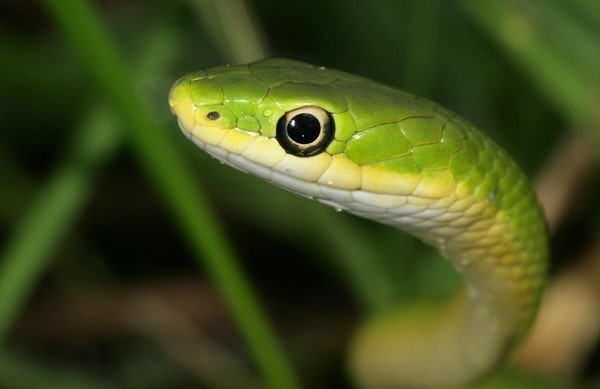
Owls eat snakes primarily when they are available and easy to overpower. This behavior is opportunistic, not specialized hunting. Their powerful talons, silent flight, accurate depth perception, and strong beaks allow them to subdue elongated and wriggling prey such as snakes.
Examples of owl species known to eat snakes
Great Horned Owl-One of the most documented snake-eating owls. Scientific analyses of prey remains show that they consume a wide range of snakes, including rat snakes, garter snakes, and even venomous rattlesnakes and copperheads when size allows. Their strength gives them a major advantage over ground-moving reptiles.
Barred Owl-An opportunistic hunter recorded eating reptiles, amphibians, and occasionally snakes while primarily relying on small mammals.
Barn Owl– While their diet is dominated by rodents, they may take small snakes when accessible in agricultural or grassland territories where prey moves near open ground.
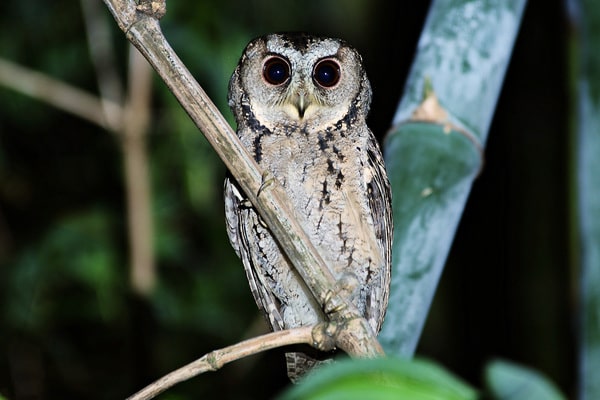
Eastern & Western Screech Owls– Mostly hunters of insects and small mammals, but capable of catching small snakes when prey availability shifts in breeding season or summer months.
Not every owl hunts snakes, and snake-eating behavior varies greatly even within the same species depending on region and habitat.
Not All Owls Are Snake-Eaters: Understanding Their Diet Diversity
Even for known snake-eating species, snakes are not a primary food source. Multiple diet studies show that mice, voles, shrews, rabbits, birds, insects, and occasionally fish usually dominate the owl diet.
Why owls only sometimes hunt snakes
- Risk– Large or venomous snakes can injure or kill attacking owls. Field reports include rare cases where constrictor snakes coiled and strangled owls during defense.
- Energy return– Small mammals provide more meat with less danger than many reptiles.
- Habitat factors– Owls living in colder climates rarely encounter snakes.
This makes snake-hunting a tactical choice, not a staple.
Do Venomous Snakes Deter Owls? What Science Says
Owls are known to consume both venomous and non-venomous snakes. Venom generally does not affect owls when ingested, because venom must enter the bloodstream to be harmful, not the digestive tract. What matters most is size and striking power, not venom alone.
The Great Horned Owl is the most frequently documented predator of venomous snakes such as rattlesnakes. Their dense feathers provide some natural protection from bites, but it is still a dangerous encounter, and owls rely on a precision strike designed to immobilize the snake instantly. This kind of opportunistic hunting also explains why questions like Do Owls Eat Fish arise, as large owls will take a wide range of prey when conditions allow.
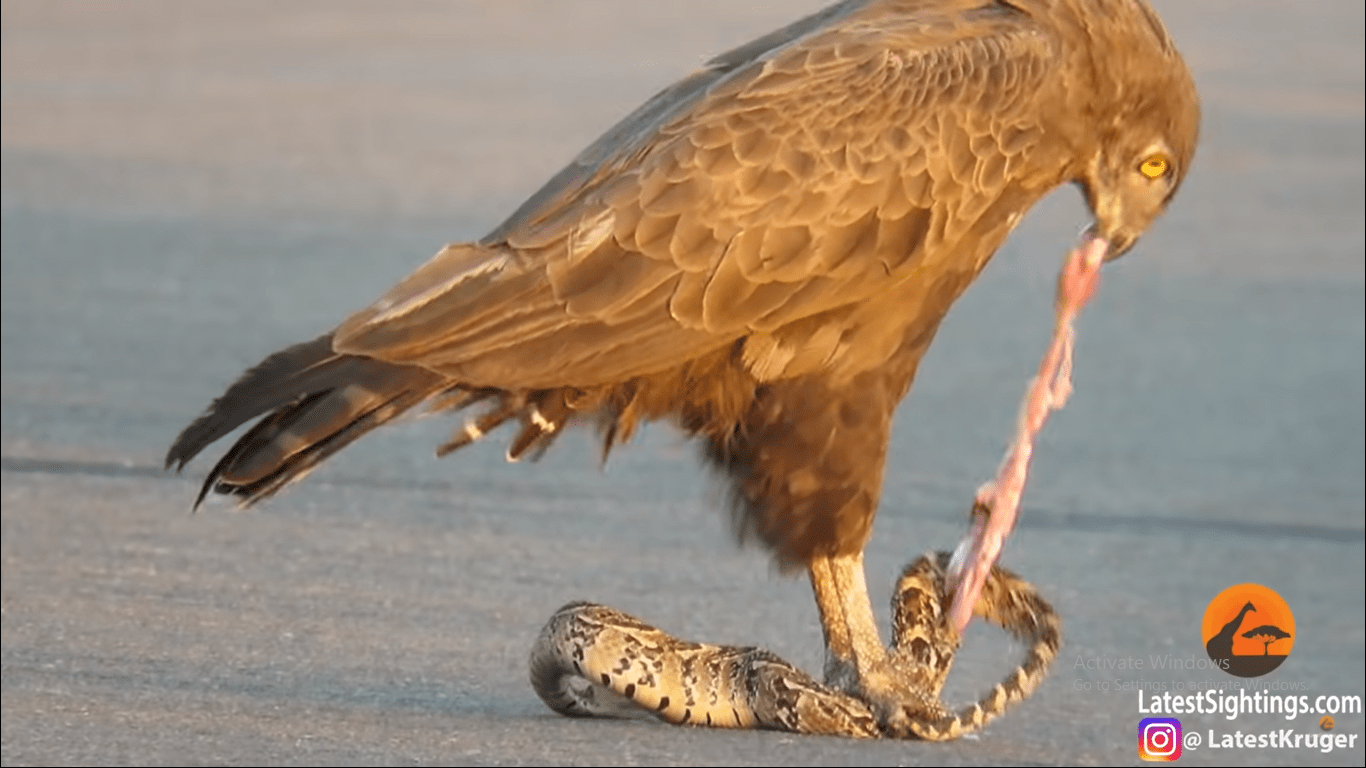
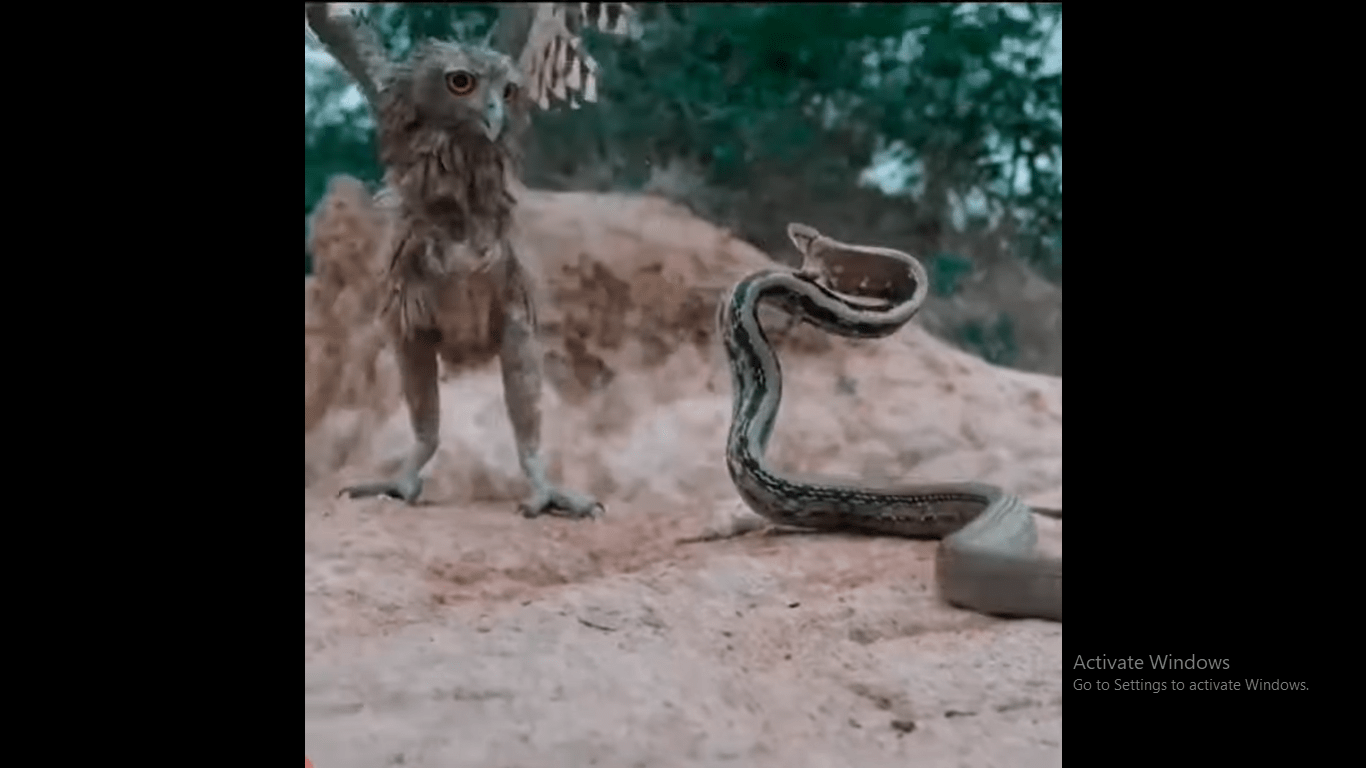
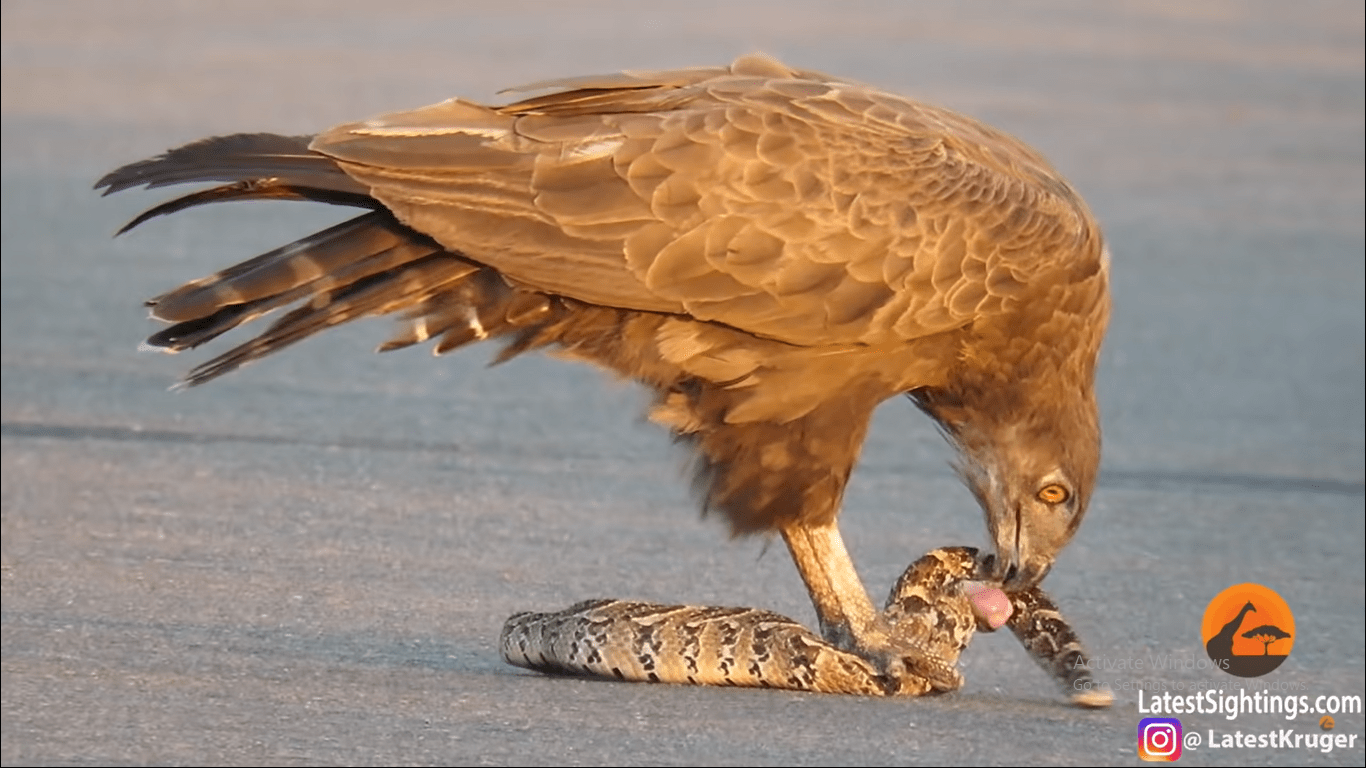
In most cases, owls use:
- A surprise downward strike
- Crushing force from talons
- Quick relocation to a safe perch before consumption
Ecological Role: How Owls Help Control Snake Populations
Owls serve as natural pest control agents. By hunting snakes where populations rise, they help maintain ecological balance and reduce human–wildlife conflict in rural areas, farms, and suburban spaces. They are part of a network of predators including hawks, eagles, badgers, and foxes that regulate snake numbers.
What Happens When Owl Populations Decline?
Areas experiencing owl population drops often see increases in rodents and sometimes snake populations, influencing crop damage, disease transmission, and ecological imbalance. Removing top predators frequently disrupts food webs and allows prey species to expand aggressively.
News Evidence: Documented Incidents of Owls Eating Snakes
1. A nest-cam video from New York (USA) shows a Barred Owl delivering a garter-snake to its nest- concrete, visual evidence that some owls eat snakes. Click here
2. The Owlet and the Snake-A Cover Story to Remember : Recounts a case of a Great Horned Owl owlet battling a garter snake; shows snake-eating behavior in wild. Click here
3. 2025 article Snake’s worst nightmare: 7 animal predators that make serpents their snack- Mentions owls (e.g. Great Horned Owl, Screech Owl, Barred Owl) as known snake-hunters. Click here
4. 2025 scientific‐observation note on Eurasian Scops Owl bringing live “worm snakes” into nests-Though in Turkey, this counts as recent, peer-reviewed evidence of owl-snake interactions. Click here
Related Post
Rufous Owl : A to Z Guide
What Does A White Owl Mean : A to Z Explanation
Do Owls Eat Birds : Let’s Understand Why
Baby Great Horned Owl – A to Z Guide
Resources
- blogs.ifas.ufl.edu
- wildexplained.com