
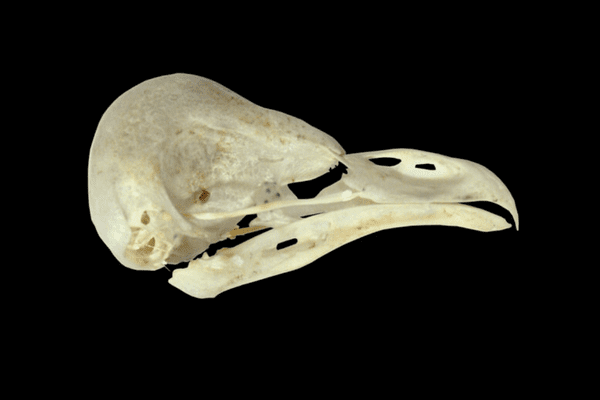
A barn owl’s skull is shaped in a way that directly supports how it hunts, hears, and survives at night. The bones are light, the facial area is curved like a sound collector, and the ears are placed at slightly different heights, a real adaptation that helps the owl pinpoint prey by listening alone.
Inside the skull there is more room for the hearing system compared to many other birds, which shows how strongly this species depends on sound. By looking closely at the skull’s shape, structure, and hidden adaptations, we can clearly understand why barn owls are such accurate and silent hunters. This article explains the key bones, the unique traits, and the scientific reasons behind these features in a simple and human way.
The Barn Owl Skull Explained: Shape, Structure, and the Science Behind It
The skull of a barn owl is shaped with one clear purpose in mind. It supports a life spent hunting in dim light where sound matters just as much as sight. Like most birds, barn owls have lightweight bones, but their skull takes this idea further. The bones are highly pneumatized, meaning they contain tiny air spaces that make the skull even lighter without sacrificing strength. This reduced weight plays a quiet but important role in how effortlessly a barn owl can glide and remain silent while flying.
The front of the skull is gently curved to support the owl’s facial disc. Many people think of the disc as a ring of feathers, but its ability to capture sound actually begins with the shape of the bone beneath those feathers. This curved structure helps guide incoming sound toward the ears, which is essential for a bird that often hunts without relying on vision at all.
The eyes add another layer to the skull’s design. Barn owls have forward facing eyes that sit in large, rounded sockets. Their eyes do not rotate much, so the skull must provide a wide and stable platform that keeps their field of vision aligned. Even though barn owls are better known for their extraordinary hearing, the skull still gives them the depth perception they need when they are approaching prey or navigating low light environments.
Every part of the skull works together. The thin, air filled bones lighten the head for silent movement. The curved front supports the owl’s sound collecting facial disc. The oversized eye sockets show how the species balances hearing with vision. And the strong beak attachment points reveal how efficiently barn owls can grip and consume their prey. When viewed as a whole, the barn owl skull is not just a set of bones. It is a finely tuned structure shaped by the demands of night hunting.
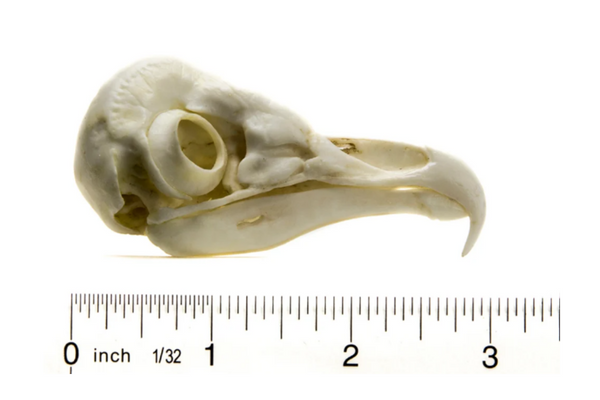
A Closer Look at the Barn Owl Skull and the Adaptations Hidden Inside It
When scientists study the skull of a barn owl, one feature stands out almost immediately. The ear openings are not placed at the same height. One sits slightly higher than the other, and this asymmetry is not a flaw or a coincidence. It is a well documented adaptation that gives barn owls an extraordinary ability to detect tiny differences in how sound reaches each ear. These differences allow the owl to understand both the height and position of a sound source, which is why barn owls can locate prey even when they cannot see it at all.
The inside of the skull tells an equally interesting story. There is noticeably more space devoted to the structures involved in hearing. Research shows that barn owls have an enlarged auditory region compared to many other birds. This expanded area allows them to process extremely subtle sound cues, such as the quiet rustling of a mouse moving under leaves or snow. It is one of the main reasons their hunting success remains high even in complete darkness.
The bone structure itself also contributes to the owl’s accuracy. The shape of the skull supports the funnel-like role of the facial disc, which works as a natural sound collector. By guiding sound toward the ear openings, the skull and the feather arrangement work together to sharpen the owl’s sense of direction. At the same time, the overall weight of the skull is kept low because of the thin, lightly built bones of the Owl Skeleton. This reduced weight helps the bird fly more silently and conserve energy while patrolling open fields or hunting along tree lines.
Taken together, these adaptations show just how deeply the barn owl’s survival depends on hearing. The uneven placement of the ears, the enlarged internal chambers, the supportive bone contours, and the lightweight structure all combine to create a skull that is perfectly suited for listening with incredible precision.
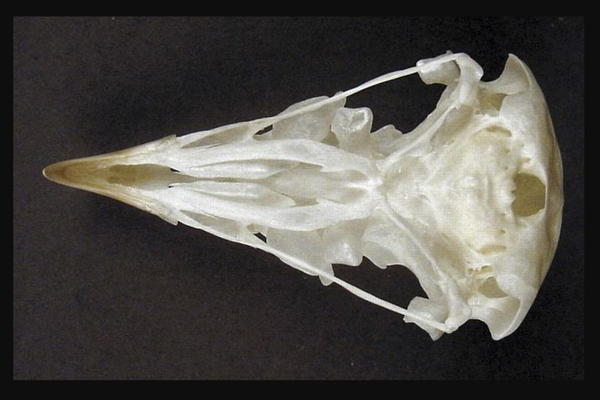
The Barn Owl Skull: Key Bones, Unique Traits, and What They Reveal About the Species
Examining the individual bones of a barn owl skull gives a surprisingly clear picture of how this bird lives and hunts. At the front, the premaxilla and maxilla form the foundation of the hooked beak, a shape designed for gripping and tearing small mammals. The connection to the quadrate bone allows the beak to open wide while remaining strong enough to break through fur and bone. These are not just structural details. They reflect a diet built around catching and consuming prey whole.
The back of the skull offers a different kind of insight. It is rounded and smooth, creating a stable connection point for the cervical vertebrae. This joint is part of the reason owls can rotate their heads so far without damaging blood vessels or nervous tissue. While the full 270 degree rotation comes from the flexibility in the neck vertebrae, the skull’s smooth base and wide articulation area make that movement safe and controlled.
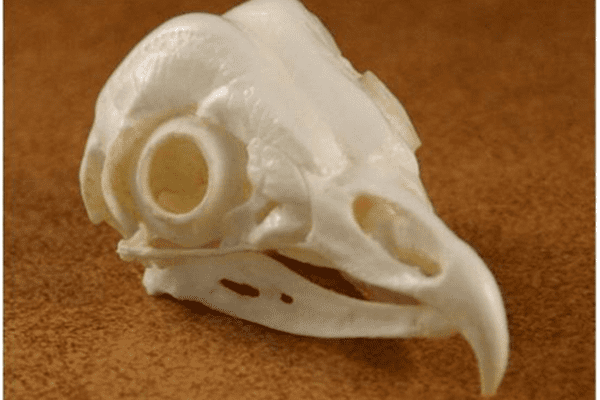
There is also a story in the size and shape of the eye sockets. Barn owls have large, forward facing orbits that hold their well known dark eyes. These oversized sockets show how important vision is in low light, even though the species is famous for its hearing. The skull makes room for the eyes to stay fixed forward, giving the owl strong depth perception when tracking movement at night.
At the same time, the skull does not let you forget how essential sound is to the species. The asymmetrical ear openings and the expanded auditory space inside the skull show just how finely tuned their hearing system is. The shape and placement of these bones reveal a bird that depends on sound as its primary guide in darkness.
When viewed together, these traits form a complete picture. The hooked beak bones hint at its diet. The large orbits point to its visual needs. The rounded skull base explains its remarkable head rotation. And the uneven ears confirm the owl’s reliance on acoustic precision. Each bone tells a part of the story, and all of them reveal a species shaped by the demands of nocturnal hunting.
Related Post