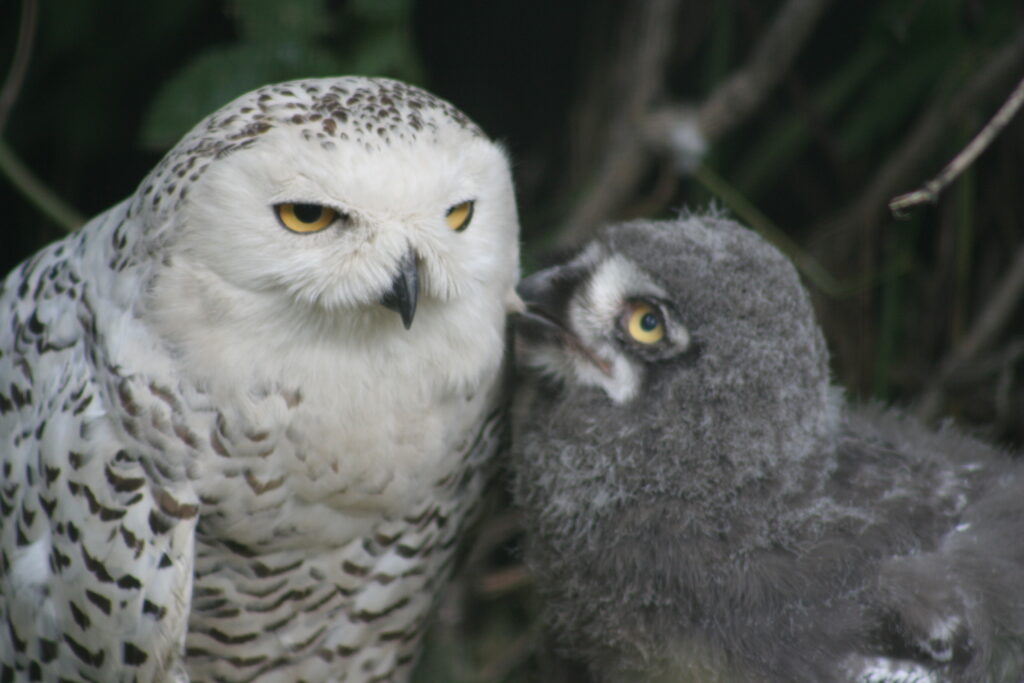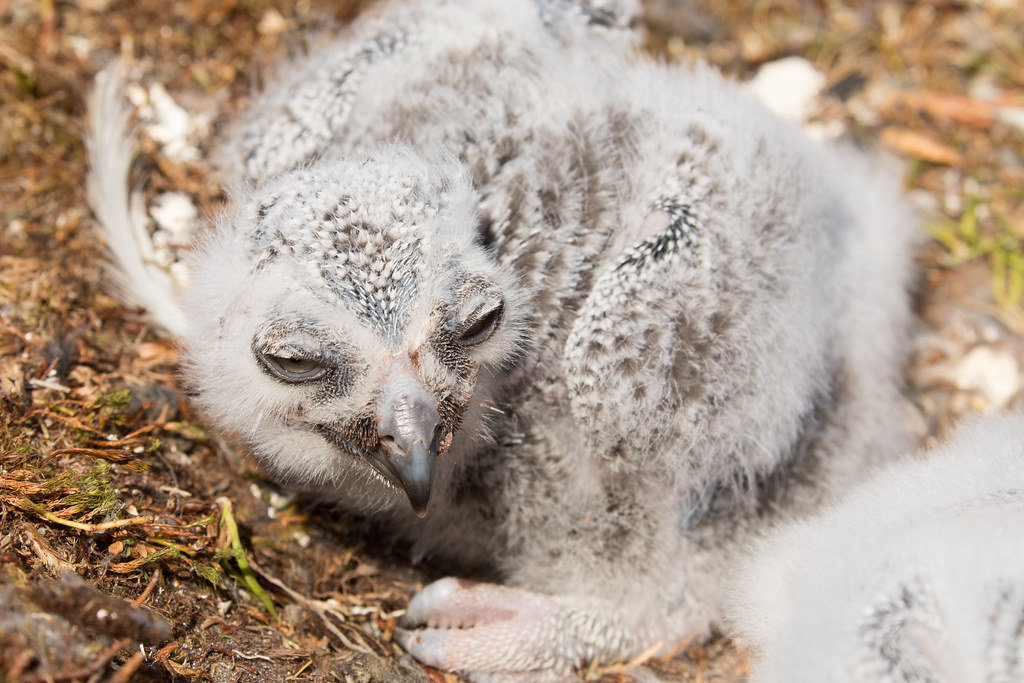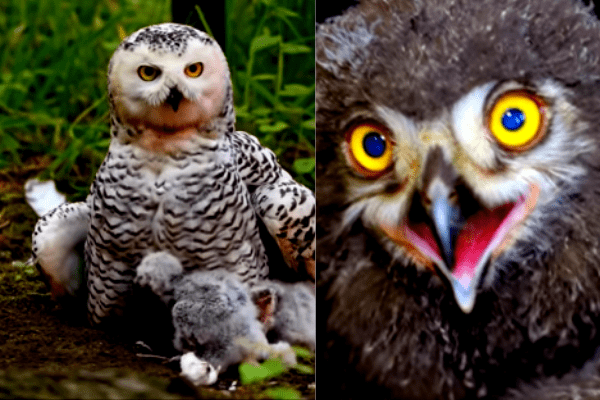
A Baby Snowy Owl does not arrive as the bright white bird people expect. In its earliest days, it looks more like a small, fluffy ball of gray down sitting on the Arctic ground, quietly trying to stay warm. These chicks are born into one of the harshest environments on Earth, where there are no trees, little shelter, and food availability can change quickly.
During their first weeks, baby Snowy Owls grow fast, gain strength, and begin moving around the tundra long before they can fly. Their survival depends heavily on how many lemmings are available, how stable the weather remains, and how well their parents can hunt. Many challenges appear early, and not every chick makes it through the first winter. Those that do are the result of careful timing, rapid growth, and a surprising amount of resilience packed into a very small body.
Baby Snowy Owl Before Its White Feathers Grow
A baby Snowy Owl enters the world looking surprisingly dark. Instead of white feathers, the chick is wrapped in thick gray down that gives it a smudged, almost soot-colored appearance against the tundra. This isn’t a mistake or a temporary oddity. The darker down helps the chick hold onto heat during its first days of life, when staying warm matters far more than blending into the landscape. White feathers come much later.
In the first week, the chick’s eyes open, but seeing is not yet its strongest sense. Movement around the nest is slow and clumsy, limited to small shifts of the body and an occasional stretch. Most of the chick’s awareness comes from touch and sound, especially the presence of its parents. Without the insulating warmth of the brooding female, a young chick can lose heat quickly, even during the Arctic summer.
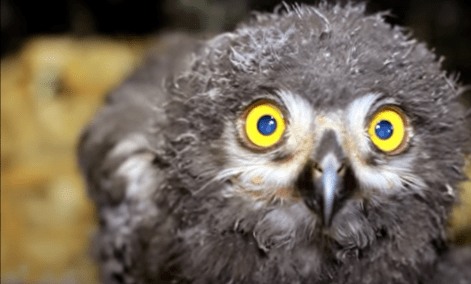
The nest itself offers little protection. Snowy Owls do not build elevated nests or use trees. Instead, the eggs hatch in a shallow scrape on open ground, exposed to wind and weather. Because of this, the chick’s body stays pressed low, its down puffed up to trap air and reduce heat loss. At this stage, the chick cannot regulate its own temperature and survives largely because the female remains close, sheltering it from the cold and feeding it prey brought by the male.
Only after several weeks does the familiar white plumage begin to appear. Until then, a baby Snowy Owl is less a symbol of Arctic beauty and more a small, heat-dependent survivor, built for endurance long before appearance.
How Baby Snowy Owls Grow in Their First Weeks
A Snowy Owl chick does not have the luxury of growing slowly. The Arctic summer is short, and the window for development closes quickly. From the moment it hatches, a chick begins gaining size at a pace that surprises even experienced field researchers. Within the first two weeks, its body becomes noticeably heavier and more solid, its movements less tentative, and its ability to sit upright improves. This rapid growth is not a sign of comfort but of necessity.
As the chick grows, a second layer of down starts to emerge beneath the first. This new down is paler and denser, adding insulation as the chick spends more time exposed to wind and fluctuating temperatures. True feathers are still weeks away, but the chick is already preparing for greater independence. Its legs strengthen early, allowing it to support its weight and move with purpose rather than simply shifting in place.
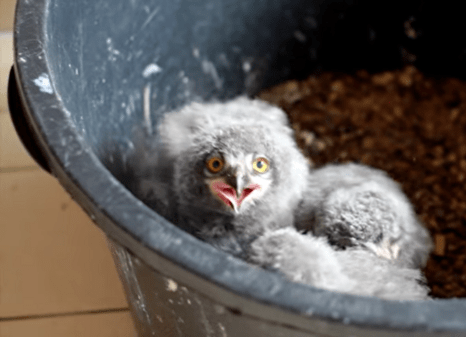
Unlike owls that grow up in trees or cavities, Snowy Owl chicks do not stay confined to a nest. Long before they can fly, they begin to walk away from the original scrape, sometimes traveling several meters across open ground. This movement is gradual and cautious, not a sudden dispersal. By the third or fourth week, many chicks are capable of navigating the tundra on foot, spreading out while remaining within reach of their parents’ hunting range.
This early mobility serves a clear purpose. Spacing out reduces the chance that a single predator, storm, or flooding event will wipe out an entire brood. Growth during these weeks is not just about getting bigger; it is about becoming sturdy enough to survive in a landscape that offers little protection and even less margin for error.
Challenges Baby Snowy Owls Face Early in Life
From the moment they hatch, baby Snowy Owls live with very little margin for error. Survival depends less on strength or appearance and more on conditions the chick cannot control. Food availability sits at the center of everything. Snowy Owls rely heavily on lemmings, and when lemming populations decline, even experienced parents struggle to bring enough prey back to the nest. In poor years, some chicks simply grow more slowly, while others do not survive at all.
Weather adds another layer of risk. Snowy Owl chicks grow on open tundra, where there is no shelter from rain, wind, or sudden temperature drops. Prolonged cold or wet conditions can drain body heat faster than a young chick can replace it, especially before its insulating down thickens. Even during the Arctic summer, hypothermia remains a real threat, particularly in the first weeks of life.
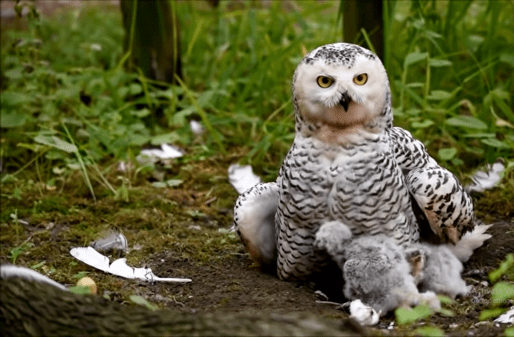
Competition within the nest is quieter but no less important. Snowy Owl eggs hatch several days apart, creating clear size differences between siblings. Older chicks are stronger, louder, and more effective at securing food when prey is limited. This staggered hatching acts as a form of natural insurance, allowing at least some chicks to survive in difficult years, but it also means younger siblings face a higher risk of starvation.
As chicks grow and begin to move away from the nest scrape, predation becomes a growing concern. Arctic foxes, gulls, and other opportunistic predators can spot ground-dwelling chicks from a distance. Once scattered across the tundra, young Snowy Owls must rely on early mobility, parental vigilance, and sheer luck to avoid becoming easy targets.
Early life for a baby Snowy Owl is shaped less by dramatic moments and more by constant pressure. Every stage brings a different challenge, and survival reflects a narrow balance between food, weather, timing, and resilience.