
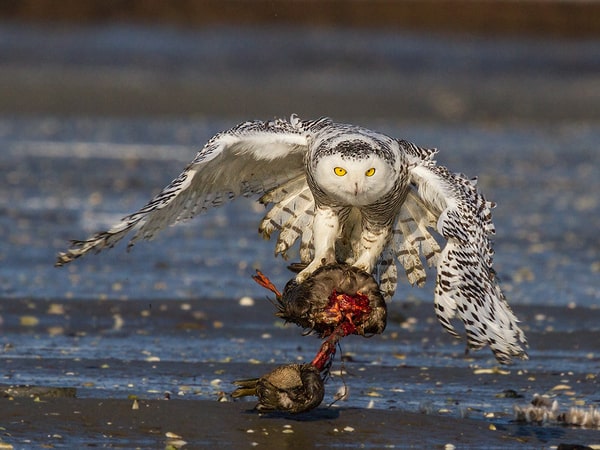
Owls do eat birds, but not all owls rely on them the same way. What researchers consistently find in pellet studies and field observations is that bird hunting varies a lot from species to species.
For example, bigger owls, such as the Great Horned Owl, regularly take birds everything from sleeping ducks to crows and even other raptors. Medium-sized owls eat birds less often, usually picking off smaller songbirds when the opportunity shows up. And small owls, like Screech Owls or Burrowing Owls, mostly stick to insects and mice, eating birds only occasionally.
Scientists also note that owls rarely chase birds the way hawks do. Instead, they use the advantages they are known for: silent flight, excellent night vision, and the ability to strike quickly while a bird is resting. Because most birds are inactive or asleep at night, owls don’t have to outfly them just catch them by surprise.
How Owls Really Hunt Birds: Their Night Tactics, Favorite Prey & What Science Reveals
If you’ve ever watched a hawk chase birds in daylight, forget that picture entirely. Owls don’t hunt birds by out-flying them.
Instead, they hunt like shadows.
Researchers from the Cornell Lab describe owl hunting not as a chase, but as a quiet takeover of the night. Birds that spend the day alert and agile become still, vulnerable forms after dark and owls have evolved perfectly to take advantage of that moment.
How Owls Actually Pull It Off
Imagine a sparrow or a starling settling into a dense bush for the night. Its eyes close. The forest is calm.
Then, without warning… a soft rush of air, and the bird is lifted from its branch before it even wakes.
This is how scientists describe typical owl predation:
short, sudden, silent strikes not long pursuits.
Owls succeed because of three powerful adaptations confirmed by field studies:
1. Silent Flight (documented across multiple owl species)
Their wings are built with special fringes that break turbulence. This is why researchers say owls can “fly without announcing themselves.” A sleeping bird never hears the approach.
2. Night Vision & Hearing (extensively documented)
Birds shut down visually at night. Owls do not.
Their low-light eyesight and facial disk hearing let them pinpoint a bird’s exact position, even inside thick cover.
3. Ambush, Not Chase
Most birds can outfly an owl in daylight. So owls wait until birds are perched, roosting, or drowsy, then strike quickly from above.
What Birds Do Owls Commonly Eat? (Based on pellet studies)
Different owls prefer different prey, but across North America and Europe, research consistently shows these birds appearing in owl pellets:
- Small songbirds (sparrows, starlings, finches, larks)
- Ground-feeding birds (quail, pigeons, doves)
- Waterbirds (ducks, coots- mostly by larger owls)
- Crows and jays (frequent prey of Great Horned Owls)
- Other raptors in rare cases (hawks, even owls well documented in Great Horned Owl diets)
Owls don’t choose birds because they’re challenging. They choose them because birds are abundant, especially near human landscapes.
Bird-Eating Owls: The Species That Hunt Birds, How Often They Do It & Why It Matters in the Wild
Not all owls hunt birds regularly, but some species show a clear pattern of doing so in long-term dietary studies. Researchers examining pellets, tracking movements, and observing nighttime behavior consistently identify a few owls for whom birds are a noticeable sometimes significant part of the diet.
Great Horned Owl: A Reliable Bird Predator
Across North America, the Great Horned Owl stands out in research because of its broad prey range.
Pellet analyses often include feathers from ducks, crows, pigeons, jays, and occasionally even smaller owls.
This species is an adaptable, powerful hunter, and its size allows it to take medium-sized birds that many owls cannot. While mammals remain the majority of its diet, birds appear often enough to be considered a regular component.
Barred Owls & Tawny Owls: Flexible Foragers
These owls primarily feed on small mammals, yet they shift their diet when conditions change. In winter or during periods when rodents are less available, pellet studies show an increase in small birds in their diet.
They usually take birds that roost low or are easier to access at night. They do not depend on birds, but they make use of them when the opportunity aligns.
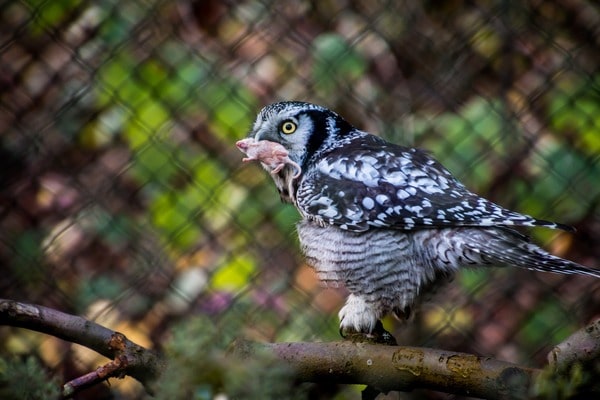
Northern Hawk Owl: A Daylight Bird Hunter
The Northern Hawk Owl is unusual because it often hunts during the day.
Field observations document this species catching grouse, jays, and various small birds with active pursuit rather than nighttime ambush.
Its behavior is closer to that of diurnal raptors, and birds naturally make up a larger portion of its prey compared to most other owls.
Screech Owls & Little Owls: Small Owls With Occasional Bird Prey
Though insects and small mammals dominate their diet, small owls like Screech Owls and Little Owls sometimes take small birds, nestlings, or fledglings.
This behavior is most common during the breeding season, when their nutritional needs increase. It is opportunistic, not routine, but still well-documented in diet studies.
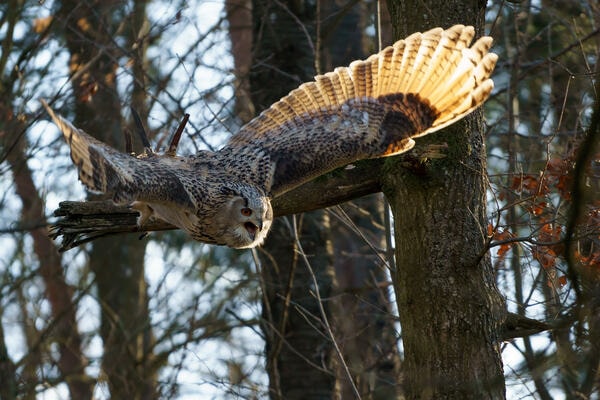
Eurasian Eagle-Owl: A Large Predator With a Broad Bird Diet
In Europe and Asia, the Eurasian Eagle-Owl frequently includes birds in its diet.
Studies report a range of bird species ducks, gulls, pigeons, woodpeckers, and others depending on what is available in the region. Its large size gives it access to prey that smaller owls cannot handle, including sizable waterbirds.
Why This Behavior Matters in the Wild
Bird predation by owls plays a functional role in ecosystems. By taking vulnerable or slow individuals, owls help maintain healthy bird populations. Their predation also reduces the impact of fast-breeding or invasive species, such as starlings or urban pigeons, which can outcompete native birds one of the reasons owls are classified as birds of prey when people ask Are Owls Raptors.
In agricultural areas, controlling certain bird populations also indirectly reduces crop stress. Owls are not primary bird specialists, but for many species, birds are an important and naturally integrated part of their ecological role.
We got a video clip of how Owl attack Bird
Resource
- kidzfeed.com
- animalsdiet.com