
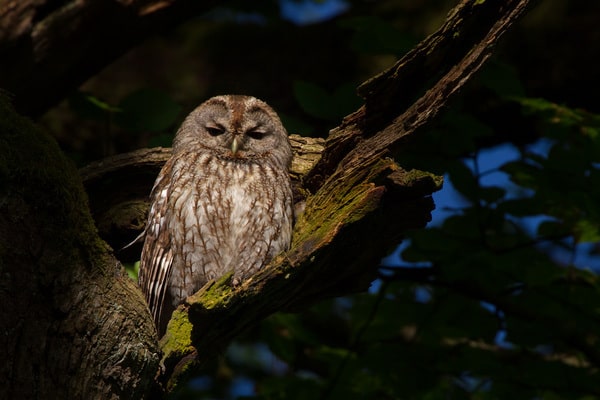
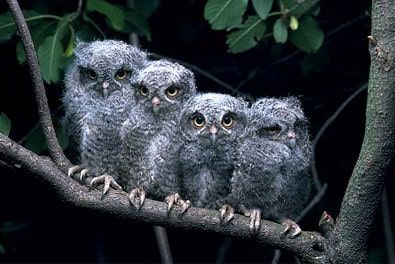
Baby Western Screech Owls spend their early life out of sight, inside tree cavities. After hatching, the chicks are weak, lightly feathered, and unable to feed themselves. They remain in the nest for several weeks while adult owls bring food and keep them warm, especially during cool or wet nights.
Growth is fast during this period. Chicks gain weight quickly, develop down feathers first, and later grow the wing and tail feathers needed for flight. The nestling stage is also when most losses occur. Predators, exposure to bad weather, and limited food are the main causes of chick mortality.
What happens during these first weeks determines whether a young Western Screech Owl survives long enough to leave the nest and begin hunting on its own. Suitable nesting cavities and steady prey availability are essential during this stage.
Habitat of Baby Western Screech Owls
Baby Western Screech Owls begin life tucked away inside tree cavities found in wooded places with older trees. This might be a forest near a stream, a patch of woodland along a field, or even a quiet neighborhood where large trees have been left standing for decades. The chicks never explore these surroundings themselves. For them, the world is the inside of one dark cavity, and everything they experience depends on where their parents chose to nest.
That choice matters more than how large or wild the surrounding area looks. Cavities in older or partly decayed trees tend to stay warmer and more stable than those in younger trees, which helps chicks cope with cold nights and bad weather. In areas where mature trees have been removed, breeding becomes harder, even if food is still available. In those places, nest boxes or the few remaining old trees often make the difference between owls raising young or not nesting at all.
Nest Sites Used During Chick Rearing
Western Screech Owls do not construct nests in the usual sense. Instead, eggs are laid directly inside a cavity, and the chicks remain there from hatching until the day they leave the nest. There is no added lining or structure. The cavity itself serves as the nest.
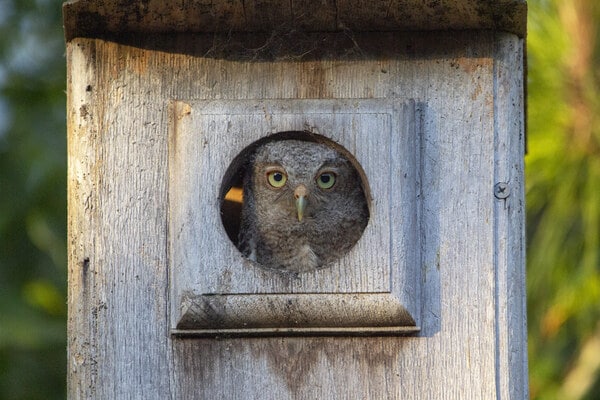
Most of these sites are natural openings in trees, often formed by decay or left behind by woodpeckers. Older deciduous trees are used most often, especially those with softened interiors that provide depth and shelter. In areas where natural cavities are scarce, owls may also use well-placed nest boxes, provided they are deep enough and have a narrow entrance.
The shape of the cavity matters. Deeper cavities offer better insulation and make it harder for predators to reach inside. Open or shallow cavities expose chicks to cold, heat, and predators, reducing the chances that they will survive to fledging.
Food Given to Nestlings
Baby Western Screech Owls are fed entirely by their parents and receive only animal prey. What they eat depends largely on what is available around the nest, which can vary from one habitat to another. Insects make up a large part of the diet early on, especially beetles, moths, and other night-active insects that are easy for adults to catch nearby.
Early Nestling Stage
Chicks hatch with sparse down and limited muscle strength. Early growth focuses on gaining body mass rather than movement.
Rapid Weight Gain
Frequent feeding supports fast increases in body mass while bones and muscles strengthen inside the cavity.
Increased Activity
Chicks become more alert and mobile, shifting position and reacting strongly during feeding visits.
Near Adult Size
Many chicks approach adult body mass before leaving the nest, even though they remain vulnerable until fully feathered.
As hunting opportunities allow, adults also bring small mammals such as mice and voles, along with the occasional small bird. In wetter environments, amphibians or small reptiles may be included as well. Very young chicks are given smaller prey or pieces of food that adults tear apart before feeding. As the chicks grow and become stronger, parents gradually deliver larger, intact prey.
Feeding by Adult Owls
Adult Western Screech Owls hunt mostly at night and return to the nest many times to feed their chicks. During the first couple of weeks after hatching, feeding visits are frequent because the chicks are growing quickly and cannot tolerate long gaps between meals. Nights during this period are often busy, with adults moving back and forth between hunting areas and the nest cavity.
Both parents can be involved in feeding, though early in the nesting period the male often supplies much of the food while the female stays with the chicks. As the young owls grow, adults adjust what they bring, offering larger prey that matches the chicks’ increasing size and strength. Feeding does not stop when the chicks leave the nest. For several weeks after fledging, young owls continue to rely on their parents while they learn to hunt on their own.
When prey is scarce, growth slows. Smaller chicks are especially vulnerable under these conditions, and not all broods survive periods of low food availability.
Physical Growth of Chicks
Physical growth in baby Western Screech Owls is fast and steady during the nestling period. In the first weeks after hatching, chicks gain weight quickly, often reaching close to adult body mass before they ever leave the nest. This rapid growth happens while they remain hidden inside the cavity, supported entirely by regular feeding from the adults.
At hatching, chicks are covered with sparse down and have little muscle strength. Over time, their bones strengthen, muscles develop, and their ability to maintain body temperature improves. As they grow, chicks become more active within the cavity, shifting position and responding more strongly to feeding visits. Even with this rapid development, they remain physically vulnerable until their feathers are well developed and they are capable of limited movement outside the nest.
Development of Feathers and Flight
Feather development in baby Western Screech Owls begins with soft down that provides limited insulation. As the chick grows, this down is gradually replaced by juvenile feathers. Body feathers appear first, while the longer wing and tail feathers develop later and continue growing even after the chick has left the nest.
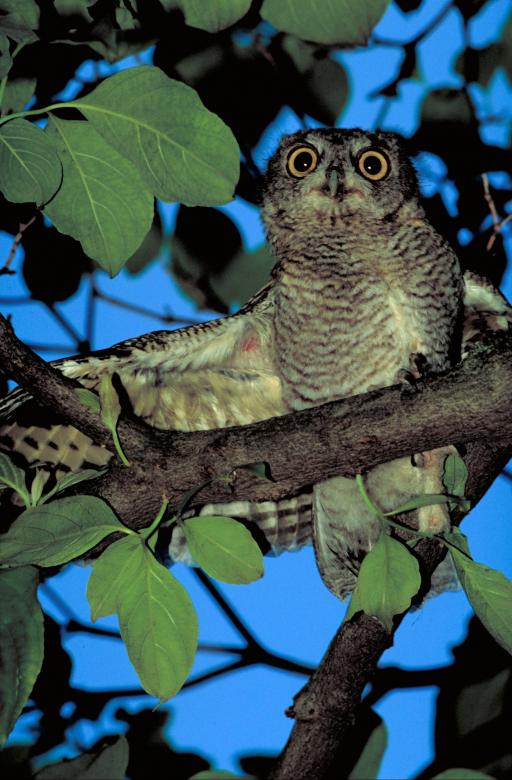
While still inside the cavity, chicks begin moving their wings, stretching and flapping in the confined space. These movements help build muscle and coordination but do not result in true flight. When the chick finally leaves the nest, it is not yet a skilled flier. Early flights are short and awkward, and young owls often rely on hopping, climbing, or brief glides between branches. Full flight control develops only after several more weeks of practice and continued care from the adults.
Behavior Inside the Nest
Life inside the nest is quiet and focused on survival. Baby Western Screech Owls spend much of their time resting, conserving energy between feedings. Movement is limited, especially early on, but increases as the chicks grow stronger and more alert.
When an adult returns with food, chicks respond with begging calls and increased activity. They also shift their position within the cavity to stay warm or avoid crowding, especially as their body temperature regulation improves. If the nest is disturbed, chicks may raise their heads, spread their wings slightly, or adopt a defensive posture. In nests with more than one chick, mild pecking or pushing can occur during feeding, particularly when food is limited. While this behavior is usually not severe, it can influence which chicks receive more food.
Predators of Chicks
Most losses of baby Western Screech Owls happen at the nest. Tree cavities offer protection, but they are not completely safe. If a predator can reach inside or force the opening wider, the chicks have little chance to escape.
Snakes are one of the most frequent threats because they can enter narrow cavities with ease. Mammals such as raccoons and squirrels are also a risk, especially when cavities are shallow or the entrance has widened over time. In a few cases, larger birds that can access tree holes may take chicks. The difference between a successful nest and a failed one often comes down to the cavity itself. Deeper cavities with small, intact entrances tend to protect chicks far better than open or deteriorating ones.
Survival After Leaving the Nest
Leaving the nest does not mean a young Western Screech Owl is independent. After fledging, juveniles stay close to the nest area and continue to rely on the adults for food and protection. This stage lasts for several weeks and is one of the most difficult periods in the owl’s life.
Early fledglings have limited flight ability and often move by short hops or awkward glides between branches. They are more exposed to predators and are still learning how to regulate their body temperature, especially during cool or wet weather. Hunting skills develop slowly, so young owls depend on adults to provide food while they practice catching prey on their own. Many do not survive their first year. Those that do gradually become more capable hunters and begin to disperse and establish territories.