
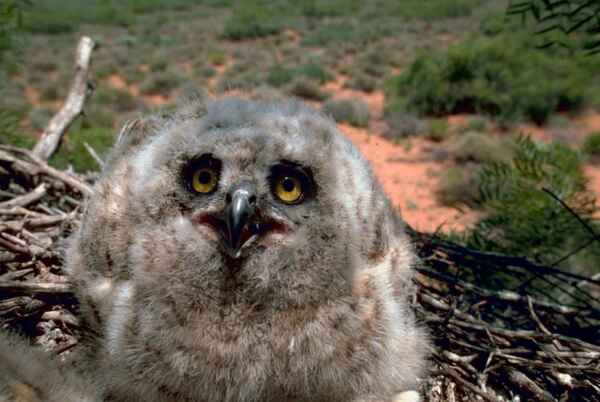
Baby Great Horned Owls those fluffy, wide-eyed owlets we see in spring begin life looking delicate, but they transform astonishingly fast. They hatch with closed eyes, soft down, and almost no strength, yet within weeks they’re climbing branches, exploring outside the nest, and testing the instincts they were born with.
Unlike many baby owls, Great Horned Owl chicks leave the nest before they can fly, using their oversized feet and awkward wing flaps to balance as they learn coordination. Their diet shifts quickly too: parents start by tearing tiny pieces of meat, then bring larger prey like rabbits and squirrels as the owlets grow. By five to six weeks, they can swallow whole meals on their own.
Their development is a blur helpless in week one, branching by week four, and taking first flights around week eight. Most amazing of all, they learn to hunt entirely through instinct, without any parental teaching.
What Makes a Baby Great Horned Owl So Different From Other Owl Chicks?
Baby Great Horned Owls-called owlets stand out from other owl species almost from the moment they hatch. They’re born with thick white down, large expressive eyes, and oversized feet that look comically disproportionate to their small bodies. But these features aren’t just cute they’re survival tools. Their giant feet and strong talons develop early, allowing them to grip branches long before they can fly, which is crucial for a species that leaves the nest unusually early.
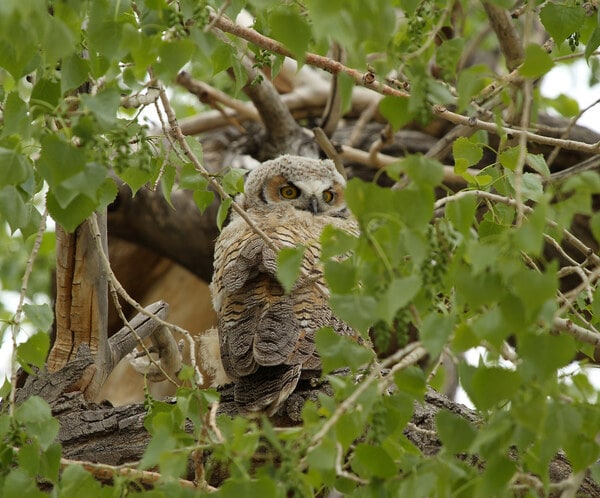
Unlike Barred Owls or Barn Owls, Great Horned Owl chicks begin exploring outside the nest in week four or five, often climbing to new perches or even ending up on the ground. This early independence is part of what makes them so adaptable and successful as predators later in life.
Key differences from other owl chicks:
- They “branch” (leave the nest area) before they can fly.
- They develop stronger talons earlier in life.
- They rely heavily on instinct rather than parental teaching.
- They tolerate colder temperatures due to thicker down.
What Baby Great Horned Owls Really Eat at Each Stage of Growth
A baby Great Horned Owl’s diet changes rapidly as its size, digestion, and hunting instincts develop. Parents both mother and father play an active role in feeding. The male hunts and delivers prey, while the female tears the food into manageable pieces for the young during the early weeks.
In the first stage of life, owlets cannot swallow large items, so meals are soft, small, and frequent. But as their throat and stomach enlarge, they transition to whole prey, eventually mimicking the diet of adult Great Horned Owls.
Diet by growth stage:
- 0–2 weeks: Soft, tiny pieces of mammals (mice, voles), torn by the mother.
- 2–4 weeks: Larger pieces of rabbit, squirrel, and small birds; still hand-fed.
- 4–6 weeks: Whole prey offered, including rats, quail, and small rabbits.
- 6–8 weeks: They begin tearing food themselves and swallowing whole meals.
- 8–12 weeks: Diet mirrors adults mammals, birds, reptiles, insects depending on what’s abundant.
Great Horned Owls have one of the broadest diets of any raptor, and this variety helps the young grow at record-breaking speed.
How Fast Do Great Horned Owl Chicks Grow? A Stunning Week-by-Week Breakdown
The growth rate of a baby Great Horned Owl is one of the fastest of any bird of prey in North America. They go from helpless fluff to fierce, coordinated juveniles in just a few months. This rapid development is essential for survival because the species nests early in the year, often in late winter, when temperatures are harsh and predators are active.
Here is their growth timeline based on wildlife biologists’ long-term observations:
Week-by-week development:
- Week 1: Eyes open; tiny movements; completely dependent on warmth.
- Week 2: Begin sitting upright; stronger neck muscles; louder begging calls.
- Week 3: Wing flapping starts; down deepens; curiosity increases.
- Week 4: Begin “branching” climbing and hopping around the nest area.
- Week 5: May leave nest entirely; strong grip allows safe climbing.
- Week 6–7: Start short glides and wing-assisted jumps.
- Week 8–9: First true flights begin; confidence increases dramatically.
- Week 10–12: Feathers nearly adult-like; learning survival behaviors.
By 12 weeks, an owlet looks like a smaller, fluffier version of an adult powerful, alert, and ready to begin hunting practice.
How Baby Great Horned Owls Build Hunting Skills Without Ever Being “Taught”
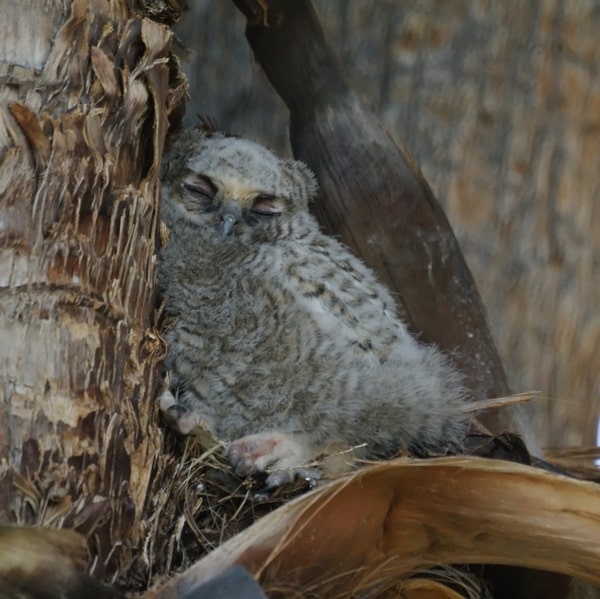
One of the most astonishing things about baby Great Horned Owls is how they grow into hunters without a single lesson from their parents. Adult owls never demonstrate how to stalk, swoop, or kill. They don’t bring live animals for “practice hunts.” Instead, every instinct an owlet needs is already built into its growing body and brain. These instincts simply switch on as the chick reaches the right stage of development.
You can see the first hints of this when an owlet begins branching. While exploring nearby limbs, they clumsily pounce on leaves, sticks, or anything that moves. It looks playful, almost like a kitten batting at a toy, but it’s actually the beginning of real hunting behavior. Each jump, each misstep, and each pounce helps them refine balance, timing, and accuracy. Even their oversized feet comically large on such a fluffy body are part of the design. They develop strong grip pressure early, long before their wings are fully ready for flight, so they can learn to hold onto prey securely.
At the same time, their senses sharpen with incredible speed. Their hearing becomes more directional, their eyes adjust to low light, and their flight feathers develop the same soft, combed edges that adults use for silent flight. All of these changes happen automatically, without encouragement or guidance.
Instinctive hunting skills that emerge naturally:
- Pouncing practice: Playful leaps onto moving leaves or insects sharpen depth perception and timing.
- Grip training: Early talon strength allows them to grasp objects tightly, preparing them to hold prey without dropping it.
- Silent approach: As their feathers mature, they gain the same quiet flight ability adult owls rely on to ambush prey.
- Tracking movement: Their rapidly improving eyesight and hearing help them lock onto even tiny, rustling creatures.
- Short chase attempts: After fledging, they begin chasing insects or small mammals, building speed and coordination.
By the time they’re three to four months old, most young Great Horned Owls can capture and kill small prey entirely on their own. It’s one of nature’s most impressive achievements an animal becoming a fully functional predator not because it was taught, but because it was born knowing how.
How a Baby Great Horned Owl Turned My Morning Walk Into an Adventure
The first time I ever stumbled across a baby Great Horned Owl, I wasn’t hiking deep in the wilderness. I was actually just taking my usual morning walk, coffee in hand, trying to convince myself I enjoyed “fresh air.” Halfway down the trail, I spotted a fluffy blob sitting under a maple tree round, motionless, and staring straight at me like I had interrupted something important.
For a moment, I panicked. Was it hurt? Did it fall? Should I call someone?
Then the tiny fluffball lifted one oversized foot, planted it like a determined toddler learning to walk, and hopped onto a root with all the grace of a marshmallow doing ballet.
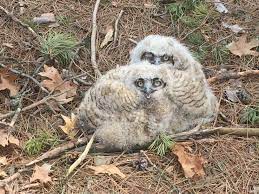
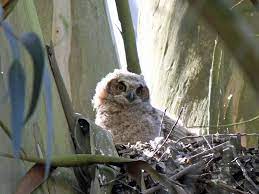
That’s when it clicked this owlet wasn’t injured at all. It was branching, doing exactly what young Great Horned Owls do: exploring before they can fly. It blinked at me, tilted its head like it was judging my hydration levels, then suddenly froze at the sound of a beetle rustling in the leaves.
Without warning, it launched the most adorably clumsy pounce I’ve ever seen. Fluff everywhere. Feet sliding. Beetle confused but unimpressed.
Honestly, it was one of the best things I’ve witnessed before finishing a cup of coffee.
Somewhere in the trees, the parents watched quietly typical Great Horned Owl style, protective but letting their kid figure things out. And that’s when I realized just how incredible these owlets are. No lessons. No demonstrations. Just pure instinct guiding them from curious little fluffballs into silent, powerful hunters.
It was impossible not to smile and even harder not to fall a little bit in love with the sheer determination of that tiny owl doing its very best in a very big world.
Reference
www.audubon.org
infinitespider.com
greathornedowl.net