
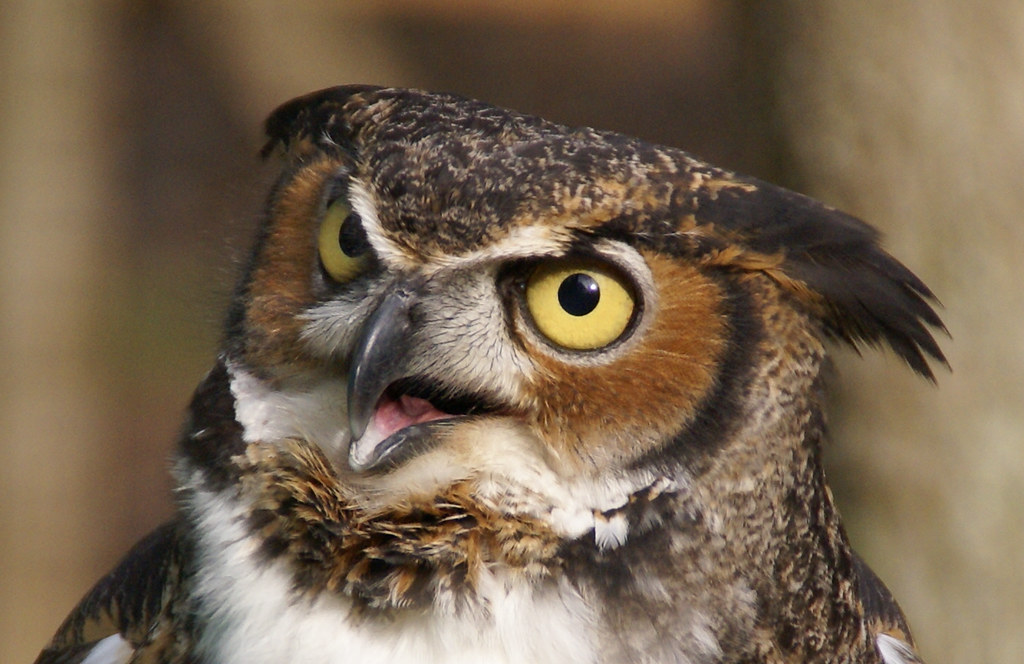
Owls absolutely are raptors-just as much as hawks, eagles, and falcons. Even though owls live in their own taxonomic order (Strigiformes), scientists classify them as raptors because they meet every biological requirement that defines a “bird of prey.” They hunt live animals, kill using powerful talons, tear meat using a hooked beak, and rely on specialized vision and hearing to locate prey. The only major difference is that hawks and falcons are diurnal raptors (day hunters), while owls are nocturnal raptors, but both fall under the broader scientific category of predatory birds.
Owls match all of these traits. They belong to their own order, Strigiformes, but they are still recognized as raptors alongside diurnal species in the orders Accipitriformes (hawks, eagles) and Falconiformes (falcons). Scientists differentiate them mainly by activity period most owls hunt at night rather than by raptor status. So while owls are not hawks or falcons, they are scientifically classified as raptors because their anatomy, feeding behavior, and predatory adaptations align with the core raptor definition used in modern ornithology.
Do an Owl’s Body and Hunting Style Actually Match What Scientists Call a Raptor?
When scientists decide whether a bird is a raptor, they don’t focus on how fierce it looks they focus on how it hunts and what its body is designed to do. Owls might seem soft, round, or harmless at first glance, but their anatomy reveals exactly why they belong in the raptor category. Nearly every part of an owl is built for capturing, killing, and eating prey, just like hawks, eagles, and other well-known birds of prey.
Owls have a short but extremely strong hooked beak that works like a built-in meat-tearer. Their talons are powerful enough to grab and immobilize animals instantly. Their forward-facing eyes give them true depth perception something very few birds have. And unlike daytime raptors, owls rely heavily on silent flight and exceptional hearing, which allows them to locate and strike prey in almost complete darkness. These adaptations didn’t happen by accident owls evolved specifically to dominate the night.
Traits That Clearly Show Owls Are Raptors
- Hooked beak designed for tearing prey
- Strong, crushing talons used as the primary killing tool
- Forward-facing eyes that provide accurate depth perception
- A carnivorous diet based entirely on hunting live animals
- Specialized flight feathers that let them approach prey silently
These aren’t bonus features or nice-to-haves they are the exact traits scientists use to identify a true raptor. The only real difference is the shift they work: hawks and falcons hunt by day, while owls use the same raptor tools to rule the night.
How Scientists Decide What Counts as a Raptor and Where Owls Fit In
When ornithologists classify a bird as a raptor, they aren’t looking at which scientific order it belongs to they’re looking at how it lives and how it hunts. This is why owls, hawks, eagles, and falcons are all placed under the raptor umbrella, even though each group evolved along its own path. What matters most is the bird’s behavior, its anatomy, and the hunting tools it uses to survive.
A true raptor is built to find, catch, and kill live prey. And on that criteria, owls fit perfectly. They might not be closely related to hawks or falcons, but through a process called convergent evolution, they developed the same predatory traits. That’s why an owl’s hunting style and body structure look so similar to daytime birds of prey, and why questions like Are Owls Omnivores sometimes arise, even though nature shaped them for the same job, just in different conditions.
How Scientists Identify a True Raptor
- It hunts and kills live animals
- It uses strong talons not the beak to make the killing strike
- It has a hooked beak designed for tearing meat
- It depends on advanced senses like sharp vision or directional hearing
- It survives primarily on a carnivorous diet
When you line this checklist up with the life of an owl, the match is obvious. They don’t just meet the requirements they often exceed them. While hawks and eagles rule the daylight with speed and sharp vision, owls dominate the night using silence, precision, and almost unmatched hearing. Different approaches, different tools, but the same result: a highly effective bird of prey.
Looking at Their Skull, Vision, and Hunting Methods-Do Owls Fit the Raptor Model?
To understand whether owls truly belong with other raptors, it helps to look past their feathers and focus on the structures that matter most in predation. An owl’s skull, eyes, ears, and hunting technique all reveal how specialized they really are. These hidden details show that owls don’t just fit the raptor model they carry some of the most advanced predatory adaptations found in any bird.
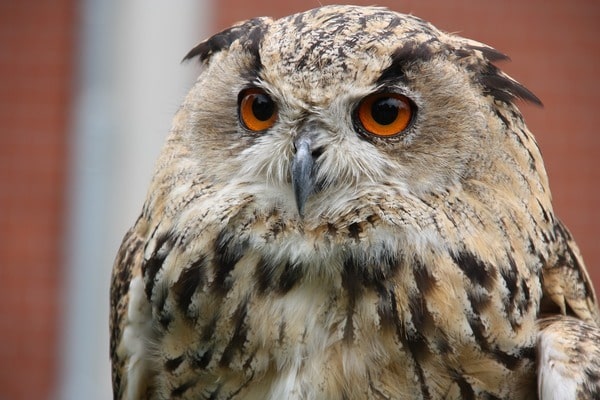
Unlike most birds, owls have large forward-facing eyes set inside fixed bony sockets. Because their eyes can’t move, their necks evolved an incredible range of motion, allowing them to rotate their heads up to roughly 270 degrees. Their skull also contains one of their most remarkable tools: asymmetrical ears in many species. This uneven ear placement lets them pinpoint prey by detecting tiny differences in sound an adaptation so precise they can locate a mouse under snow or leaves without ever seeing it.
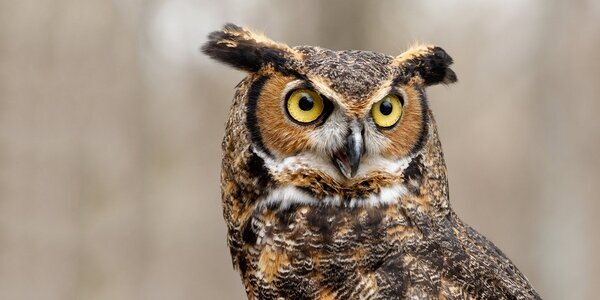
Once an owl finds its target, everything happens fast. They approach silently thanks to specially shaped feathers, then strike with powerful talons that deliver the killing blow. Larger species, like the Great Horned Owl, can exert enough grip strength to immobilize small mammals instantly. This combination of stealth, sensory precision, and raw force is exactly what defines a top-level nocturnal raptor.
Key Biological Features That Prove Owls Are Raptors
- Large forward-facing eyes for accurate depth perception
- Curved, hooked beak designed for tearing prey
- Strong talons used as their main killing tool
- Silent flight that lets them launch surprise attacks
- Exceptional hearing boosted by facial disc feathers
All of these features match the classic raptor blueprint. The only real difference is in the style: hawks rely on speed and daylight vision, while owls use silence and sound to dominate the night.