
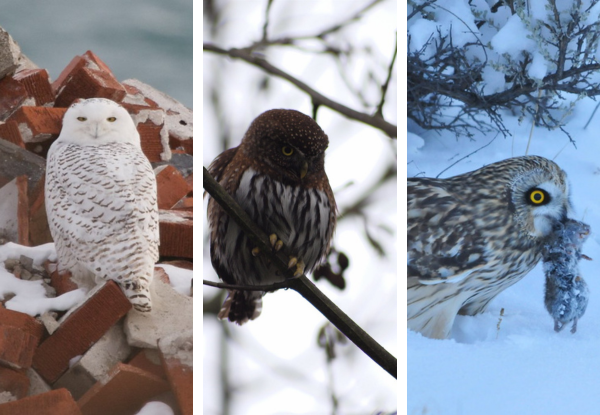
Alaska does not just have owls. It has the full spectrum. Eleven species live across the state, and they occupy places that feel almost unreal at night. On the open Arctic tundra, Snowy Owls nest directly on the ground during summer, raising chicks under a sun that barely sets. In the dark spruce forests of the Interior, Boreal and Great Gray Owls hunt silently through subzero winters. Along the Southeast coast, Western Screech Owls hold territories in temperate rainforest that feels nothing like the Arctic most people imagine.
Some owls stay all year. The Great Horned Owl begins nesting in late winter, sometimes while snow still covers the landscape. Others move depending on prey cycles. Snowy Owls may travel south in winters when lemmings are scarce. The Northern Hawk Owl even hunts in daylight, which surprises people who assume all owls are strictly nocturnal.
From hand sized Northern Saw whet Owls to the massive Great Gray, Alaska’s 11 species reflect one simple truth. If a habitat exists in this state, an owl has figured out how to live in it.
1. Snowy Owl
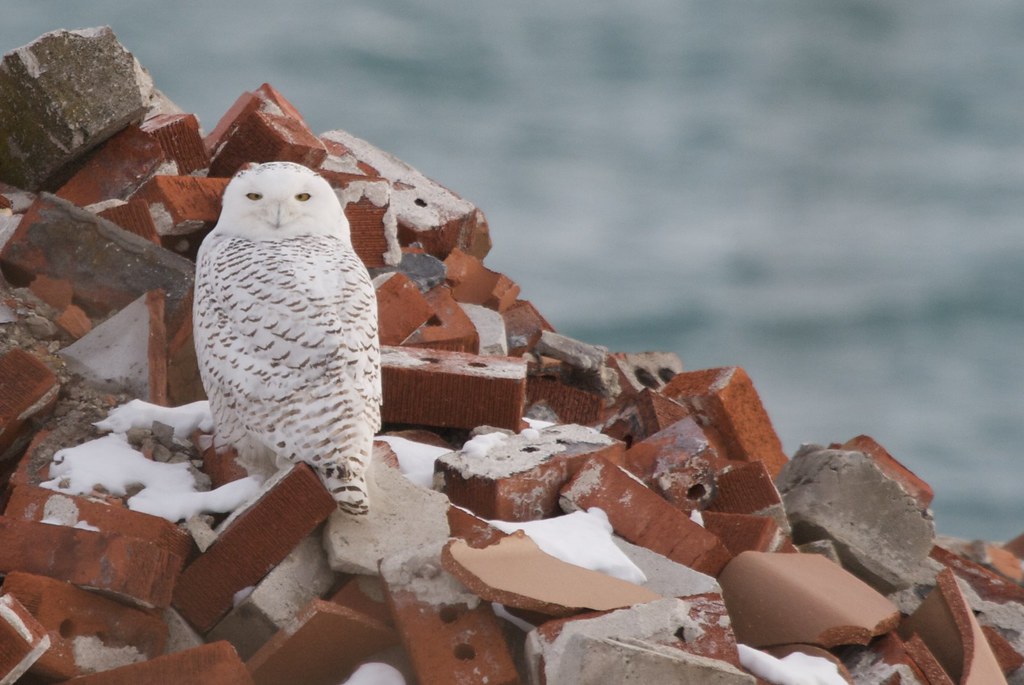
The Snowy Owl belongs to the Arctic in a way few birds do. It breeds on Alaska’s northern tundra, nesting directly on the ground where there are no trees to choose from anyway. Its entire breeding success rises and falls with lemming populations.
When lemmings are abundant, Snowy Owls may raise large broods. When lemmings crash, many owls move south in winter in what birders call irruption years. Unlike most owls, this one hunts frequently during daylight, which makes sense in a place where summer nights barely exist. Males can be nearly pure white, while females and younger birds show more dark barring. They look calm, but they are intensely focused hunters built for open landscapes.
2. Great Horned Owl
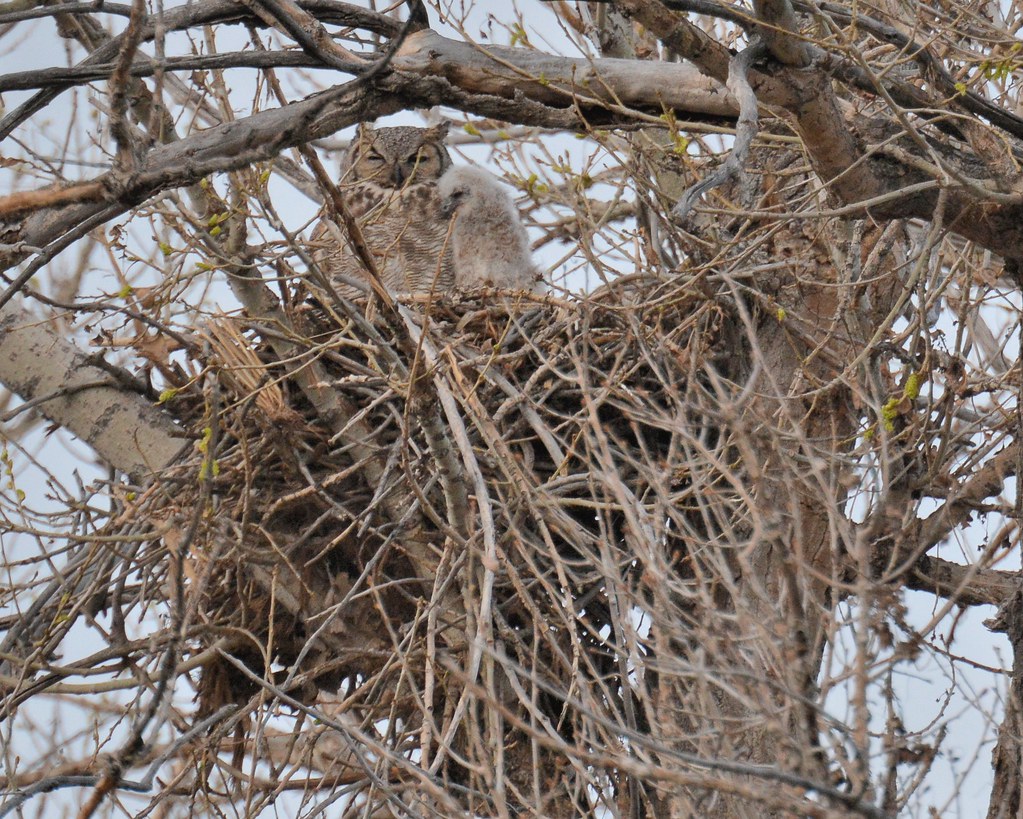
If Alaska had a default owl setting, it would probably be the Great Horned Owl. This species lives almost everywhere in the state except the most extreme Arctic tundra. Forest edges, river valleys, muskeg, even near towns, it adapts with impressive confidence. It does not build its own nest but instead takes over old stick nests built by hawks, ravens, or eagles.
In Alaska it often begins nesting in late winter, sometimes while snow still covers the ground, which feels slightly ambitious but clearly works. Its diet reflects that confidence. Snowshoe hares, voles, ducks, grouse, even skunks are all on the menu. When you hear a deep, steady hoot carrying across a frozen evening, chances are this is the owl responsible.
3. Great Gray Owl
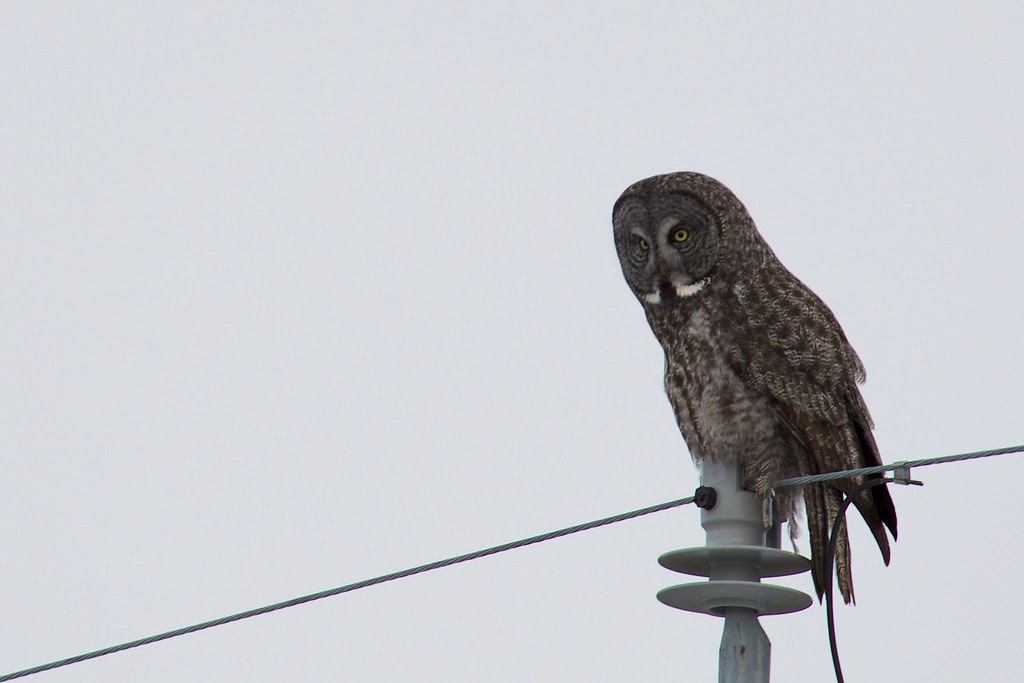
The Great Gray Owl looks enormous, and in height it truly is one of the tallest owls in North America. Much of that size, however, is feathers and an oversized facial disc that helps it pinpoint prey beneath deep snow. In Alaska it prefers boreal forests and forest edges, especially areas with nearby meadows.
It hunts primarily voles and can hear movement under snow before plunging straight down through it. Watching one drop silently into powder is one of those moments that feels unreal until you see it. Despite its size, it feeds mostly on small mammals and is remarkably quiet and deliberate in its movements.
4. Northern Hawk Owl
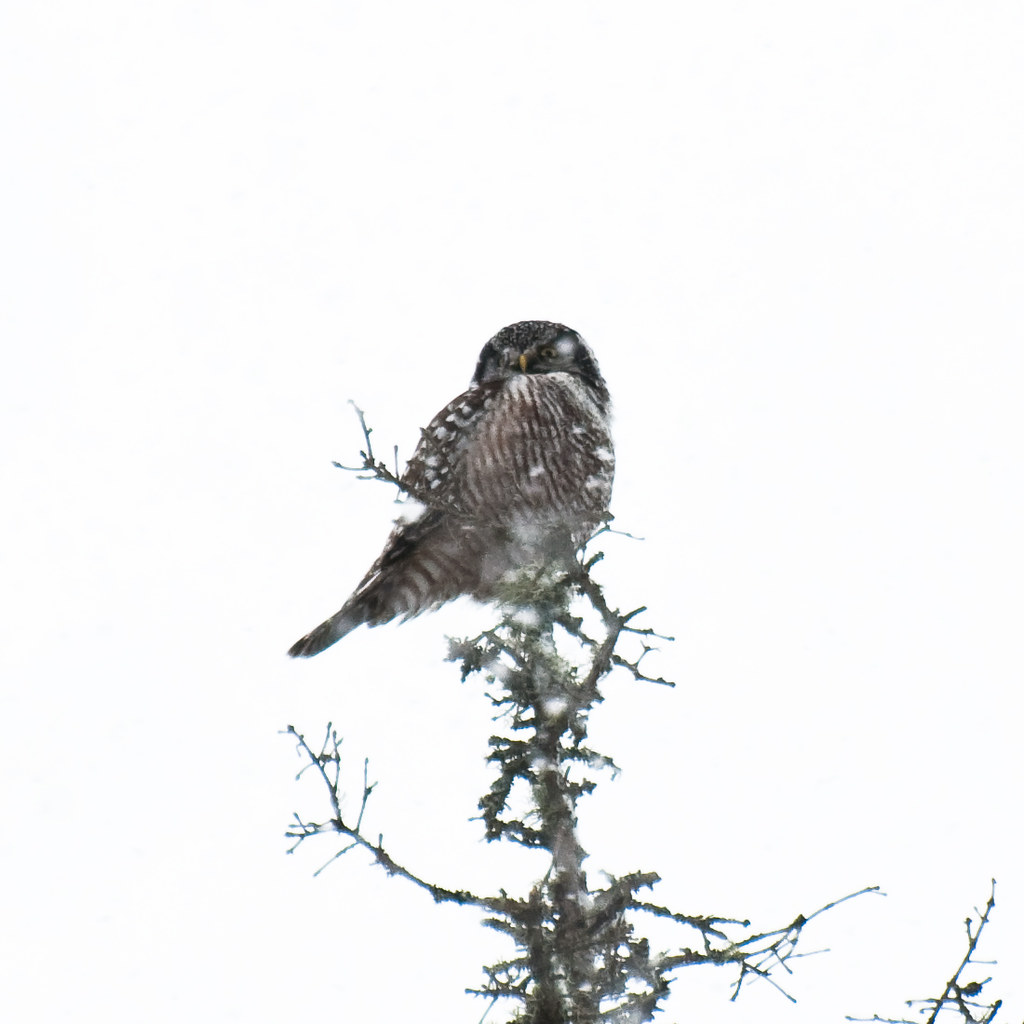
The Northern Hawk Owl behaves in ways that surprise people who think all owls are creatures of darkness. This species hunts regularly during the day, especially in Alaska’s long summer light. It favors open boreal forest and recently burned areas where it can perch high and scan for prey.
Its long tail and more streamlined shape give it a silhouette that feels slightly hawk like, which explains the name. It feeds heavily on voles and other small mammals, and in years when prey declines it may move south. It often perches very visibly, almost daring you to notice it.
5. Boreal Owl
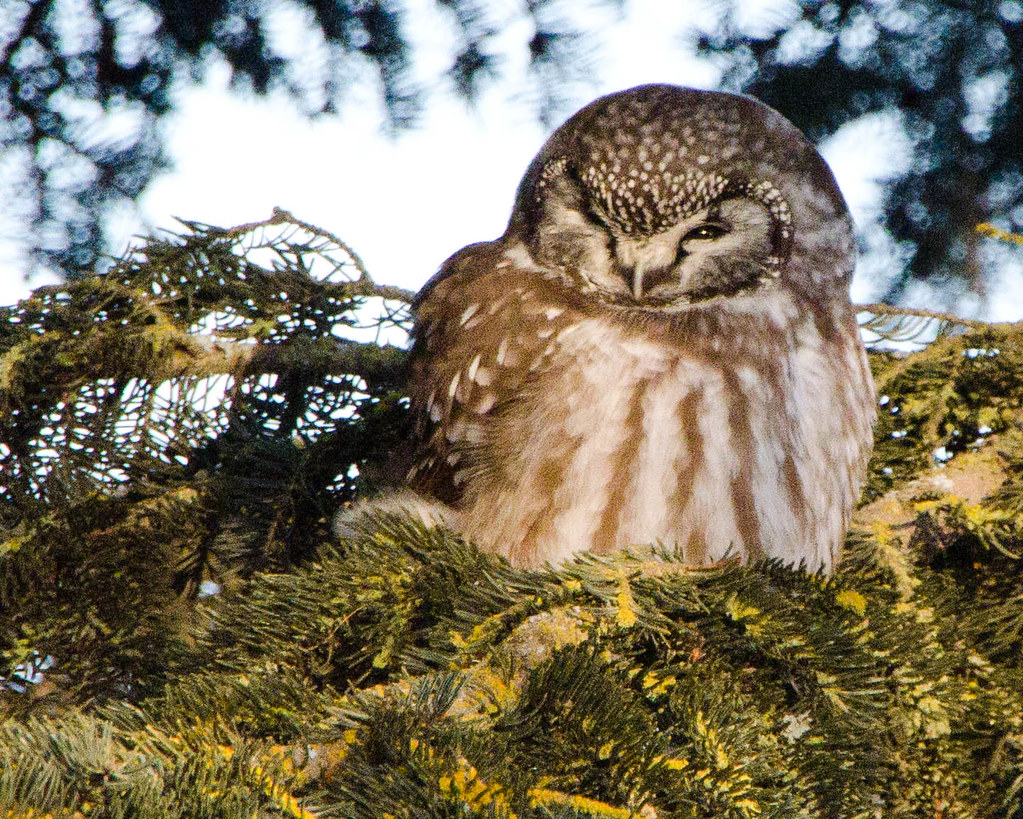
The Boreal Owl is small, secretive, and perfectly matched to dense northern spruce forests. Many people live in Alaska for years and never see one. It hunts mostly at night, feeding on voles and other small mammals. Unlike some owls, it nests in cavities, often using old woodpecker holes.
During winter it may move slightly southward within the state depending on food availability. Its soft hooting call is far more likely to reveal its presence than its appearance. If you do see one, it tends to sit very still, relying on camouflage rather than drama.
6. Northern Saw whet Owl
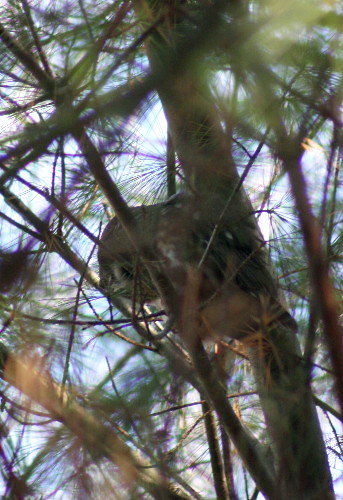
The Northern Saw whet Owl is one of Alaska’s smallest owls, roughly robin sized. It is another cavity nester and often uses old woodpecker holes. Despite its small size, it is an efficient hunter of mice and voles. Its name comes from a call that early observers thought sounded like a saw being sharpened on a whetstone.
In Alaska it occurs mainly in forested regions and can be difficult to detect outside the breeding season. Holding one in the hand during banding research has revealed just how compact and feather dense these birds are, built to survive long cold nights.
7. Western Screech Owl
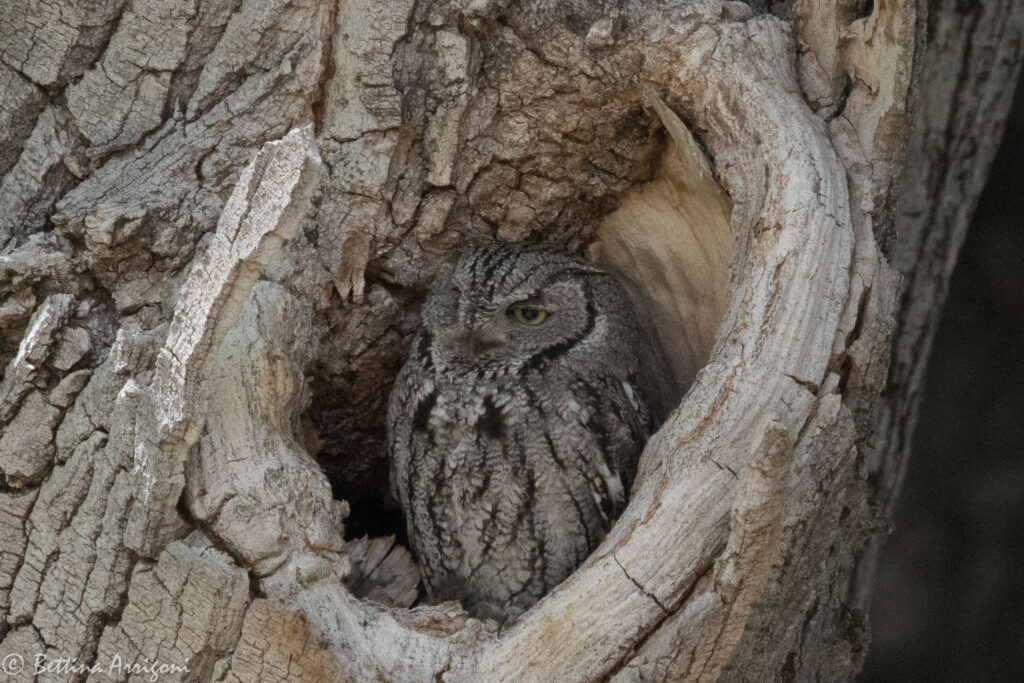
The Western Screech Owl has a limited range in Alaska, occurring primarily in the temperate rainforests of Southeast Alaska. It is small, with short ear tufts and excellent camouflage against tree bark. Unlike the classic screech implied by its name, its call is more of a series of soft, bouncing whistles.
It nests in tree cavities and hunts insects, small mammals, and occasionally small birds. Its presence in Alaska surprises people who picture only Arctic conditions, but Southeast Alaska’s climate and forests feel entirely different from the Interior.
8. Short eared Owl
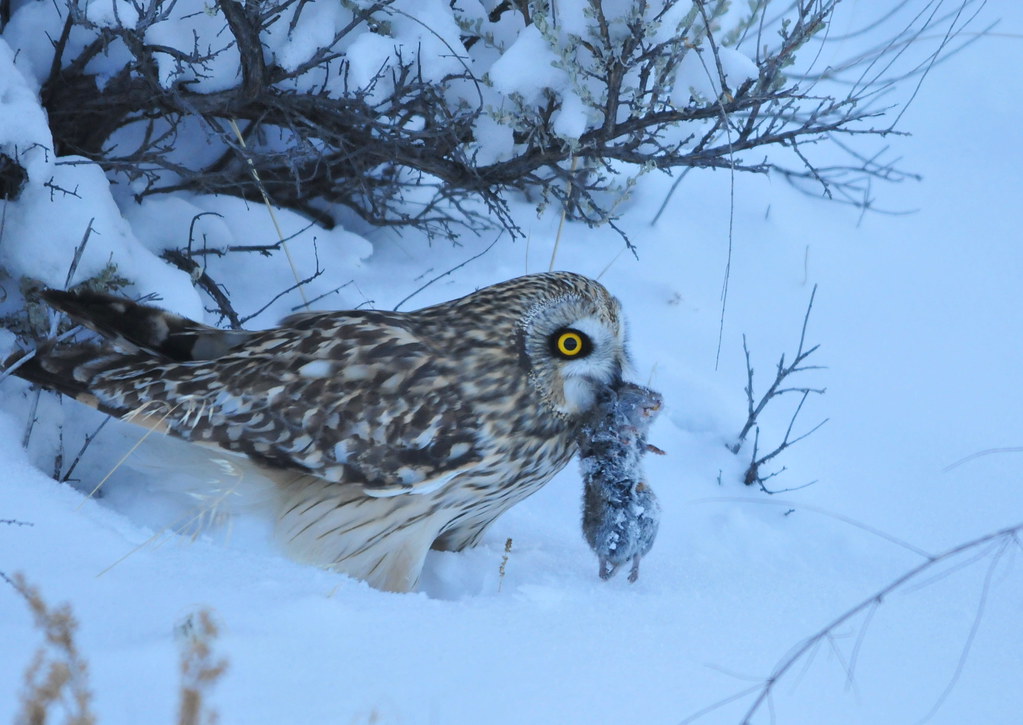
The Short eared Owl favors open country. In Alaska that means tundra, marshes, coastal meadows, and grasslands. It often hunts at dusk and dawn, flying low over open ground with buoyant, moth like wingbeats. It nests on the ground, which makes it vulnerable to predators but well adapted to treeless habitats.
Voles are its primary prey. In some years it is more common than others, depending on small mammal cycles. Seeing one quartering low across an open landscape at sunset is one of Alaska’s classic wildlife sights.
9. Long eared Owl
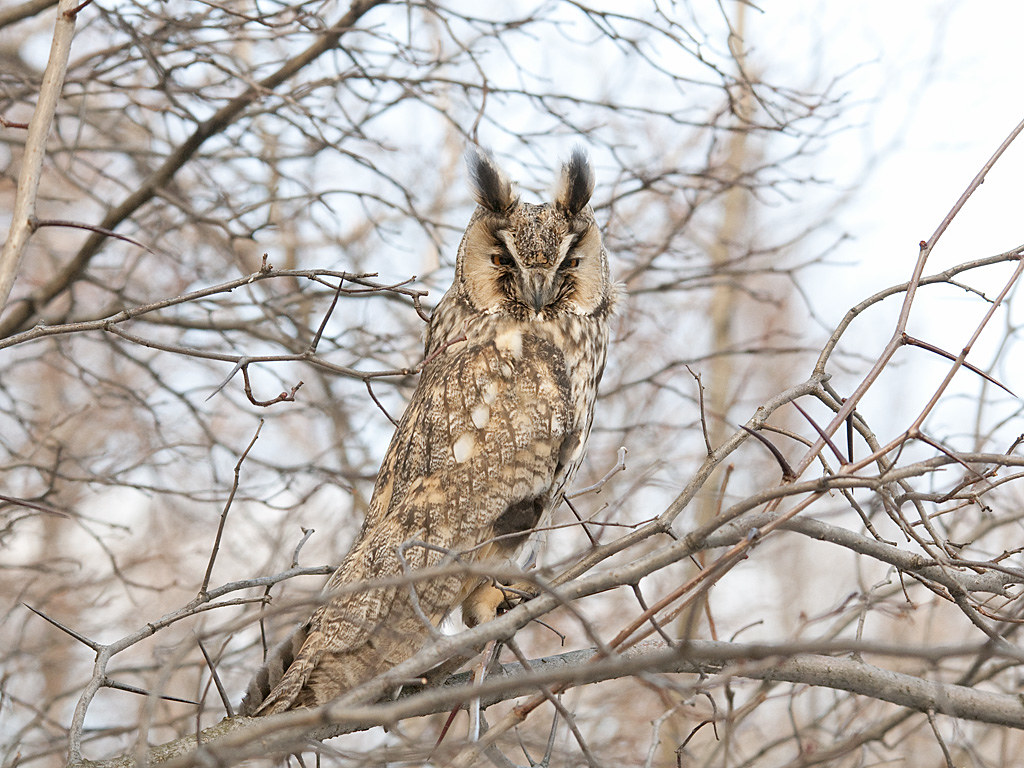
The Long eared Owl is slender and secretive, usually choosing dense forest edges or groves for roosting. It often uses old stick nests built by other birds rather than constructing its own.
During the breeding season it becomes more vocal, but outside that period it can be extremely hard to find. It hunts mostly at night, feeding on small mammals. In Alaska it is less widespread than some other species and occurs mainly in suitable forested regions. Its tall ear tufts give it an alert, almost surprised expression.
10. Barred Owl
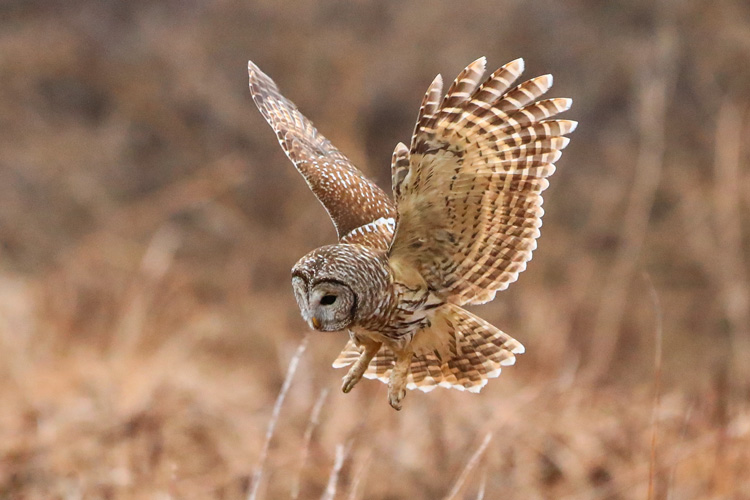
The Barred Owl is not historically native to most of Alaska, but it has expanded its range westward across North America over the past century and is now found in parts of Southeast Alaska.
It prefers mature forests and is known for its distinctive call often described as sounding like who cooks for you. It nests in tree cavities and feeds on small mammals, amphibians, and birds. Its presence in Alaska reflects broader range changes documented across the continent.
11. Northern Pygmy Owl
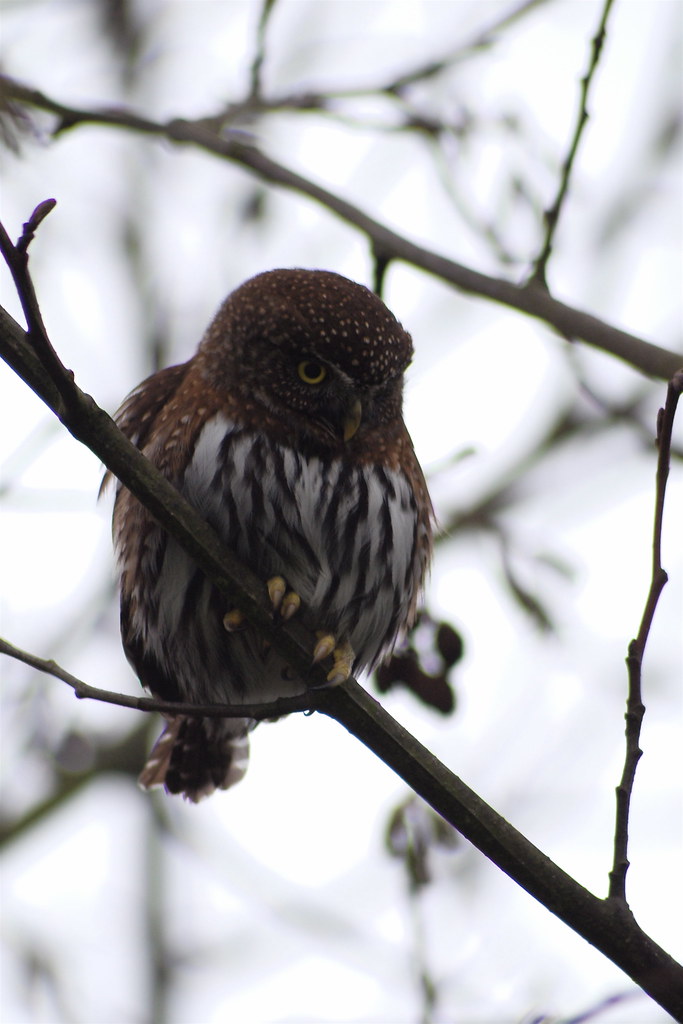
The Northern Pygmy Owl is tiny but bold. Active during the day, it hunts small birds and mammals and will sometimes perch conspicuously while scanning for prey. It occurs in parts of Southeast Alaska and forested regions.
Despite being only about the size of a sparrow, it is a determined predator. Small songbirds often mob it aggressively, which can actually help observers locate one. It nests in cavities and relies heavily on stealth and speed rather than size.