
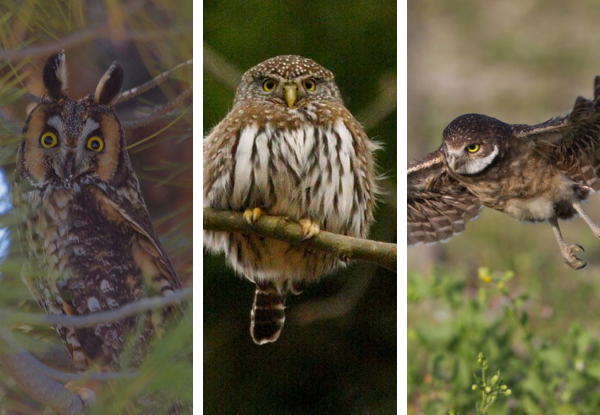
Utah supports 12 owl species, a number that surprises many people once they look beyond forests and into the full range of the state’s landscapes. Owls live here not because Utah is wild in a single way, but because it offers many kinds of quiet. Mountain forests provide cover for secretive woodland species, desert canyons offer cliff ledges and hunting corridors, and open farmland creates ideal conditions for owls that rely on rodents. Each habitat favors a different hunting style, body size, and nesting strategy.
Some Utah owls are permanent residents that defend territories year after year, even through harsh winters. Others appear only at certain times, arriving when prey becomes more available or when seasonal movement pushes them south or downslope. Many people never notice them, not because owls are rare, but because most fly low, call briefly, and disappear before sunrise.
Understanding which owls live in Utah requires paying attention to habitat, season, and sound as much as appearance. When those pieces come together, the state’s owl diversity becomes clearer, revealing a group of birds deeply shaped by Utah’s land and climate.
1. Great Horned Owl
If there is one owl that truly defines Utah, it is the Great Horned Owl. This species succeeds not because it specializes, but because it refuses to. It can live almost anywhere the state offers, from open desert valleys and rocky canyons to mountain forests, wetlands, farmland, and even the edges of growing cities. Many people hear its deep, echoing hoots long before they realize how common it actually is.
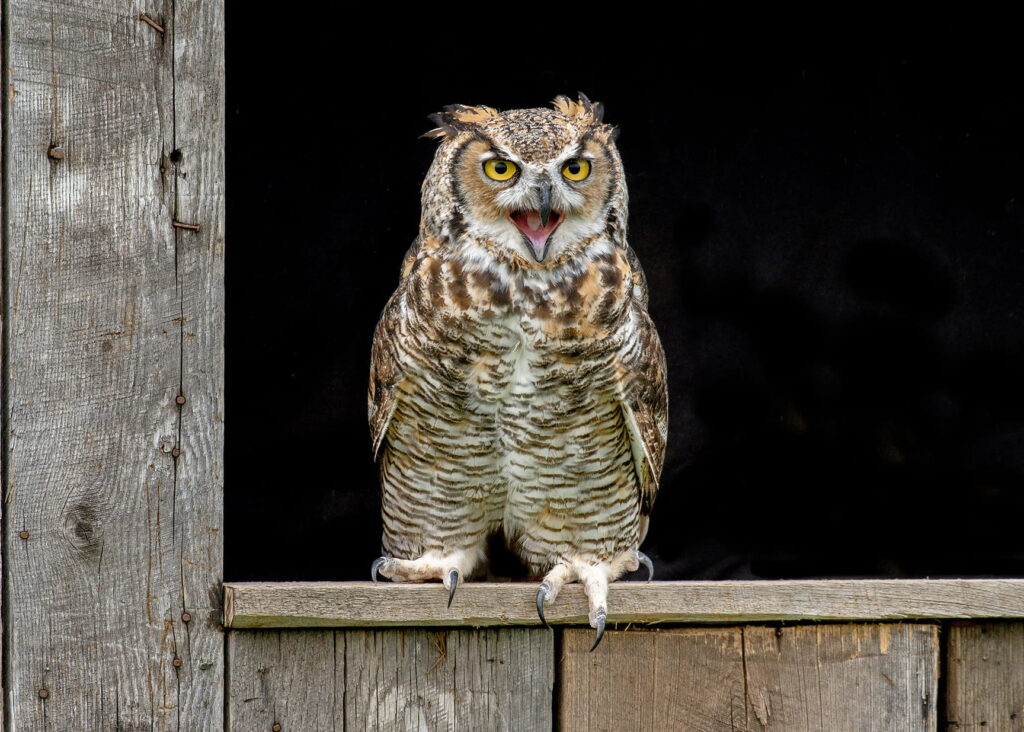
One reason the Great Horned Owl is so widespread is that it does not bother building a nest of its own. Instead, it takes advantage of what already exists, using abandoned hawk or raven nests, tree cavities, cliff ledges, and occasionally man-made structures. This flexibility allows it to settle into new areas quickly, even where natural nesting sites are limited.
Its diet is just as adaptable. Great Horned Owls hunt whatever prey is available, including rabbits, rodents, birds, reptiles, and occasionally other raptors. Because it can find food year-round, it is one of the earliest nesting owls in Utah, often raising young while winter still lingers. That early start gives it a strong advantage in nearly every habitat it occupies.
2. Barn Owl
Barn Owls feel almost purpose-built for Utah’s open spaces. They are most successful where the land is flat or gently rolling and where vegetation stays low, allowing sound to move freely. Unlike many owls that depend heavily on vision, Barn Owls hunt primarily by hearing. Their asymmetrical ears and highly developed facial disk allow them to pinpoint the exact location of prey in complete darkness, even when it is hidden beneath grass or soil.
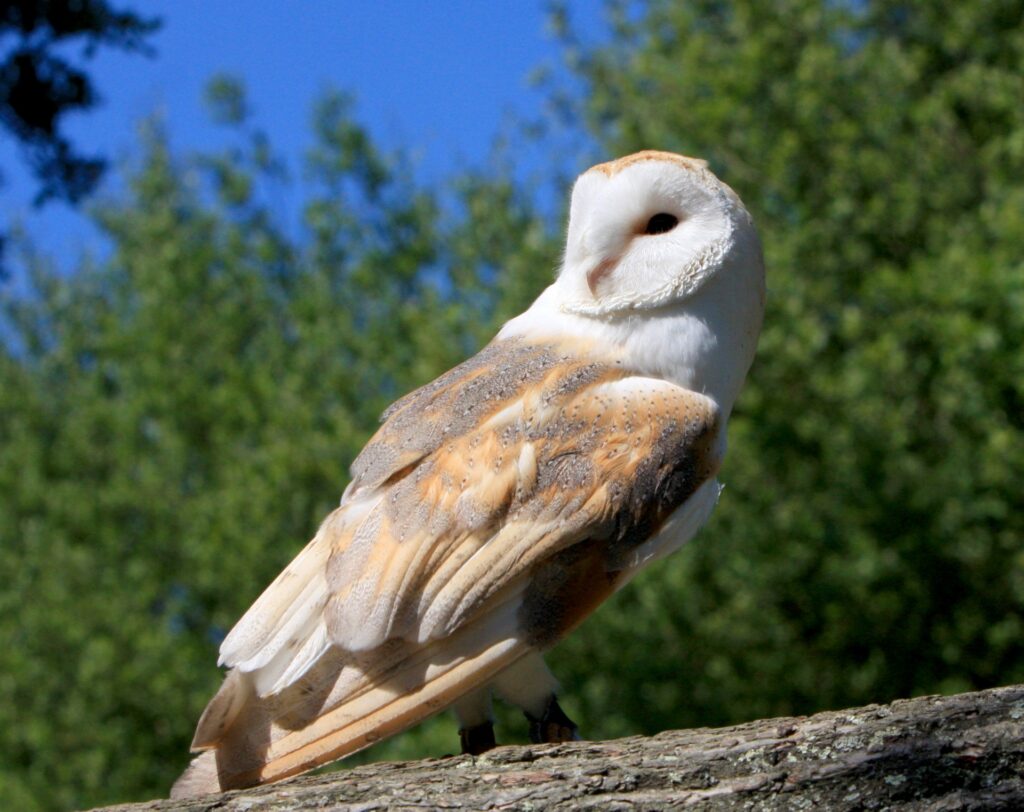
In Utah, Barn Owls are most often found in agricultural valleys, grasslands, and low-elevation desert regions. These areas support large rodent populations, which form the core of their diet. Human activity has quietly shaped where Barn Owls live in the state, not by driving them away, but by offering nesting opportunities. Barns, silos, abandoned buildings, and other structures often replace natural cavities that would otherwise be scarce in open terrain.
The owl’s pale, heart-shaped face and silent flight give it a ghostlike appearance at night, which explains why it is frequently noticed only in passing. Where habitat and nesting sites remain available, Barn Owls can persist year-round, making them an important natural control on rodent populations in Utah’s working landscapes.
3. Western Screech-Owl
The Western Screech-Owl is one of Utah’s most easily missed owls, not because it is rare, but because it blends so well into its surroundings. This small owl is built for concealment. Its mottled gray or brown plumage matches the bark of cottonwoods, willows, and box elders, allowing it to remain almost invisible during the day. Most people who live near it never realize it is there.
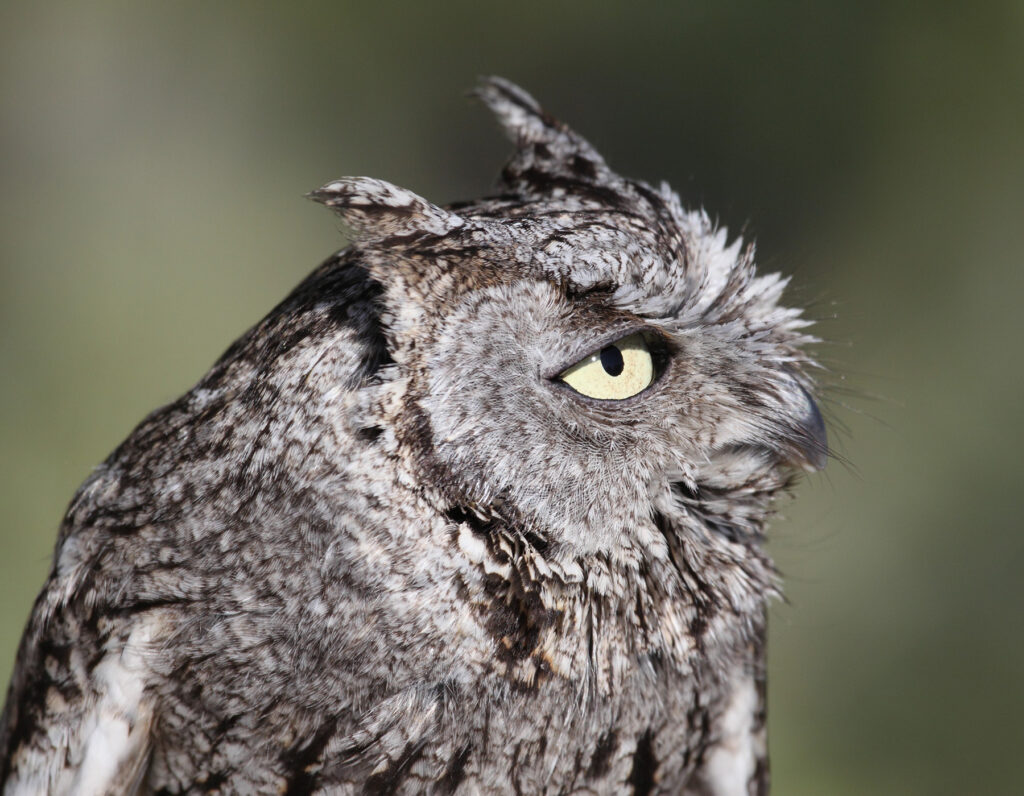
In Utah, the Western Screech-Owl is closely associated with rivers, streams, and wooded canyon bottoms where mature trees provide natural cavities. These cavities are essential for nesting and roosting, which is why intact riparian forests matter so much to this species. When those woodlands disappear, the owl usually disappears with them.
Although it remains in Utah year-round, the Western Screech-Owl is rarely seen. Its calls are soft and rhythmic rather than loud or dramatic, and it does not announce itself the way larger owls do. Those who learn to recognize its bouncing, hollow notes often discover that the owl is far more common than expected, quietly occupying narrow strips of habitat that follow water through an otherwise dry landscape.
4. Long-eared Owl
The Long-eared Owl is one of Utah’s most secretive owl species, even in places where it is present in good numbers. During daylight hours, it relies on dense vegetation for cover, pressing its slim body close to tree trunks and stretching its ear tufts upward to blend in with branches. Because of this behavior, many people pass within a few yards of a roosting Long-eared Owl without ever noticing it.
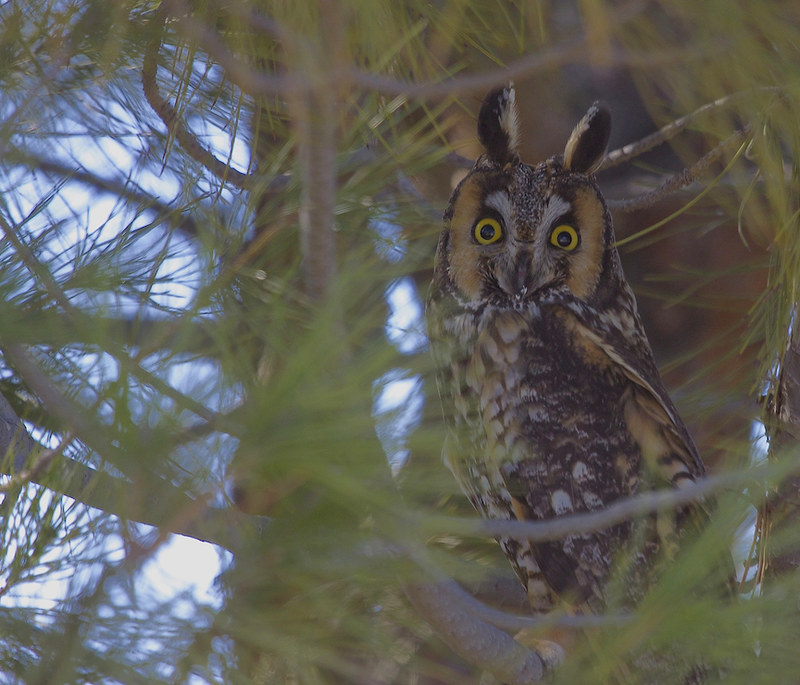
In Utah, this species favors woodlands, riparian groves, and shelterbelts that border open areas. The dense trees provide daytime protection, while nearby grasslands and fields offer productive hunting grounds after dark. Long-eared Owls do not build their own nests, instead using old stick nests left behind by crows, magpies, or other birds.
One of the most unusual aspects of this owl’s behavior appears in winter. At that time, multiple individuals may gather in communal roosts, sometimes sharing a single stand of trees. Even then, they remain quiet and well hidden, which is why they are far more often detected by their low hoots at night than by sight during the day.
5. Short-eared Owl
The Short-eared Owl breaks many of the rules people associate with owls. Instead of staying hidden until night, it is often most active during daylight hours, particularly around dawn and dusk. In Utah, this makes it one of the few owls that people regularly see in the open, coursing low over fields with slow, buoyant wingbeats.
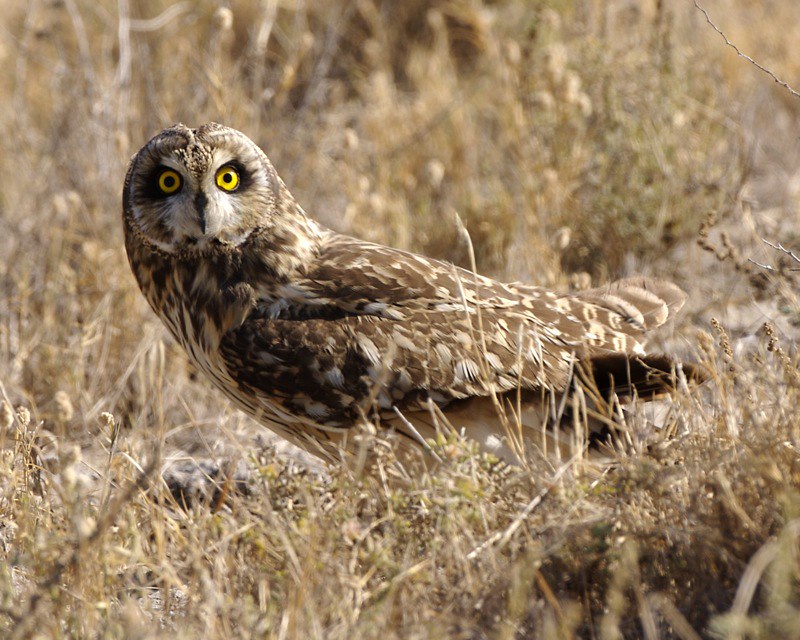
This species is closely tied to wide, open landscapes such as grasslands, wetlands, and marshy flats. Rather than hunting from perches, the Short-eared Owl flies just above the ground, listening for the movement of small mammals beneath the vegetation. Its hunting style is more similar to that of a harrier than a typical owl, which adds to its distinct appearance in flight.
Short-eared Owls do not nest in trees. They place their nests directly on the ground, hidden among grasses, which makes them especially sensitive to habitat disturbance. In Utah, the species is most noticeable in winter, when individuals move south or descend from higher latitudes in search of food. These seasonal movements can cause numbers to fluctuate widely from year to year, making some winters feel surprisingly owl-rich and others very quiet.
6. Northern Pygmy-Owl
The Northern Pygmy-Owl is one of Utah’s smallest owls, but it behaves nothing like a timid bird. Despite its size, it is a bold and efficient predator, fully capable of taking prey nearly as large as itself. This owl hunts by day, which immediately sets it apart from most other owl species in the state.
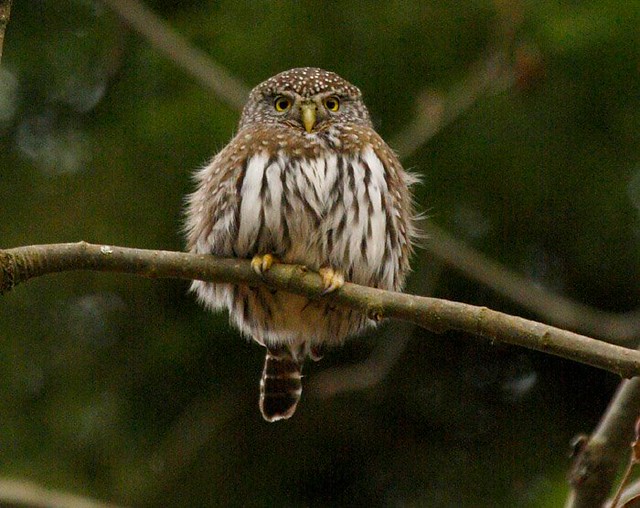
In Utah, the Northern Pygmy-Owl is most often found in montane forests and wooded foothills, particularly where conifers mix with open patches of forest. Rather than flying continuously, it hunts from exposed perches, scanning its surroundings before launching short, direct attacks. Because of its daytime activity, it is sometimes encountered by hikers who are not even looking for owls.
Its presence is often revealed indirectly. Small songbirds recognize the Northern Pygmy-Owl as a serious threat and will loudly mob it when they find one perched in the open. Following the sound of these alarm calls often leads to the owl itself, sitting calmly despite the chaos around it. This behavior makes the species easier to locate than many larger owls, even though it remains uncommon and highly localized within its preferred habitat.
7. Burrowing Owl
Burrowing Owls are unlike any other owl found in Utah, and they rarely behave the way people expect an owl to behave. Instead of roosting in trees or hunting from hidden perches, they live entirely on the ground in open landscapes. Their homes are abandoned burrows originally dug by mammals such as prairie dogs or ground squirrels, which they adapt for nesting and shelter.
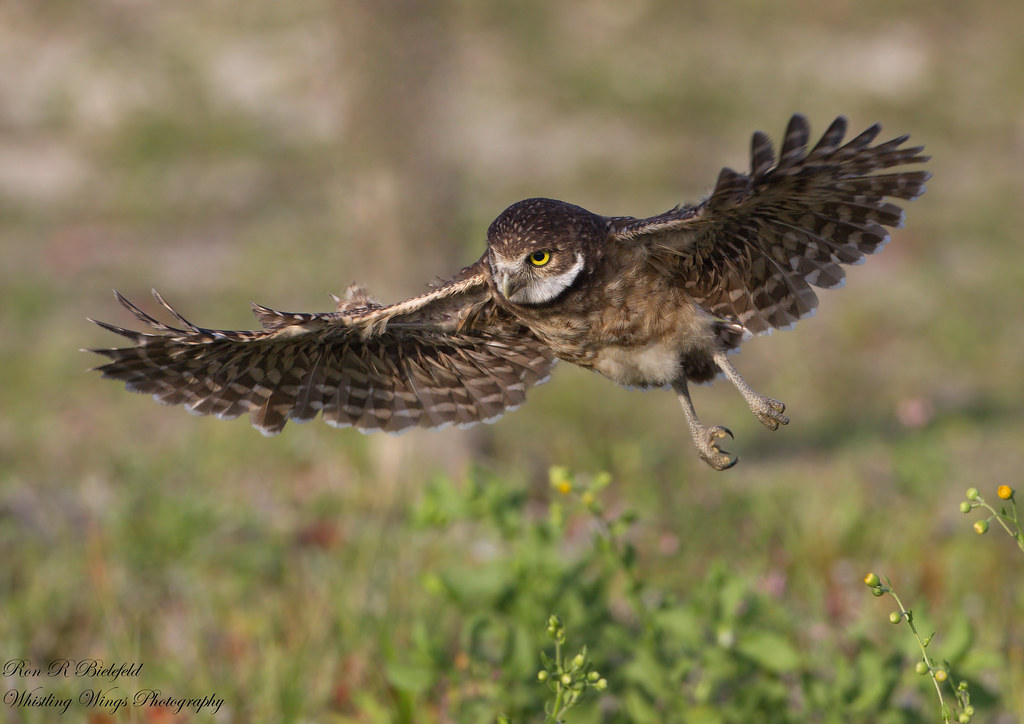
In Utah, Burrowing Owls are most closely tied to grasslands, shrub-steppe, and agricultural areas where burrowing mammals are present. They are often visible during daylight hours, standing upright near the entrance to their burrow or moving across the ground with a quick, almost comical gait. This daytime activity makes them easier to observe than most owl species, even though their overall numbers are limited.
Burrowing Owls are primarily a summer presence in Utah. They arrive in spring to breed and raise young, then migrate south as colder weather approaches. Because they depend on intact open habitat and existing burrow systems, changes in land use can have a strong impact on where they are able to persist from year to year.
8. Flammulated Owl
The Flammulated Owl is one of Utah’s most easily overlooked owl species, largely because it is both small and quiet. Unlike most owls, it feeds almost entirely on insects, which shapes nearly every part of its life in the state. Because insects are only abundant during warmer months, this owl arrives in Utah in late spring and leaves again before winter sets in.
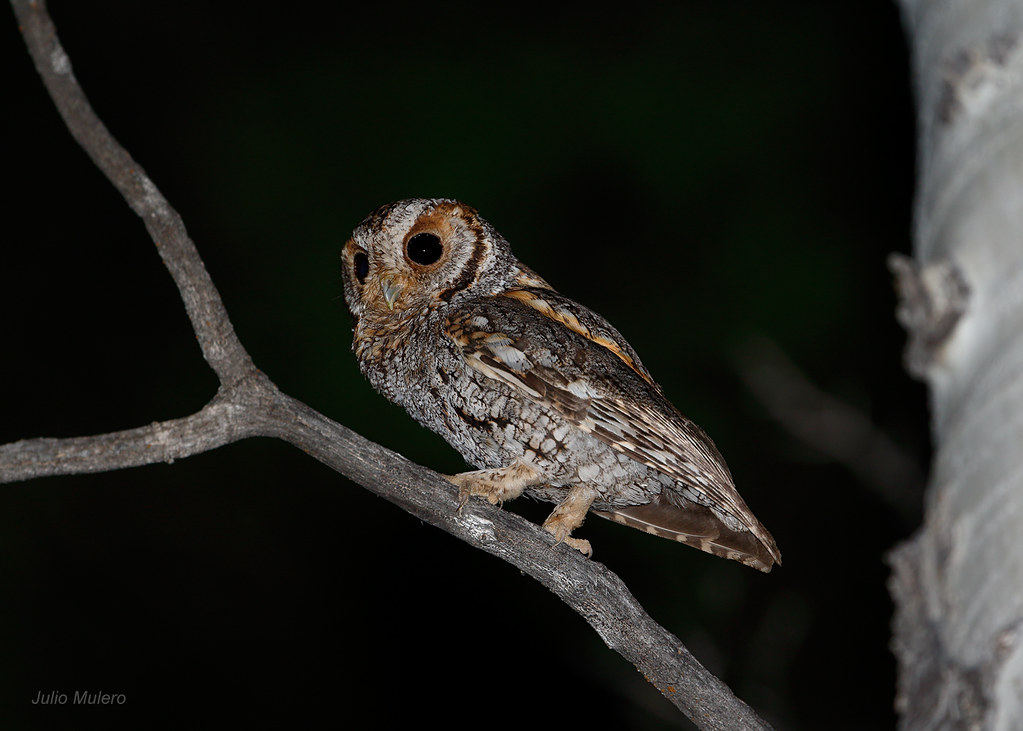
In Utah, the Flammulated Owl is closely tied to mature pine and mixed montane forests, particularly areas with large trees that offer natural cavities for nesting. It is most active at night, but its presence is often revealed by its low, soft hooting call. Though the call is gentle, it can carry surprising distances through still mountain air, especially in undisturbed forests.
Because of its migratory nature and subtle behavior, the Flammulated Owl is rarely seen even by experienced birders. Many people first learn of its presence by hearing its call echoing through pine forests on warm summer nights. Its reliance on both healthy forests and seasonal insect populations makes it a sensitive indicator of changes in montane ecosystems.
9. Northern Saw-whet Owl
The Northern Saw-whet Owl is one of Utah’s most widespread owls, yet it remains largely invisible to the people who live alongside it. Its small size and quiet behavior allow it to blend easily into forests and wooded valleys, where it spends much of the day roosting close to tree trunks or within dense cover. Even in areas where it is fairly common, it often goes unnoticed.
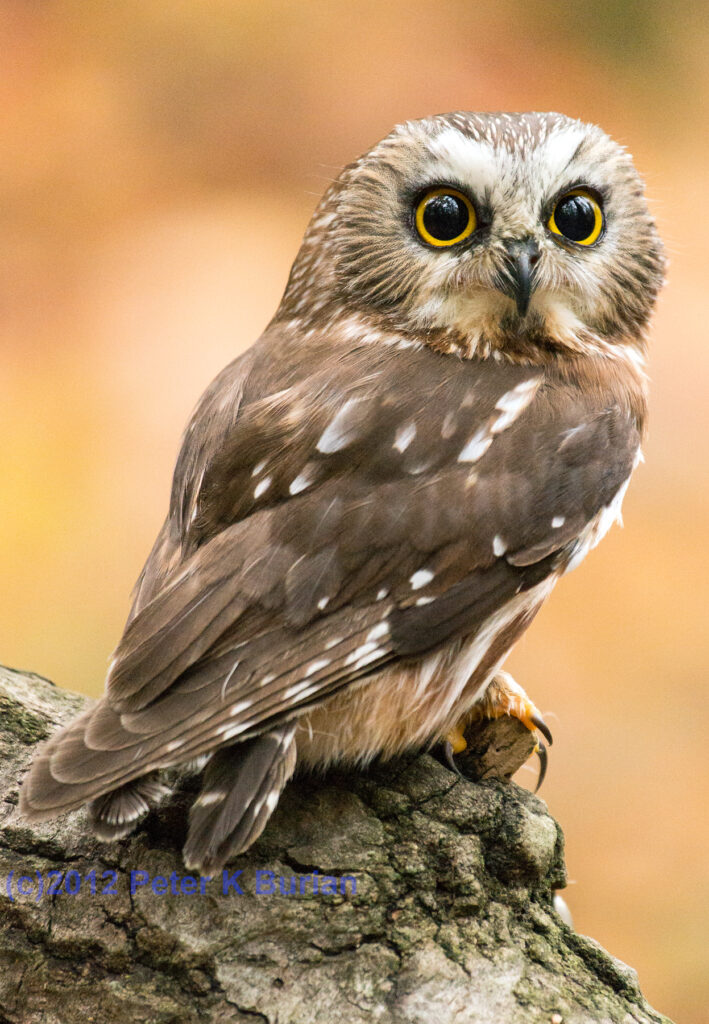
This owl relies on tree cavities for nesting and shelter, using holes formed by decay or created by woodpeckers. In Utah, it occupies a range of forested habitats, from mountain woodlands to sheltered valleys with mature trees. While some individuals remain in the state year-round, others arrive during winter migration, causing local numbers to increase when colder conditions push birds south or downslope.
Most people who encounter a Northern Saw-whet Owl do so by chance, often during quiet winter months when leaves are gone and roosting sites are more exposed. Its soft, repetitive calls are easy to miss, which contributes to the impression that it is rare. In reality, it is simply skilled at staying hidden, even in familiar landscapes.
10. Mexican Spotted Owl
The Mexican Spotted Owl occupies a very specific corner of Utah’s landscape, and it does not stray far from it. In the state, this species is found mainly in the south, where steep canyon walls and mature forests come together to create cool, shaded environments. These owls depend on complex forest structure and rugged terrain that provide cover, nesting sites, and reliable hunting conditions.
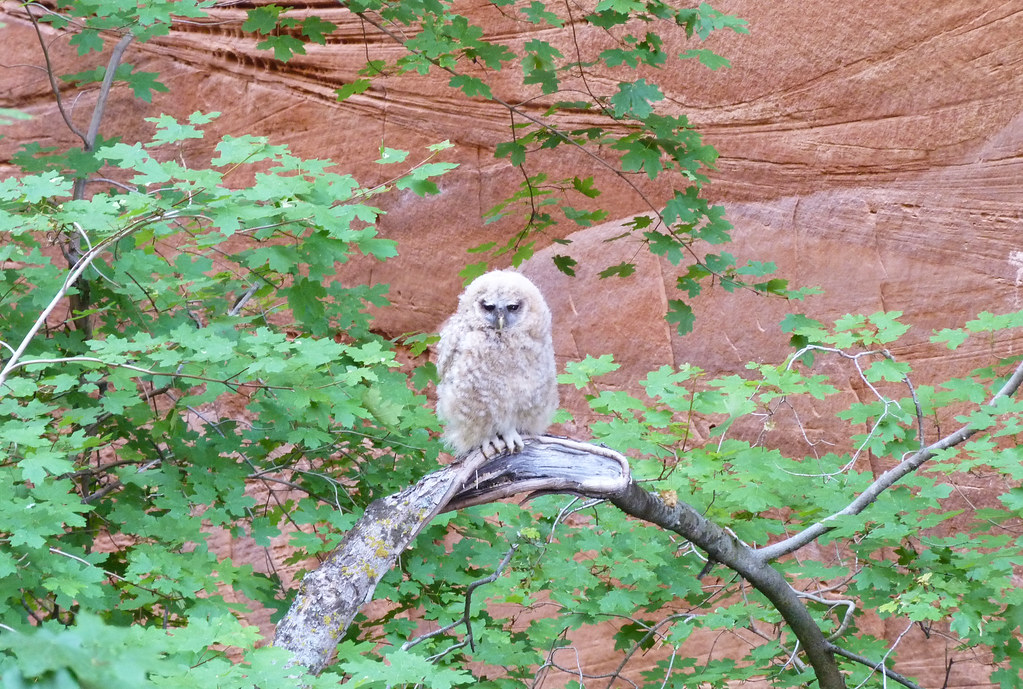
Unlike more adaptable owls, the Mexican Spotted Owl does not respond well to change. It relies on stable, undisturbed habitat and tends to avoid areas where forests have been heavily altered or fragmented. Large trees, uneven canopies, and deep canyons all play a role in how this owl hunts and nests, making its habitat requirements far more specific than those of most other Utah owl species.
Because of this specialization, the Mexican Spotted Owl is naturally limited in where it can live. Its presence often reflects the long-term health of canyon and forest ecosystems, rather than short-term fluctuations in prey or weather. For many people, simply knowing this owl exists in Utah highlights how much of the state’s biodiversity depends on landscapes that remain relatively unchanged over time.
11. Great Gray Owl
The Great Gray Owl is one of the most striking owls ever recorded in Utah, not only because of its size, but because of how rarely it is encountered. Although it is among the largest owls in North America by length, its presence in Utah is limited to high-elevation forests and open meadows where conditions closely resemble its northern range. Even within suitable habitat, sightings are uncommon and often clustered in certain years.
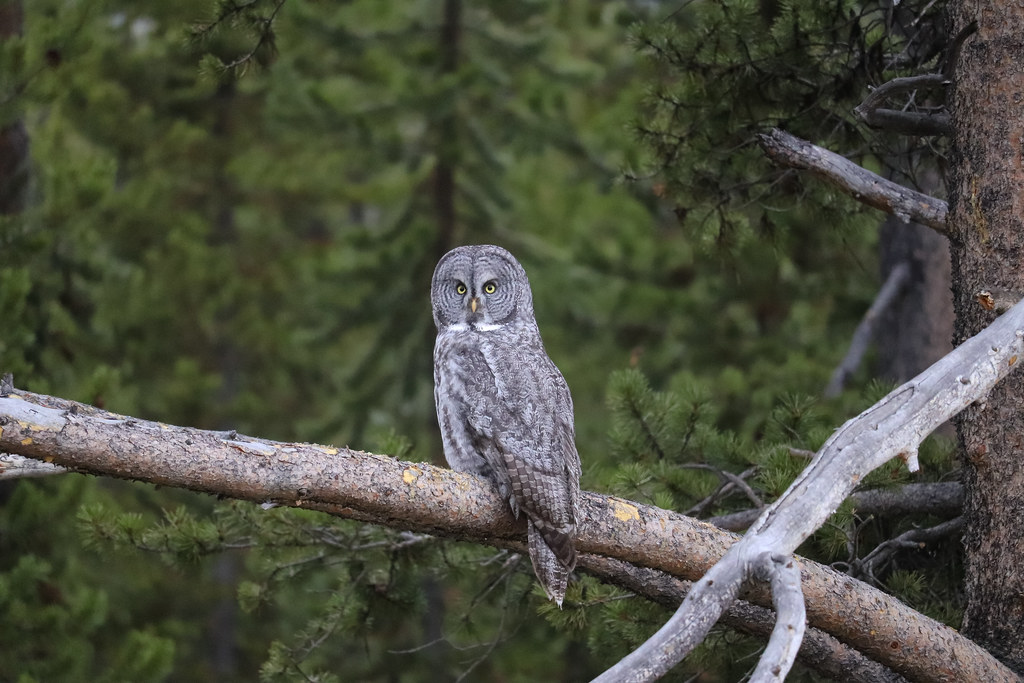
This owl is uniquely adapted to hunting in cold environments. Rather than relying on sight alone, it uses exceptionally sensitive hearing to locate small mammals moving beneath snow. From a low perch or hovering flight, it can plunge through the snow surface with remarkable precision. This ability allows it to survive in places where prey is hidden for much of the year.
In Utah, the Great Gray Owl is considered a rare resident, and its appearance is often tied to fluctuations in prey populations or broader environmental conditions. When one is seen, it tends to leave a lasting impression, standing motionless in open forest edges or meadow margins. For many observers, encountering this owl feels less like spotting a local species and more like witnessing a visitor from a much colder world.
12. Snowy Owl
Snowy Owls do not truly belong to Utah in the way most other owls on this list do, but during certain winters, they appear anyway. These large Arctic owls move south only when food shortages or population pressures force them beyond their usual range. In those irruption years, a small number reach Utah, turning up in places that resemble the open tundra they prefer.
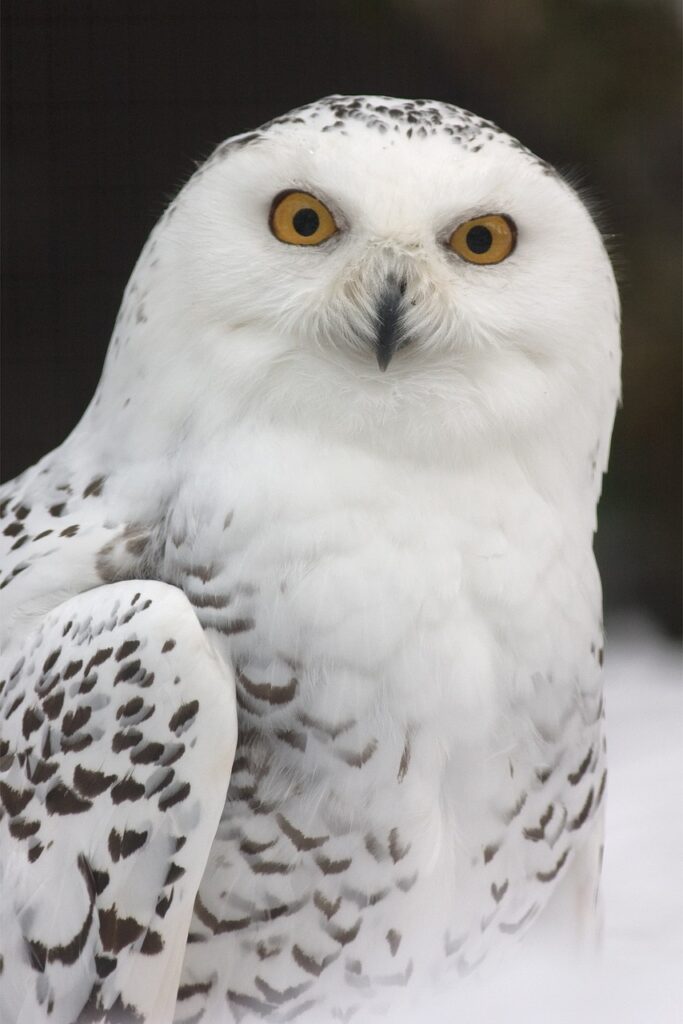
When they do appear, Snowy Owls favor wide, open landscapes such as agricultural fields, wetlands, and lake edges. They often perch directly on the ground or on low structures, relying on their excellent vision to scan for prey in broad daylight. Their hunting style and behavior feel very different from forest-dwelling owls, which adds to the sense that they are out of place.
The Snowy Owl’s size and white plumage make it unmistakable, even at a distance. Because these visits are irregular and unpredictable, sightings tend to draw attention from both birders and the general public. For many people in Utah, seeing a Snowy Owl is a once-in-a-lifetime experience, marking a brief and dramatic overlap between Arctic wildlife and the state’s winter landscape.
Resources
- U.S. Fish & Wildlife Service
- Utah Division of Wildlife Resources
- Poole, A. (Ed.). Birds of the World, Cornell Lab of Ornithology