
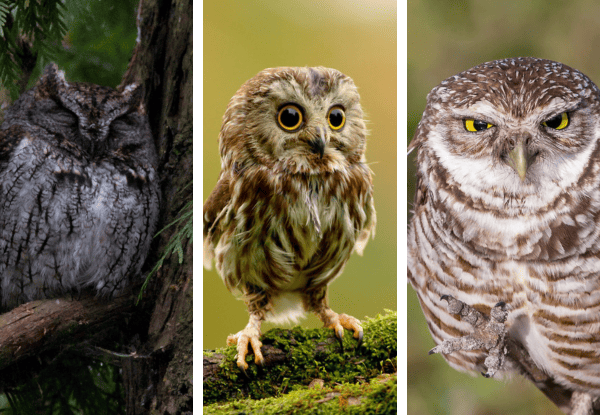
Oklahoma is home to nine regularly occurring owl species, documented by regional bird records and field surveys across the state. From dense eastern forests to wide western prairies, these birds of prey have adapted to nearly every major habitat Oklahoma offers. Year-round residents like the Great Horned Owl and Eastern Screech-Owl are common across much of the state, while others such as the Snowy Owl appear only rarely during winter irruptions. Grassland hunters like the Burrowing Owl and Short-eared Owl prefer open country, while woodland specialists like the Barred Owl thrive near rivers and mature forests.
What makes Oklahoma especially interesting is its geographic position: it sits where eastern forests meet western plains, allowing species from both regions to overlap. Some owls are strictly nocturnal, others hunt at dawn and dusk, and a few may even be active during daylight hours.
1. Great Horned Owl
The Great Horned Owl is the most widespread and adaptable owl in Oklahoma. It occurs statewide and year round, occupying forests, open country, farmland, desert edges, and suburban areas. Its ability to thrive in both remote and human altered landscapes explains why it is so consistently recorded across the state.
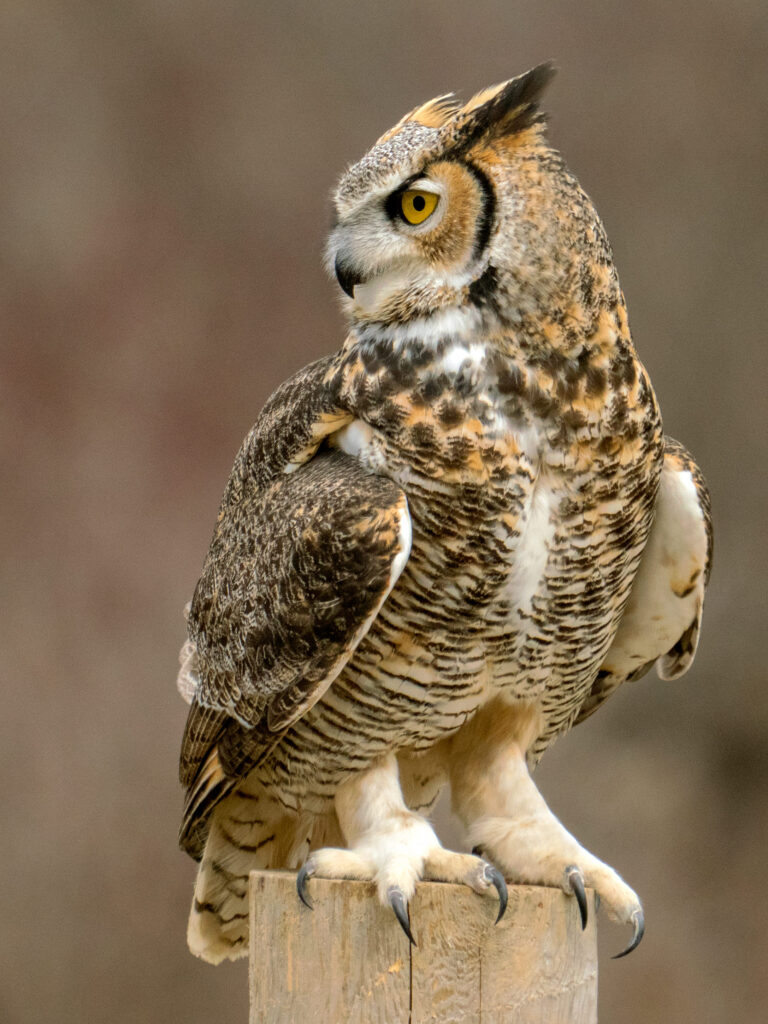
It is large, powerfully built, and marked by prominent ear tufts and bright yellow eyes. This species nests earlier than most other North American birds, often beginning courtship in winter. Instead of building its own nest, it typically uses abandoned nests built by hawks or crows. Its diet is broad and includes mammals, birds, and reptiles, reflecting its position as a top nocturnal predator.
2. Eastern Screech-Owl
In eastern and central Oklahoma, the Eastern Screech-Owl is one of the most frequently encountered owls, even if it goes unnoticed. Small and compact, it often lives in wooded neighborhoods, parks, and natural forests. It nests in tree cavities and will readily use nest boxes.
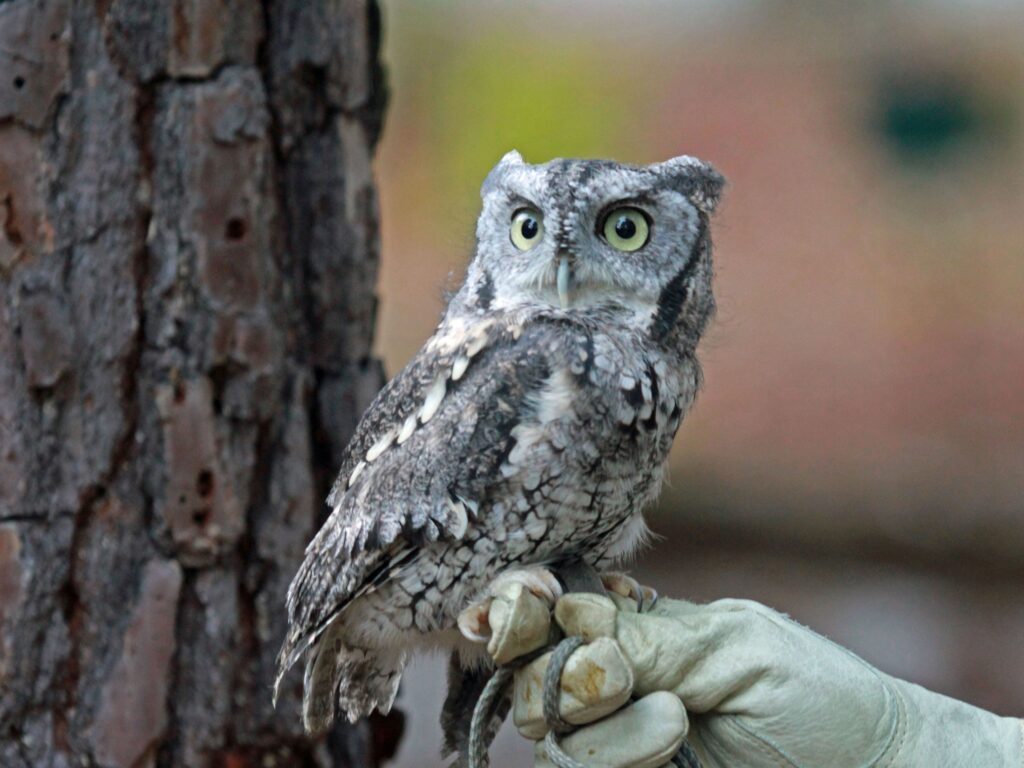
Despite its name, it rarely produces a harsh screech. Its most common vocalizations are soft trills and descending whinnies. The species occurs in gray and reddish color forms, both of which are found in Oklahoma. Its adaptability to suburban environments has allowed it to remain common in suitable habitat.
3. Barred Owl
The Barred Owl is strongly associated with mature forests, especially those near water. In Oklahoma, it is most common in the eastern part of the state where forest cover is more extensive. It favors river corridors, wooded wetlands, and bottomland forests.
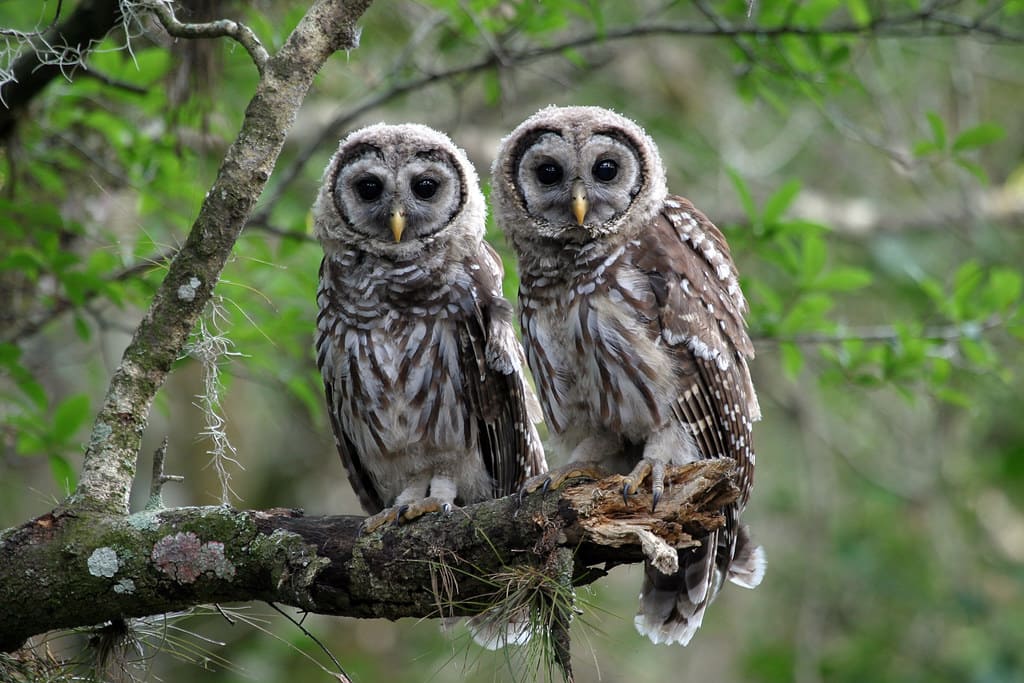
This medium to large owl has dark brown eyes and distinctive horizontal barring across the chest. Its well known call has been described as sounding like a rhythmic question. Unlike many other owls, it is sometimes active during daylight hours, particularly on overcast days.
4. Barn Owl
The Barn Owl occurs in open landscapes across Oklahoma, particularly farmland and grasslands where rodent populations are abundant. It nests in barns, silos, tree cavities, and occasionally cliffs.
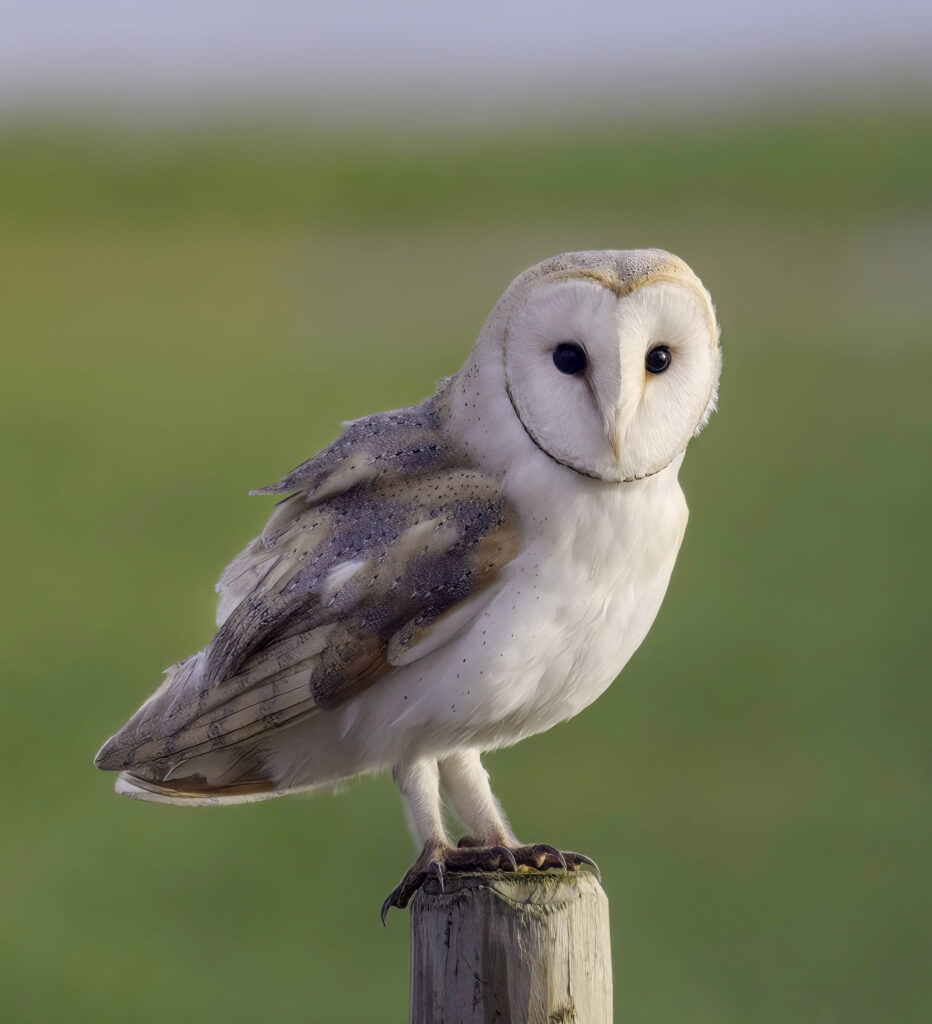
It is easily recognized by its pale body and heart shaped facial disk. Unlike most owls in the state, its eyes are dark rather than yellow. The Barn Owl is primarily nocturnal and hunts by flying low over fields while listening for prey. Its distribution within Oklahoma can be patchy, depending on available nesting sites and prey abundance.
5. Western Screech-Owl
In western Oklahoma, the Western Screech-Owl replaces its eastern counterpart. It is closely related to the Eastern Screech-Owl but occupies drier habitats, including open woodlands and riparian areas in the western part of the state.
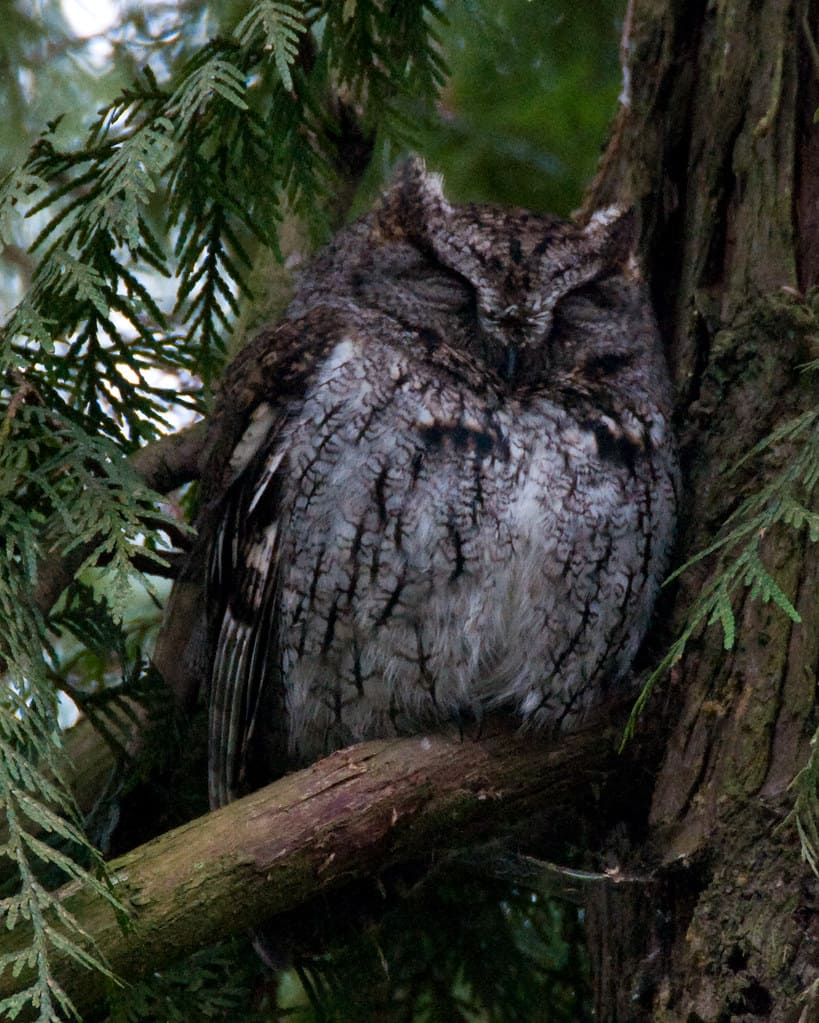
It is similar in size and general appearance to the Eastern species but differs in vocalizations and subtle plumage details. In areas where the ranges approach each other, their distributions are influenced by habitat type and regional geography.
6. Long-eared Owl
The Long-eared Owl is present in Oklahoma primarily during migration and winter. It prefers dense stands of trees or shelterbelts for roosting, especially in otherwise open landscapes.
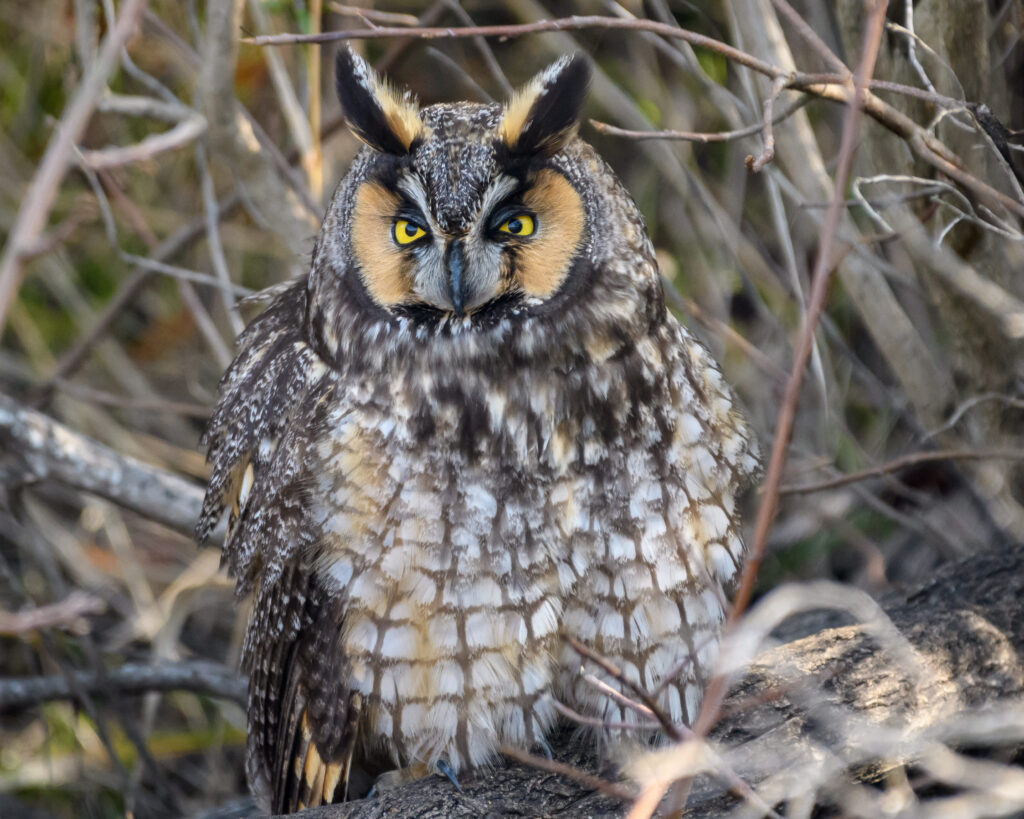
Slim and upright in posture, it has long ear tufts and orange facial disks. During the breeding season, which typically occurs farther north or west of Oklahoma, it nests in abandoned stick nests built by other birds. In Oklahoma, it is most often detected in winter roosts where multiple individuals may gather in dense cover.
7. Short-eared Owl
The Short-eared Owl is associated with open grasslands and prairies. In Oklahoma, it is most often recorded in winter and during migration. Unlike many owls, it frequently hunts during daylight, especially near sunrise and sunset.
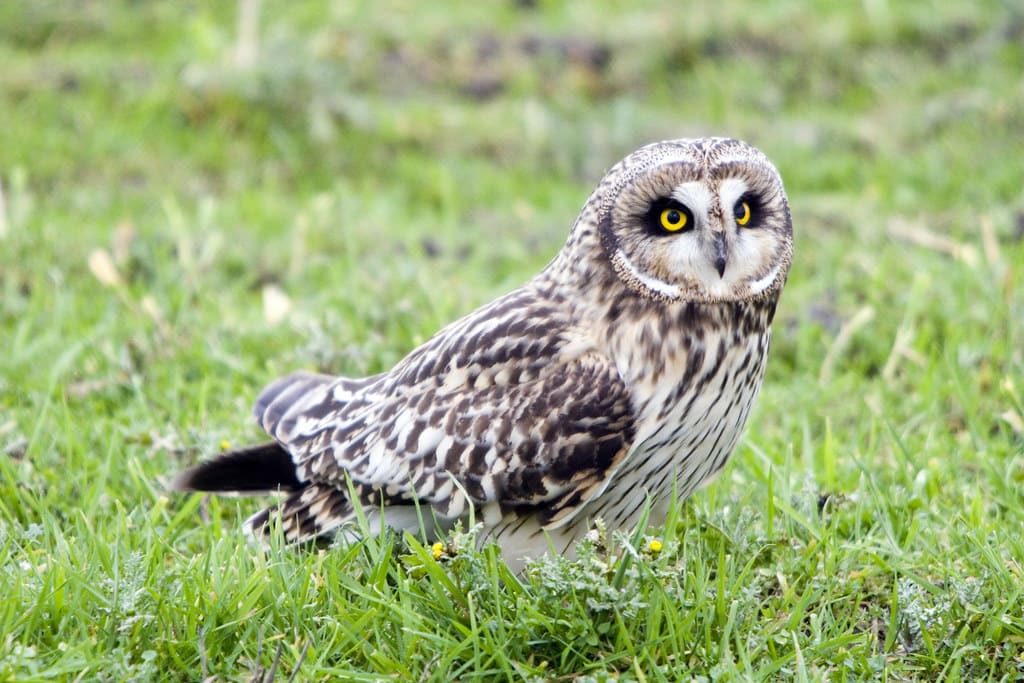
It has relatively short ear tufts that are often not visible and pale patches on the wings that show clearly in flight. When flushed from grasslands, it flies with buoyant, moth like wingbeats. Its presence in Oklahoma reflects the importance of intact grassland habitat.
8. Burrowing Owl
The Burrowing Owl is primarily found in western Oklahoma, where open prairies and grasslands provide suitable habitat. Unlike most owls, it nests underground, often using burrows created by mammals such as prairie dogs.
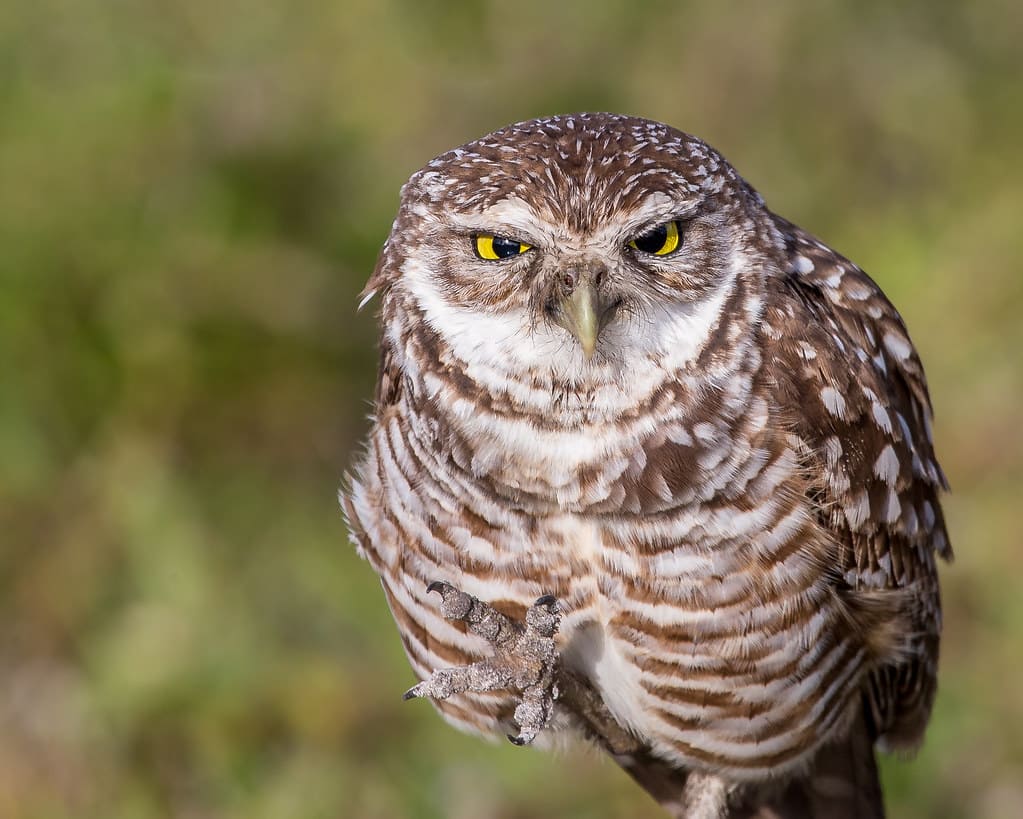
It is small, long legged, and often seen standing upright near its burrow entrance. This species is more active during daylight than many other owls. In Oklahoma, it is considered a local breeder in appropriate western habitats.
9. Northern Saw-whet Owl
The Northern Saw-whet Owl is the smallest regularly occurring owl species recorded in Oklahoma. It is primarily a migrant and winter visitor, often going unnoticed due to its small size and secretive behavior.
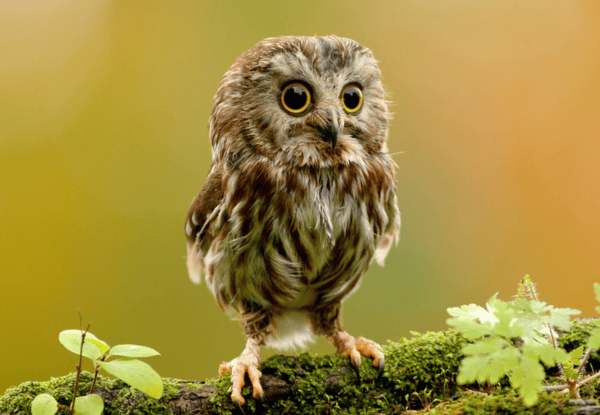
It favors dense woodland habitat and roosts in thick vegetation during the day. Most records in Oklahoma occur during fall and winter migration periods. Because it is quiet and well camouflaged, it is detected more often during banding efforts than by casual observers.