
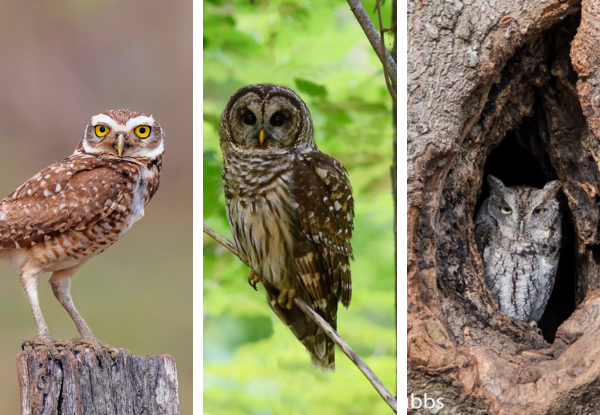
If you live in North Texas and hear strange sounds at night, you are probably not imagining things. In most cases, an owl is nearby and doing exactly what it is supposed to do. North Texas is home to at least nine owl species, and many of them live much closer to people than most residents realize.
This region works well for owls because it combines open farmland, wooded creek corridors, city parks, and growing neighborhoods. These habitats support rodents, small birds, and insects, which are the main food sources for owls. Some species stay year-round, while others appear only during winter or migration. A few are present but rarely noticed because they are quiet, well camouflaged, and active almost entirely at night.
Seeing an owl is uncommon, but sharing space with one is not. Many owls hunt after dark, roost silently during the day, and nest in tree cavities, old structures, or abandoned nests. That means an owl can live near your home for years without ever being seen. This guide explains which owl species you can realistically spot in North Texas and why you are far more likely to hear them first.
1. Great Horned Owl
If there is one owl most people in North Texas unknowingly share space with, it is the Great Horned Owl. This species has earned its reputation as the region’s most adaptable owl by learning how to live almost anywhere. Wooded creek corridors, open farmland, city parks, and even suburban neighborhoods all fall within its comfort zone. What matters most is access to food and a sturdy place to nest.

Great Horned Owls do not bother building nests of their own. Instead, they reuse old nests left behind by hawks, crows, or even large squirrels, which allows them to begin breeding earlier than most birds. In North Texas, their deep, resonant hooting is often heard in late fall and winter, when many other species are still silent. These calls are not random sounds but territorial signals tied closely to the breeding season.
Despite their size and powerful appearance, Great Horned Owls are usually noticed only by sound. They often perch quietly on tall trees, utility poles, or woodland edges at dusk, blending into the landscape while hunting rodents, rabbits, and other common prey found around human development.
2. Eastern Screech-Owl
The Eastern Screech-Owl is one of the most common owls in North Texas, yet it is also one of the easiest to overlook. Its small size and exceptional camouflage allow it to disappear into tree bark so completely that people often walk past one without realizing it is there. During the day, this owl typically roosts inside tree cavities or against trunks, remaining perfectly still and relying on its plumage to blend into the surroundings.
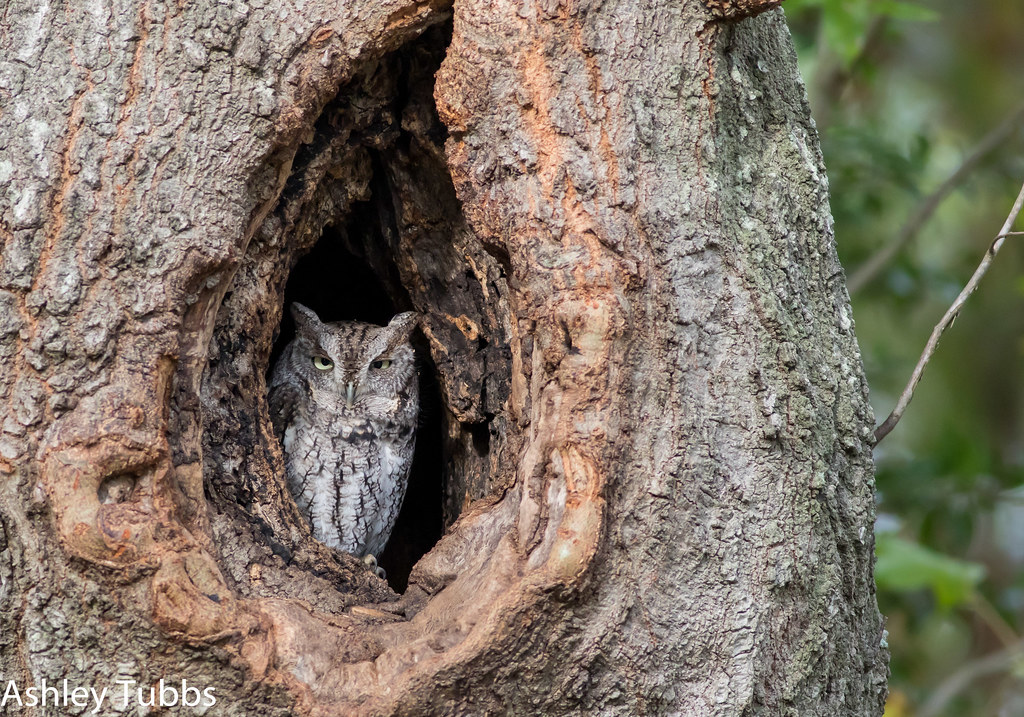
This species adapts especially well to residential areas with mature trees. Older neighborhoods, city parks, and wooded suburbs provide the cavities it needs for shelter and nesting. Because natural tree holes are sometimes scarce, Eastern Screech-Owls readily use properly placed nest boxes, which has made them one of the few owl species that can coexist closely with people without conflict.
Most activity happens after sunset. At night, these owls hunt quietly from low perches, feeding on insects, small mammals, and reptiles common in yards and green spaces. Their calls, which include soft trills and whinnying sounds, are often the only sign of their presence. Many North Texas residents hear Eastern Screech-Owls regularly without ever realizing how close these owls actually are.
3. Barred Owl
Barred Owls are closely tied to water, and in North Texas they are most often found along wooded creeks, river bottoms, and lakes with thick tree cover. These shaded corridors provide everything the species needs: tall trees for roosting, nearby water, and open understory where prey is easy to locate. If a neighborhood backs up to a creek or greenbelt, a Barred Owl may already be there.
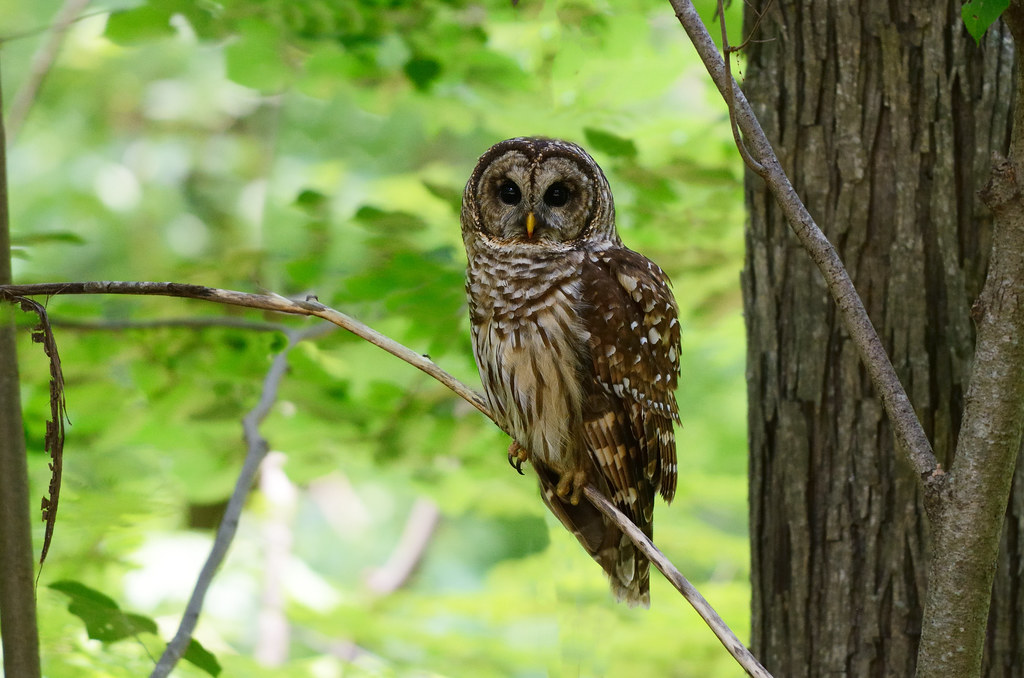
Most people become aware of Barred Owls by sound rather than sight. Their calls are loud, expressive, and carry surprisingly far through the woods, especially at night and before dawn. It is common to hear a Barred Owl calling repeatedly while the bird itself remains completely hidden in the canopy. In some cases, pairs will call back and forth, creating the impression that several owls are present when there may only be two.
In North Texas, Barred Owl sightings have become more frequent as wooded corridors along waterways have expanded and matured. Where forested habitat remains intact, this species tends to stay year-round, quietly occupying the same stretch of woods for many seasons without drawing much attention during daylight hours.
4. Barn Owl
Barn Owls belong to the open spaces of North Texas. They are most closely associated with farmland, grasslands, ranches, and wide agricultural fields where rodents are abundant. Unlike forest owls that hunt beneath tree cover, Barn Owls rely on open ground and low vegetation, using their silent flight and exceptional hearing to locate prey moving below.
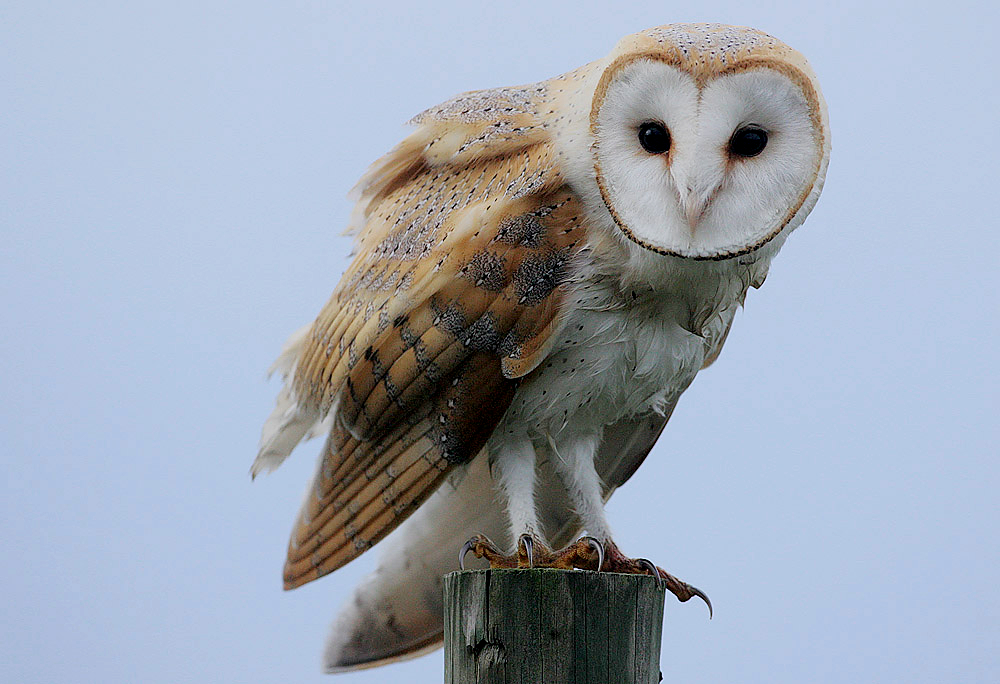
Their name comes from their long history of nesting in human structures. Barns, silos, old sheds, bridges, and abandoned buildings often provide the enclosed spaces Barn Owls need for roosting and raising young. In many rural areas, these structures have replaced natural nesting cavities, allowing the species to live close to people without being noticed.
Most activity happens well after sunset. Barn Owls typically hunt late into the night, flying low over fields and roadside edges. Although they are present year-round in parts of North Texas, their numbers have declined in some areas as old buildings disappear and land use changes. Because they are strictly nocturnal and tend to avoid populated areas during daylight, Barn Owls often remain unseen even where they are still actively hunting.
5. Western Screech-Owl
The Western Screech-Owl is a quiet presence in North Texas and is most often found in the drier western portions of the region. It favors landscapes with scattered trees rather than dense forest, including open woodlands, mesquite stands, and rural areas where patches of cover break up open ground. Although closely related to the Eastern Screech-Owl, it occupies slightly different terrain, which limits how often the two species overlap.
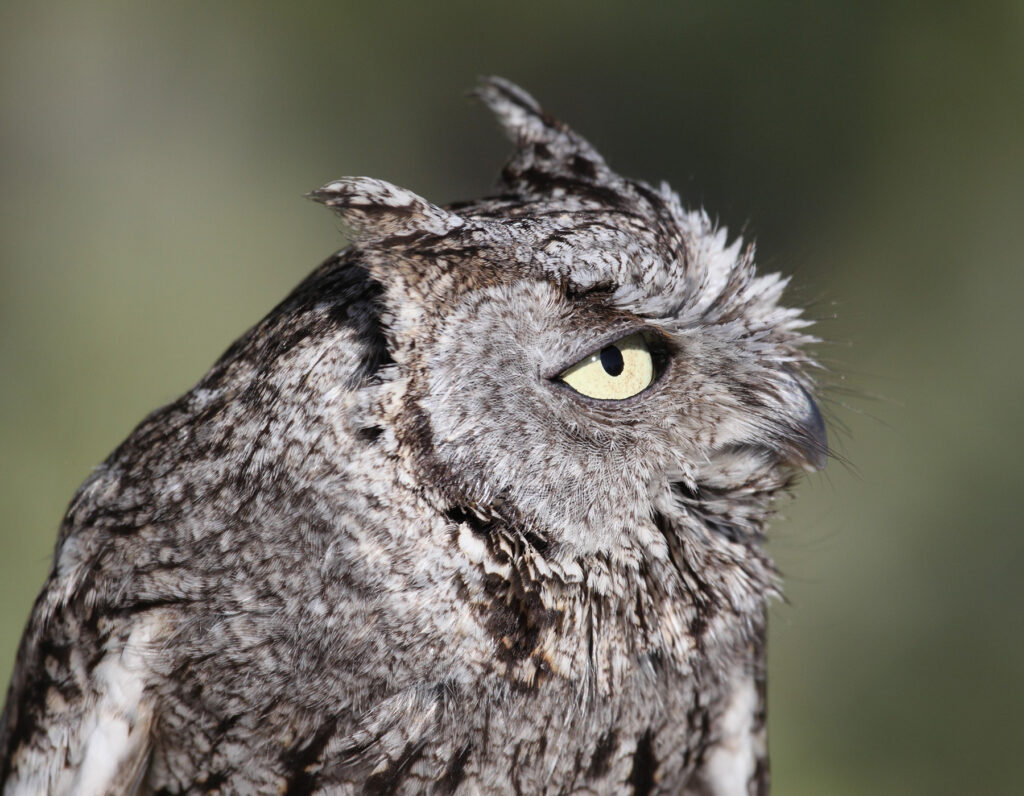
This owl is small and extremely well camouflaged. During the day, it roosts inside tree cavities or pressed against trunks, relying on its patterned plumage to blend into bark and shadows. Because of this, it can be present in an area for years without being detected. Even its calls are subtle. The soft, bouncing notes it produces at night do not carry as far as those of larger owls, making it easy to miss unless conditions are quiet.
Western Screech-Owls remain in North Texas throughout the year, using natural cavities and occasionally nest boxes for shelter and breeding. Most encounters come from patient listening rather than visual sightings, as the bird itself rarely reveals its location once daylight arrives.
6. Burrowing Owl
Burrowing Owls are unlike any other owl found in North Texas, mainly because they live on the ground instead of in trees. They depend on wide, open landscapes where visibility is good and vegetation stays low. In this region, that often means grasslands, agricultural fields, airport property, and other areas that remain open and lightly developed. These owls use underground burrows for shelter and nesting, most of which were originally dug by mammals or created through past human activity.
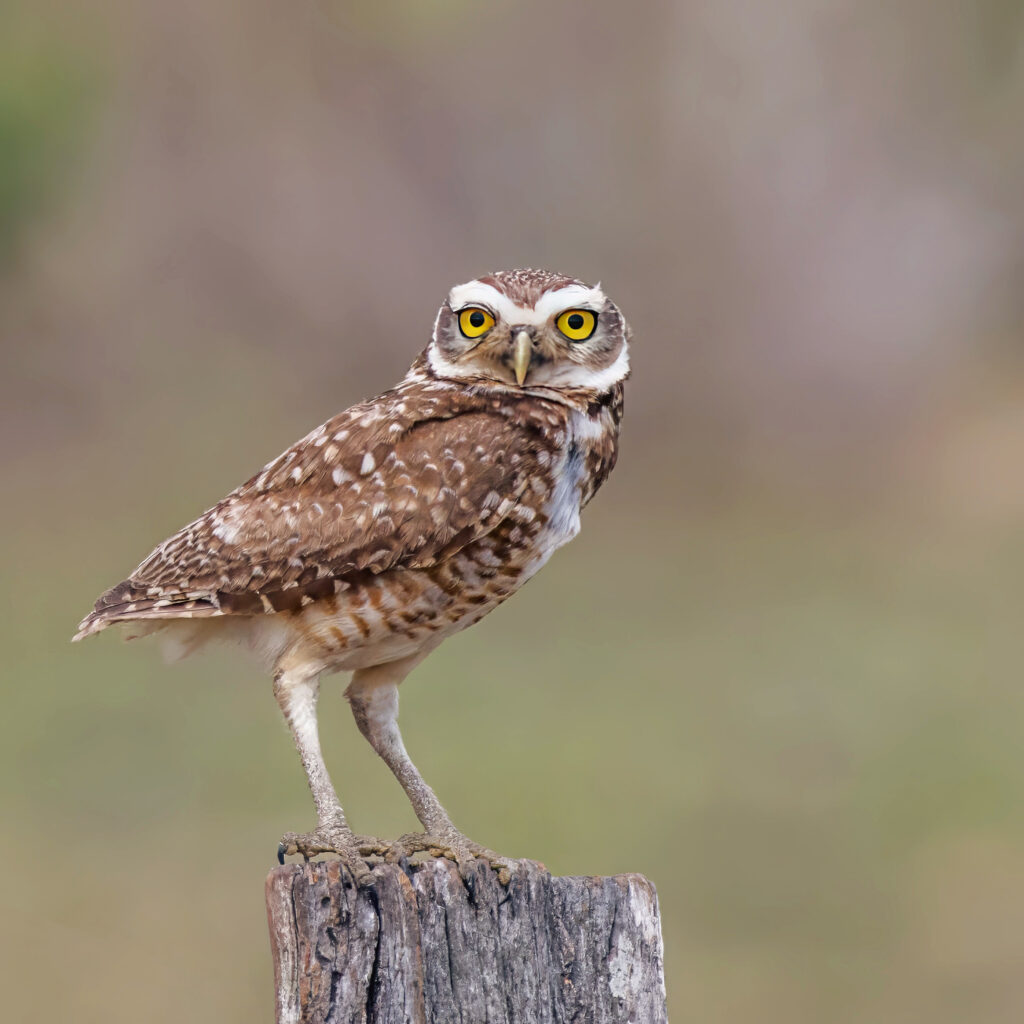
Unlike most owls, Burrowing Owls are active during the day as well as at night. It is not unusual to see one standing upright near the entrance of its burrow, watching its surroundings rather than hiding. This behavior makes them easier to spot than many other owl species, even though their overall range in North Texas is limited.
Burrowing Owls tend to remain in the same general areas year-round where suitable habitat persists. However, their numbers are closely tied to land use. As open grasslands are developed or disturbed, local populations often decline, making remaining habitat increasingly important for their survival.
7. Long-eared Owl
The Long-eared Owl is one of the least visible owls in North Texas, even when it is present. During the day, it roosts silently in dense trees, often choosing thick foliage that provides complete cover. Because it remains motionless and well hidden, this owl can be overlooked easily, even by experienced birders standing nearby.
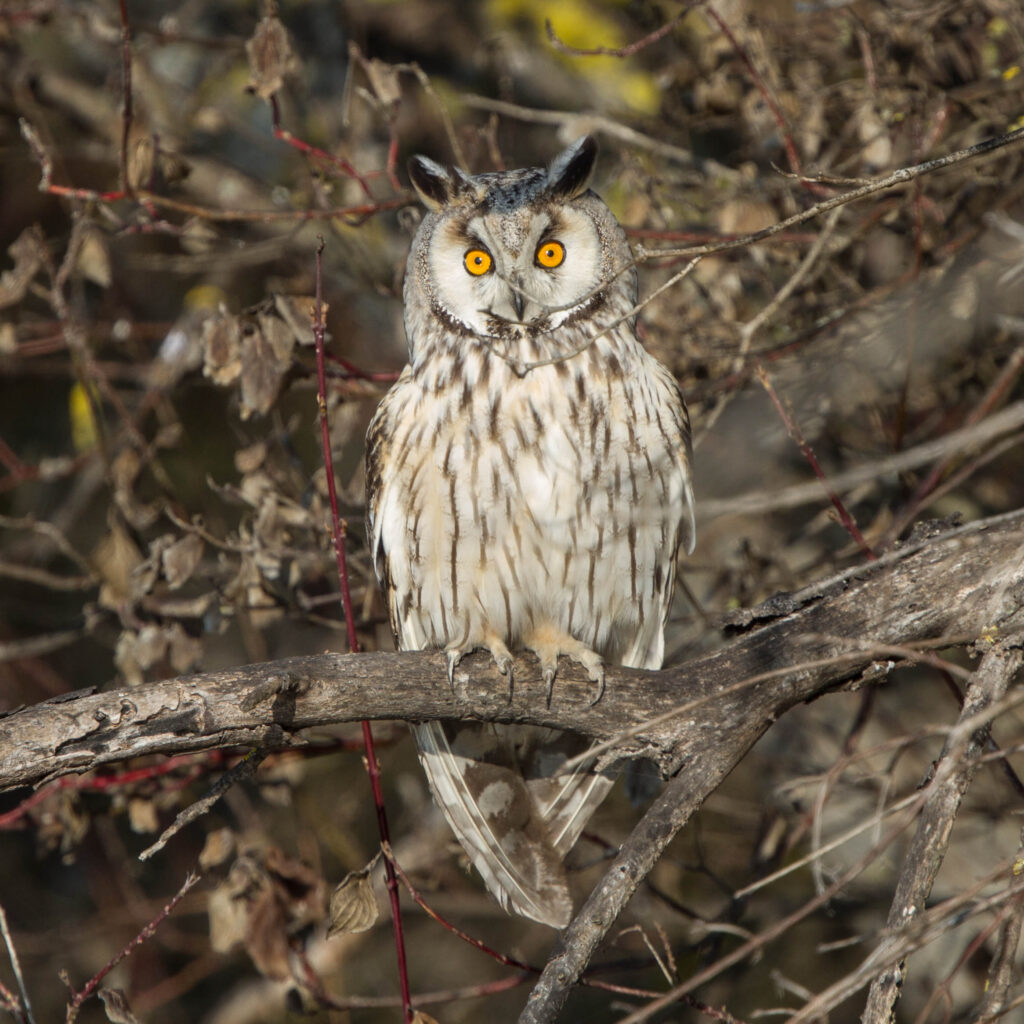
In North Texas, Long-eared Owls are most often found along the edges of wooded areas that border open fields or grassland. These locations allow them to roost safely during daylight hours and hunt rodents in open spaces after dark. Their hunting activity is almost entirely nocturnal, and they typically fly low and quietly, making detection difficult.
Most sightings in the region occur during winter, when individuals move south from colder breeding areas. During this season, Long-eared Owls sometimes roost communally, with several birds using the same stand of trees. Even then, they rarely draw attention to themselves. Encounters are usually brief and depend more on chance than effort, which adds to this owl’s reputation as one of North Texas’s most secretive winter visitors.
8. Short-eared Owl
Short-eared Owls are one of the few owls in North Texas that people are more likely to see than hear. Unlike most owl species, they hunt during daylight and at dusk, flying low over open ground with a slow, buoyant wingbeat. This behavior makes them noticeably easier to spot, especially in wide, open landscapes where visibility is good.
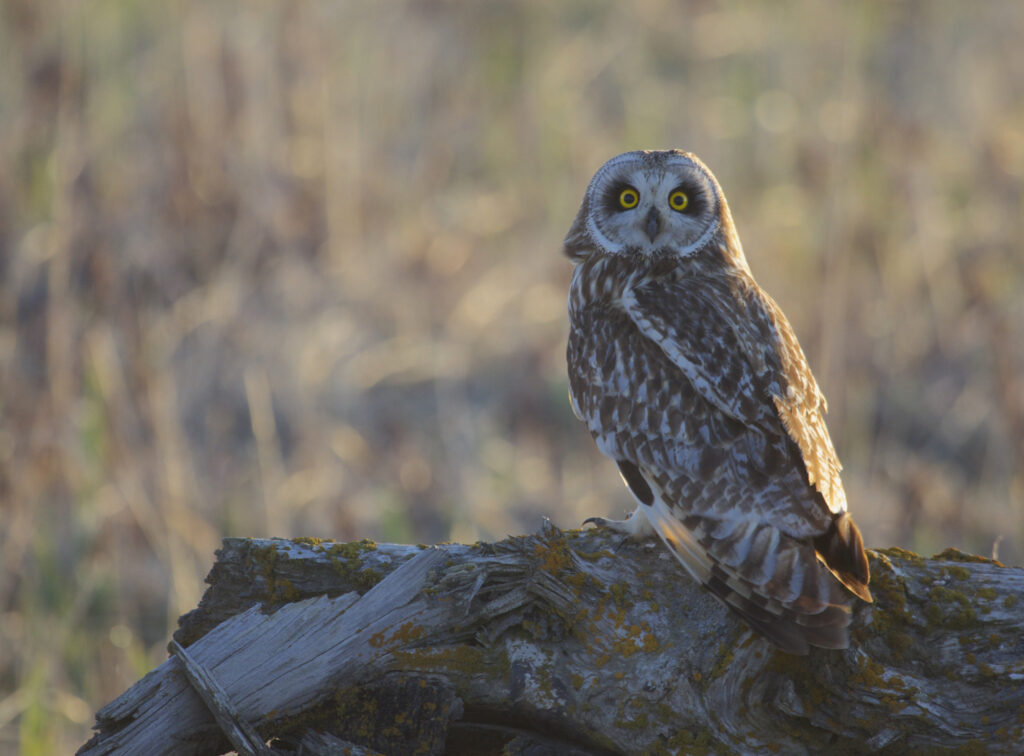
In North Texas, Short-eared Owls are closely tied to prairies, grasslands, and other expansive open areas with minimal tree cover. These habitats support the small mammals they rely on and allow them to hunt efficiently without obstacles. Most individuals appear in the region during winter, arriving from northern breeding grounds as temperatures drop.
Although their daytime activity draws attention, Short-eared Owls are not common. Their presence depends heavily on the availability of large, undeveloped grasslands, which have declined significantly over time. As a result, sightings tend to be localized and irregular. When suitable habitat remains intact, these owls may return to the same areas in successive winters, quietly patrolling the same open fields before moving on again in spring.
9. Northern Saw-whet Owl
The Northern Saw-whet Owl is the smallest and most easily overlooked owl that appears in North Texas. Even when it passes through the region, it rarely draws attention. Its size, soft calls, and secretive behavior allow it to move through wooded areas almost unnoticed, which is why many local birders never encounter one at all.
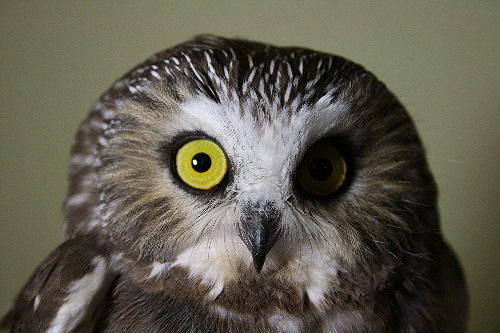
Most North Texas records come from migration or winter, when individuals move south from northern breeding grounds. During this time, the owls roost quietly in dense vegetation, often remaining hidden just a few feet above the ground. They are almost entirely inactive during daylight and rarely vocal outside of specific seasonal periods.
Because of this, Northern Saw-whet Owls are usually detected through targeted call surveys rather than casual observation. These surveys reveal that the species passes through more regularly than sightings suggest, but it seldom stays long. Encounters are typically brief and depend on timing rather than location, making the Northern Saw-whet Owl one of the most elusive and rarely experienced owls in North Texas.