
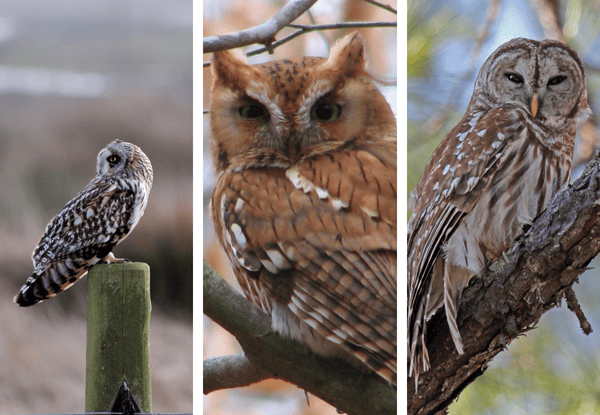
If you have ever stepped outside on a warm Alabama evening and heard a deep hooting call rolling through the trees, you have already met one of the state’s eight owl species. Alabama supports a full cast of resident and seasonal owls, from the powerful Great Horned Owl found statewide to the small Eastern Screech Owl that quietly lives in wooded neighborhoods and parks. Forested wetlands echo with the classic “who cooks for you” call of the Barred Owl, while open farmland and old barns may shelter the pale faced Barn Owl.
Not all of Alabama’s owls stay year round. Short eared Owls appear mainly in winter over open fields and marshes, and the tiny Northern Saw whet Owl is an uncommon cold season visitor. The Long eared Owl is rare but has been recorded during migration and winter months.
Together, these eight species occupy forests, swamps, grasslands, agricultural land, and suburban edges. Most hunt at night and feed heavily on rodents and other small animals, making them both fascinating neighbors and quiet contributors to Alabama’s ecosystems.
1. Eastern Screech Owl
This is the owl many Alabamians unknowingly live beside. The Eastern Screech Owl occurs statewide year round and adapts easily to wooded neighborhoods, city parks, farmland edges, and mature forests. It is small, about the size of a robin, and spends daylight hours hidden inside tree cavities, often old woodpecker holes.
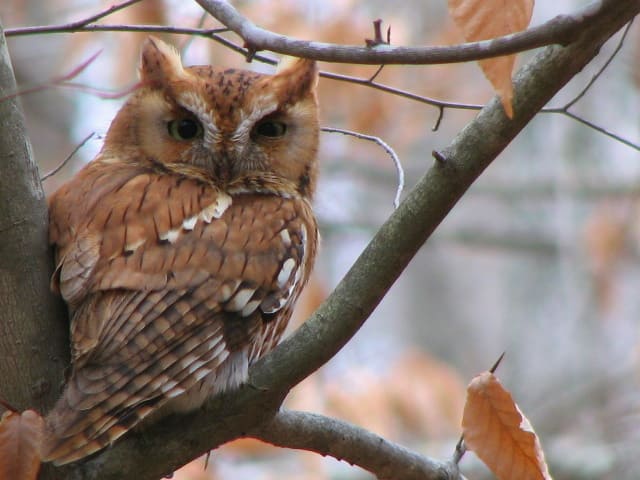
Its call is not a harsh scream as the name suggests. Instead, it gives a soft trill or wavering whinny that drifts through the night. After sunset it hunts from low perches, feeding on mice, small birds, and large insects. Its flexibility and tolerance of human activity make it one of the most stable owls in Alabama.
2. Great Horned Owl
The Great Horned Owl is Alabama’s largest regularly occurring owl and is found statewide throughout the year. Its prominent ear tufts and deep hooting voice make it easy to recognize. That low, resonant call often carries long distances on calm nights.
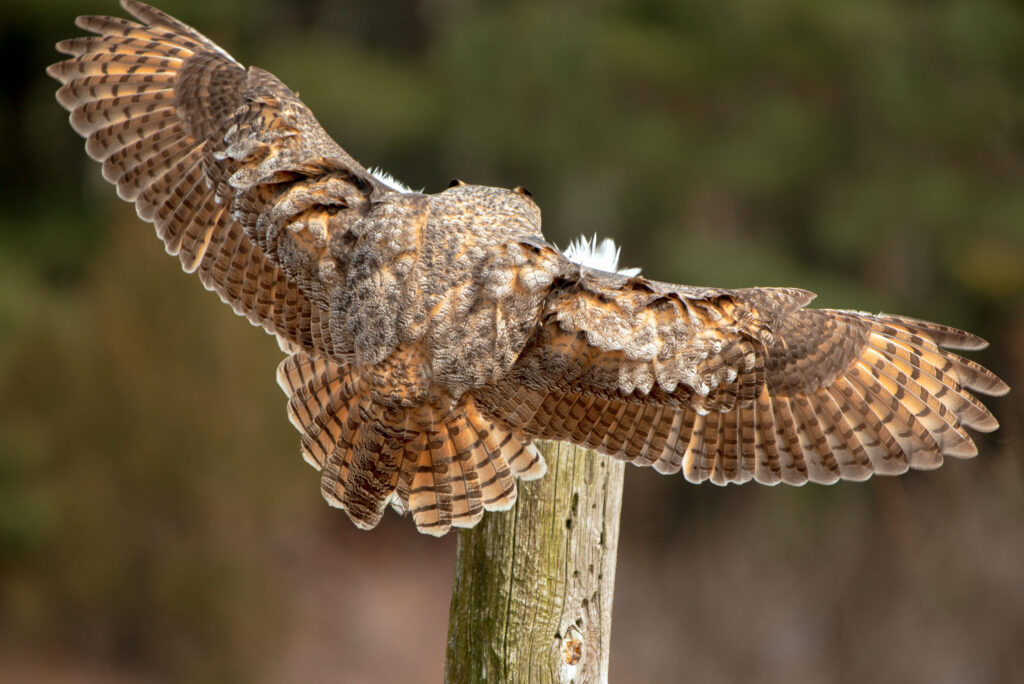
It occupies forests, wetlands, farmland, and even urban edges. Rather than building its own nest, it typically takes over old nests built by hawks or crows. As a powerful predator, it feeds on rabbits, rodents, birds, and other small animals. Its strength and adaptability allow it to thrive in almost every part of the state.
3. Barred Owl
The Barred Owl is closely tied to wooded habitats near water and is common throughout Alabama. River swamps, bottomland hardwood forests, and shaded creek corridors provide ideal conditions. Unlike the Great Horned Owl, it lacks ear tufts and has dark brown eyes.
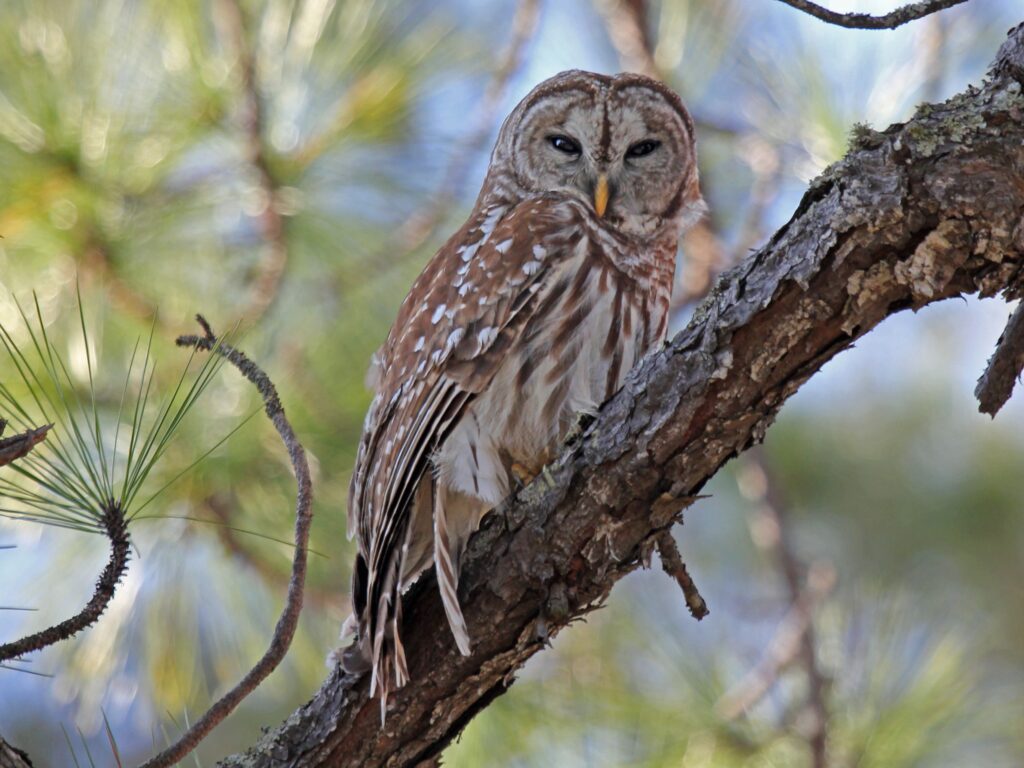
Its call, often described as “who cooks for you,” echoes clearly through swamp forests. It nests in tree cavities or occasionally uses abandoned stick nests. Its diet includes rodents, amphibians, reptiles, and small birds. In Alabama’s wet habitats, frogs and other amphibians are frequently taken.
4. Barn Owl
The Barn Owl prefers open country over forests. In Alabama it is present year round but local, favoring farmland, grasslands, and areas with old buildings. Its pale, heart shaped face makes it unmistakable.
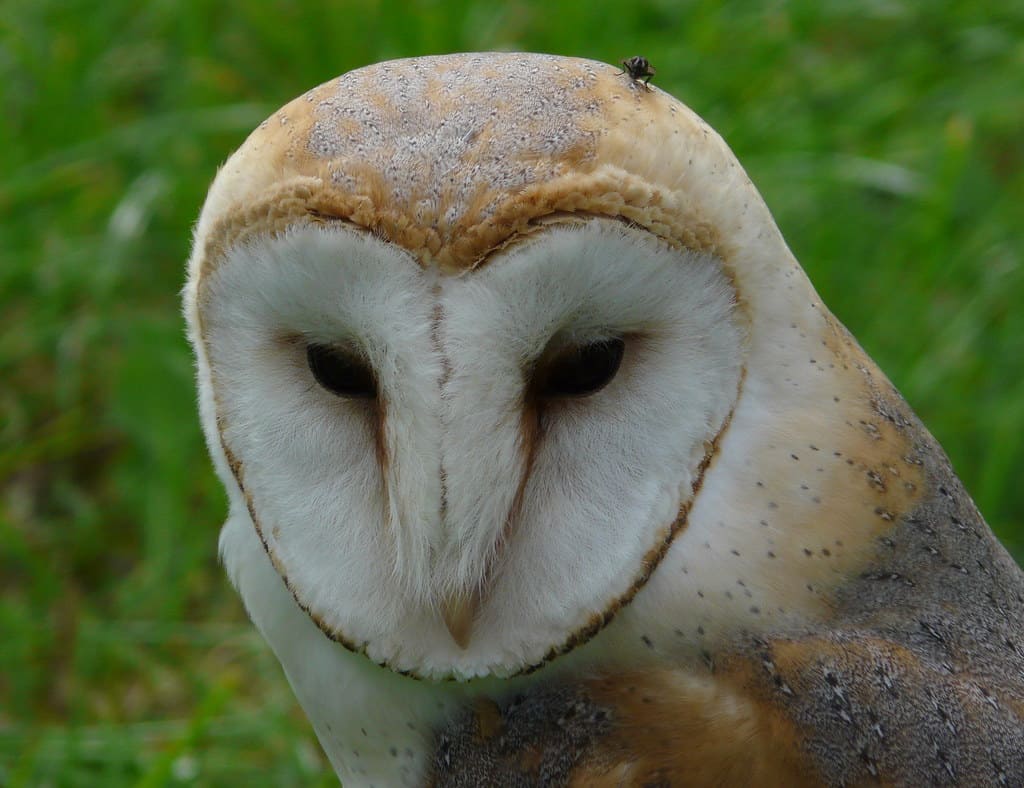
Instead of hooting, it gives a long raspy scream. It nests in barns, abandoned structures, tree cavities, or similar sheltered spaces. Its diet consists primarily of small mammals, especially mice and other rodents. In agricultural areas, it plays an important role in natural rodent control.
5. Northern Saw-whet Owl
The Northern Saw-whet Owl does not breed in Alabama but appears as an uncommon winter visitor. Most records come from forested areas during colder months. It is Alabama’s smallest owl, with a rounded head and no ear tufts.
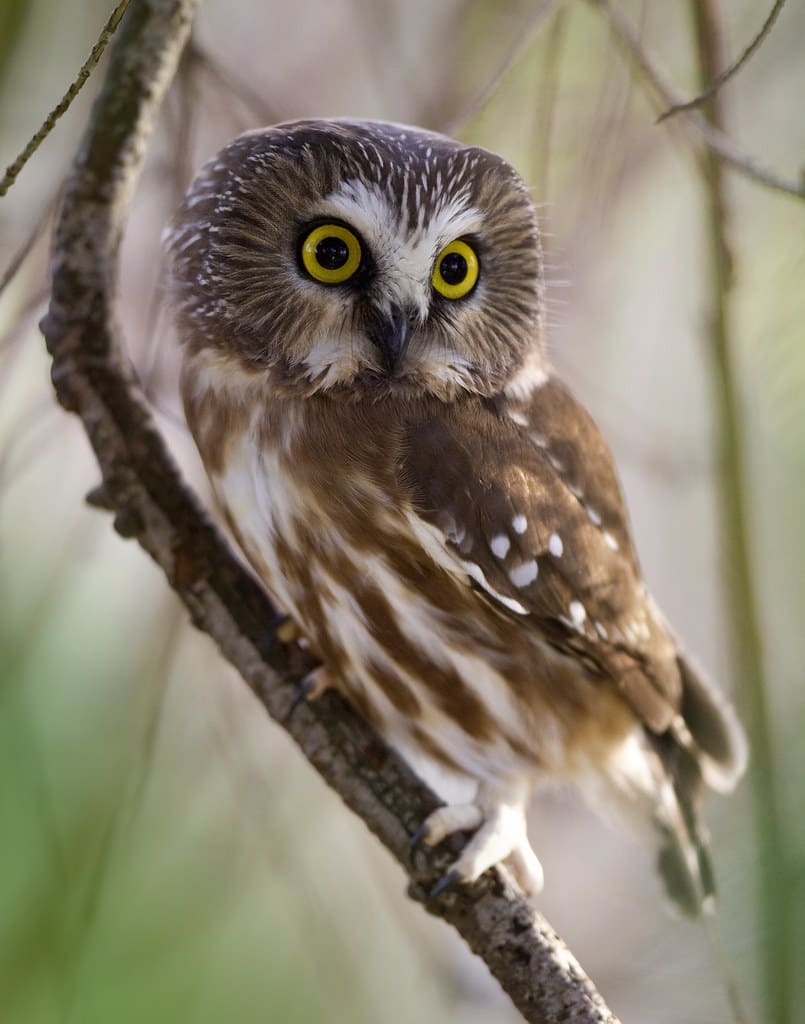
In winter it is usually silent and difficult to detect. It hunts small rodents at night and roosts in dense vegetation during the day. Its presence varies from year to year depending on migration patterns and food availability farther north.
6. Long-eared Owl
The Long-eared Owl is rare in Alabama and is recorded mainly during migration or winter. It favors wooded areas for roosting but hunts over nearby open land at night. Its tall ear tufts sit close together on the head, giving it a narrow appearance.
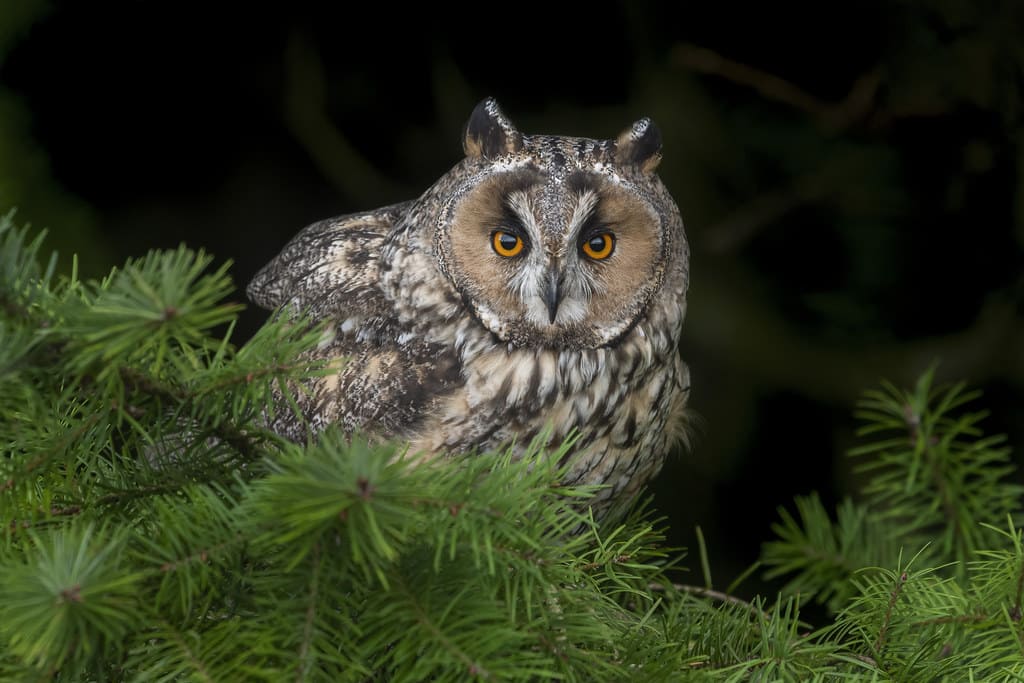
It does not build its own nest, instead using abandoned stick nests created by other birds. Because it roosts quietly in dense cover during the day, it can easily go unnoticed when present in the state.
7. Short-eared Owl
The Short-eared Owl prefers open landscapes such as grasslands, marshes, and large agricultural fields. In Alabama it is mainly a winter visitor. Unlike most owls, it is often active at dusk and sometimes even during daylight.
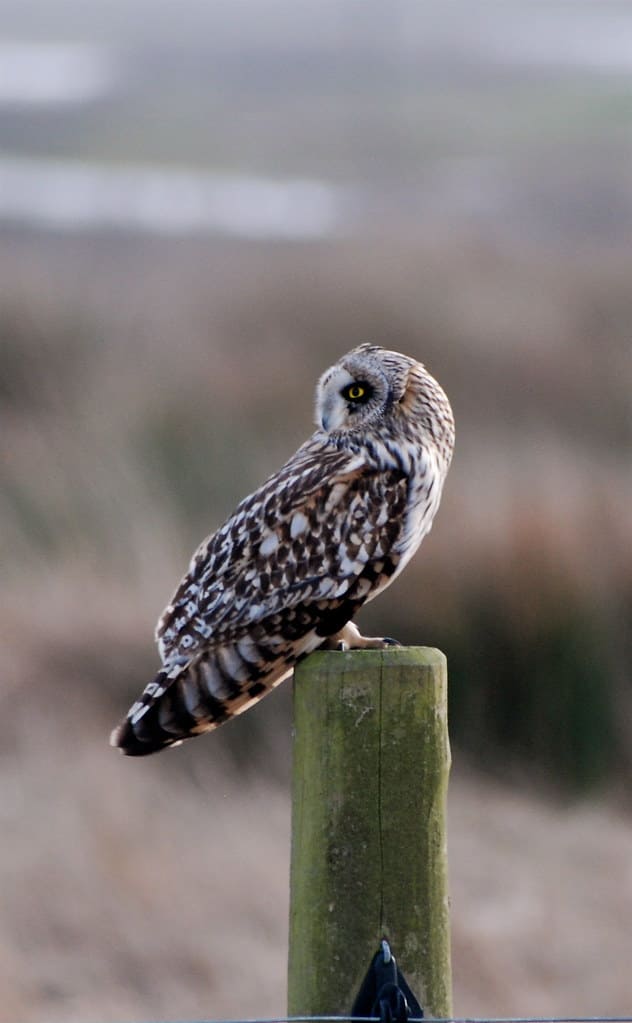
Its ear tufts are small and often not visible. It flies low over fields with a buoyant, almost moth like flight while hunting rodents. It nests on the ground within grasslands in its breeding range, though it does not typically breed in Alabama.
8. Snowy Owl
The Snowy Owl is not a regular species in Alabama but has been recorded during rare winter irruptions. These movements occur when food shortages in the Arctic push individuals farther south than usual.
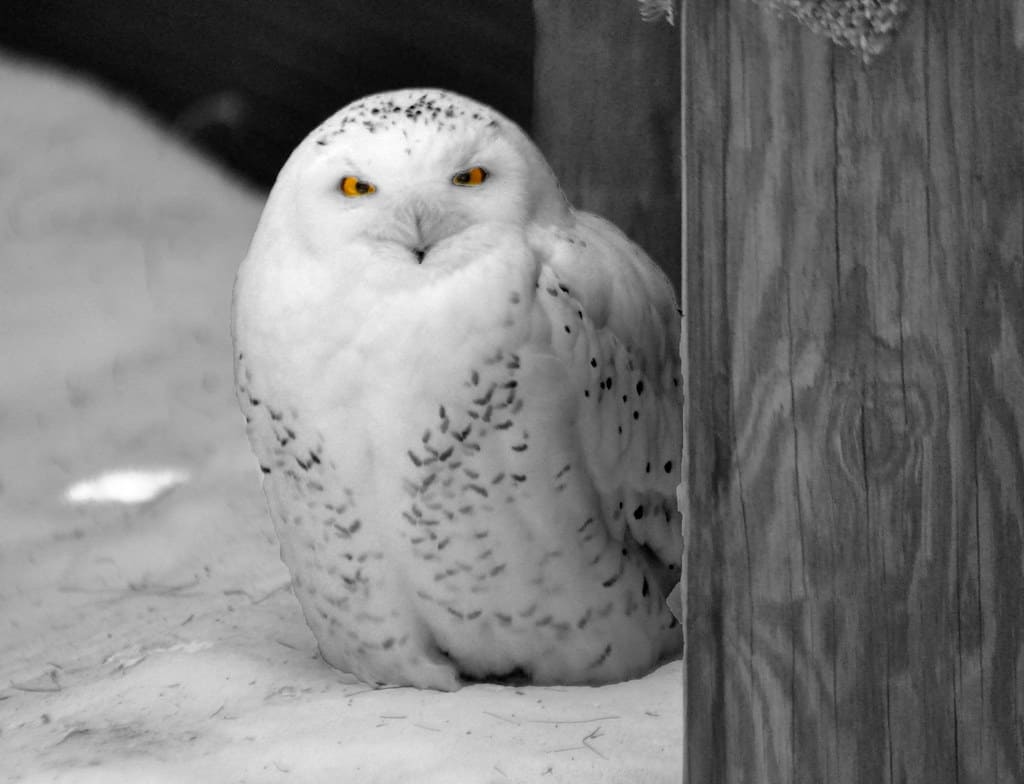
When one appears in Alabama, it is usually found in open habitats such as coastal areas or large fields rather than forests. Large and mostly white, it looks very different from the state’s woodland owls. Sightings are uncommon and often attract significant attention from birders.