
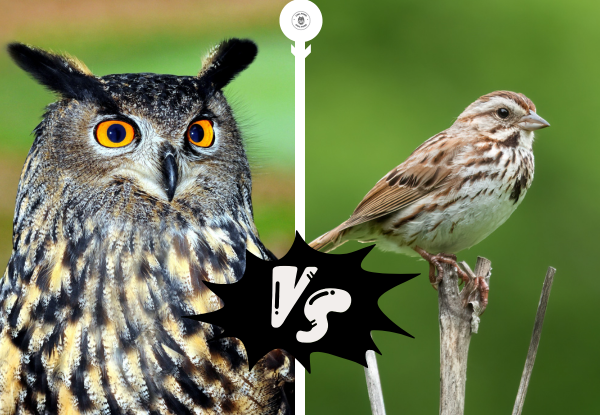
If you ever watch an owl, it looks like it has all the time in the world. It can sit on a branch for ages, barely moving, as if nothing is urgent. That calm is not confidence for show. It is how an owl survives. Owls hunt by waiting. They rely on sharp hearing and strong night vision to spot prey without chasing it around. One successful hunt can meet their energy needs for hours, so patience pays off.
Sparrows do not get that luxury. Their bodies burn energy fast, and their food comes in small, scattered bits. To stay alive, they have to keep moving, keep eating, and keep checking for danger. On top of that, sparrows are prey for many animals, which means standing still for too long is a bad idea. Staying busy is how they stay safe.
So the owl’s calm and the sparrow’s constant motion are not personality quirks. They are survival habits shaped over millions of years. Owls win by waiting and striking at the right moment. Sparrows survive by never switching off. Both birds are doing exactly what nature trained them to do, even if one looks far more relaxed while doing it.
🦉 Owl
Calm, patient, and strategic. Wins quietly and efficiently.
🐦 Sparrow
Fast, alert, and energetic. Wins by staying active.
Why Owls Win by Sitting Still While Other Birds Try Too Hard
An owl sitting motionless on a branch is not resting. It is working in the most efficient way possible. Owls are ambush predators, which means their success depends on waiting for the right moment rather than chasing every opportunity.
They let the environment do the work. When a mouse rustles in the grass or shifts under leaves, the owl already knows where it is without needing to move an inch. That stillness keeps the owl hidden and silent, which is exactly what prey does not want.
This calm approach only works because owls are built for it. Their hearing is so sensitive that they can pinpoint prey using sound alone, even in total darkness. Their eyes, facing forward like ours, give them strong depth perception, which matters when a hunt ends with a precise drop from above.
Flying around constantly would actually reduce their advantage. Movement creates noise, breaks camouflage, and burns energy that might be better saved for a single, well timed strike.
Energy is the quiet factor shaping all of this. Owls hunt prey that delivers a lot of calories at once, usually small mammals like rodents. Catching one mouse can fuel an owl for hours. That means there is no pressure to stay busy.
In fact, unnecessary movement would be wasteful. In the wild, wasting energy can be more dangerous than missing a meal. Sitting still is not passive. It is careful budgeting.
Smaller birds live under very different rules. Songbirds feed on seeds and insects that provide quick energy but in small amounts. To survive, they have to keep moving, keep eating, and keep watching for threats. To us, this looks frantic. To them, it is survival. Owls do not share that lifestyle, so they do not share that stress.
What looks like effortlessness in owls is actually restraint. They are not winning because they try harder. They are winning because they know when not to try at all.
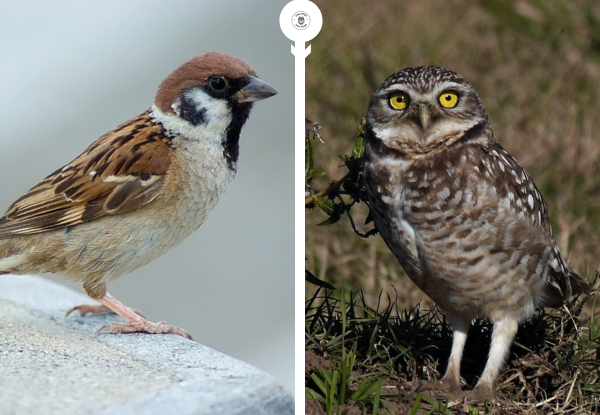
Why Owls Stay Relaxed and Still End Up on Top of the Food Chain
Being high on the food chain changes how you experience the world, and owls are a good example of that. Most adult owls are not on many animals’ menus, especially once the sun goes down. This immediately lowers the background stress of daily life. While smaller birds are constantly checking the sky for danger, an owl can afford to focus on what matters. Fewer threats mean fewer reasons to panic.
Night also works in the owl’s favor. Darkness thins out competition and quiets the landscape. Owls evolved to hunt when most other predators are inactive, which gives them access to prey with less interference.
In these conditions, rushing around would actually be counterproductive. Remaining still helps an owl blend into the shadows and avoid drawing attention, both from prey and from the occasional rival. Silence is not just helpful. It is part of the weapon.
This calm does not come from arrogance. Owls are not fearless, and they are not reckless. They simply avoid unnecessary risks. When an owl waits, it is choosing control over effort. By conserving strength and acting only when the odds are good, owls reduce injury, avoid wasted energy, and keep the upper hand. Speed looks impressive, but control is what keeps a predator successful over time.
In nature, the animals that last are rarely the ones that move the most. They are the ones that know when to move at all. Owls have learned that lesson well, and it shows in how quietly they rule their corner of the food chain.
🦉 The Owl
The owl survives by doing less, not more. It waits quietly, listens carefully, and strikes only when the odds are right. With powerful hearing and strong night vision, an owl does not need to chase food all day. One successful hunt can fuel it for hours.
Sitting still is not inactivity. It is strategy. By conserving energy and avoiding unnecessary movement, owls reduce risk and stay in control of their environment.
Strategy: Wait and Win🐦 The Sparrow
Sparrows live fast because they have to. Their small bodies burn energy quickly, and their food comes in small pieces that require constant searching. Standing still for too long is risky when so many predators are nearby.
Movement keeps sparrows fed and alert. What looks like chaos is actually discipline shaped by survival pressure.
Strategy: Move or Miss Out