
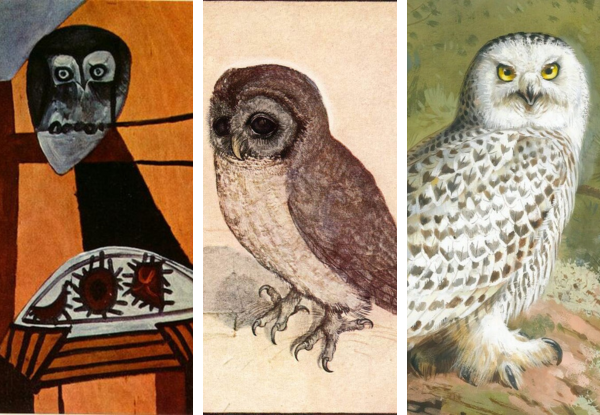
Owls have appeared in famous paintings for centuries, not because artists ran out of birds to paint, but because the owl carries an unusual mix of intelligence, mystery, and quiet authority. From Albrecht Dürer’s highly realistic studies to Pablo Picasso’s playful mid-20th-century owls, artists across eras have repeatedly returned to this night bird when exploring deeper ideas.
What makes these famous owl paintings so compelling is how differently each artist uses the same subject. Franz Marc infused the owl with emotional intensity during the rise of Expressionism, while Joan Miró stripped it down to symbols and shapes, proving an owl could survive abstraction. Naturalists like John James Audubon and Archibald Thorburn treated owls as serious scientific subjects long before wildlife photography became common, while works such as Wise Old Owl by Edward Hersey Richards leaned into the symbolic and cultural identity the bird had already gained.
In Inuit art, Kenojuak Ashevak transformed the owl into a spiritual presence, while contemporary painter Walton Ford uses owls to question humanity’s relationship with nature. Together, these works show that in art, the owl is never just decoration-it is a symbol that continues to evolve with every generation.
1. The Owl by Albrecht Dürer (circa 1500)
Albrecht Dürer’s study of an owl stands among the earliest realistic animal depictions in European art. Created using watercolor and gouache, the work focuses on anatomy, posture, and texture rather than allegory.
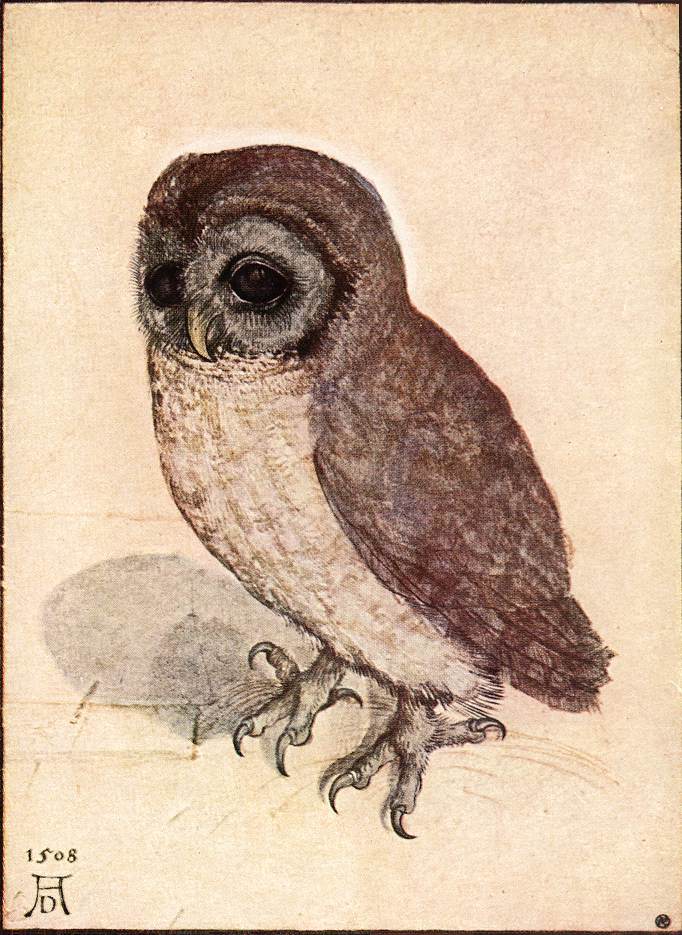
During the Renaissance, such direct observation marked a turning point, as artists increasingly treated animals as subjects worthy of careful study. Dürer’s owl reflects the growing influence of science and natural history in art, and similar studies are preserved today in major European museum collections associated with his work.
2. Athena with the Owl in Renaissance painting
Renaissance artists frequently revived classical Greek themes, including Athena accompanied by her owl. These paintings, found across European collections, were inspired by ancient sculpture and coinage.
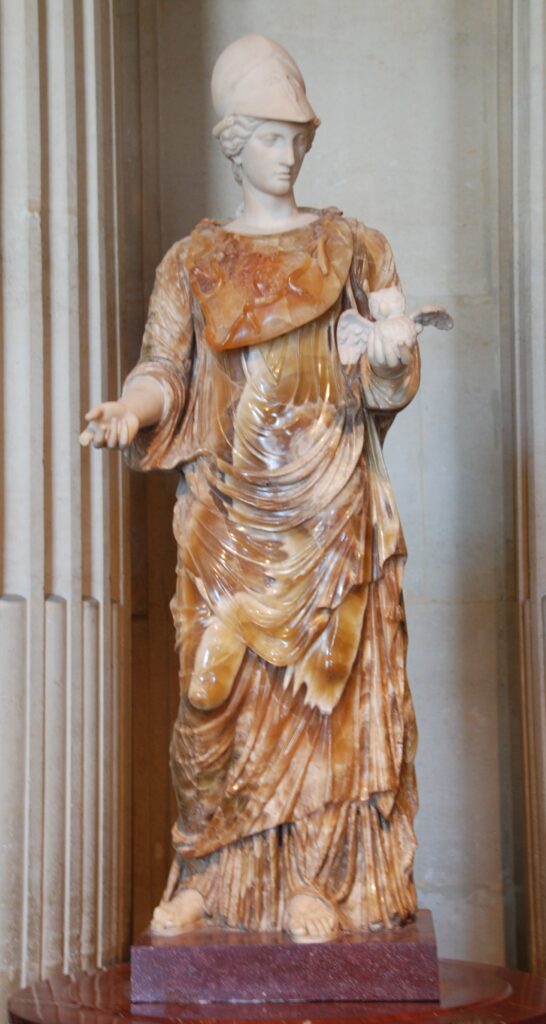
The owl was not decorative but intentional, reinforcing Athena’s role as a goddess of wisdom and strategy. In these works, the owl acts as a visual shorthand for knowledge and vigilance, reflecting the humanist ideals shaping Renaissance thought.
3. Owl by Pablo Picasso (late 1940s)
Pablo Picasso’s owls emerged during the late 1940s, a period marked by personal experimentation and renewed playfulness. After briefly caring for an injured owl, Picasso incorporated the bird into paintings, drawings, and ceramics.
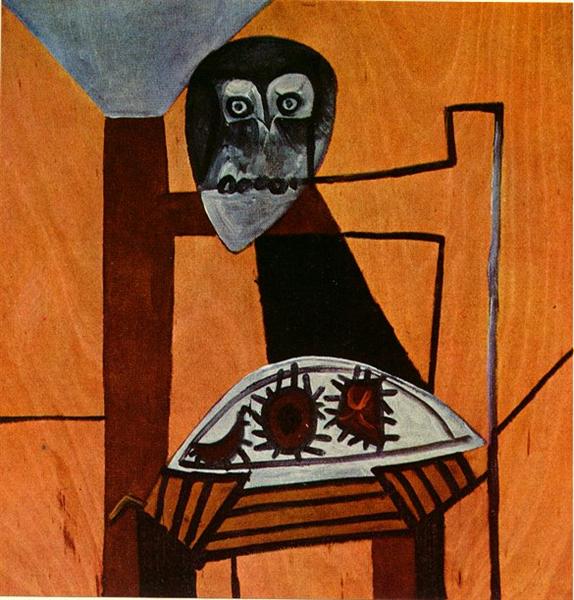
His owl works simplify form and exaggerate expression, moving away from realism entirely. Held in collections such as the Musée Picasso, these works show how a traditionally serious symbol could be reimagined with warmth and humor.
4. Owl by Joan Miró
Joan Miró approached owls through abstraction. Rather than depicting feathers or anatomy, he reduced the owl to signs, colors, and shapes. Large eyes, sharp angles, and floating forms allow viewers to recognize the bird without literal detail.
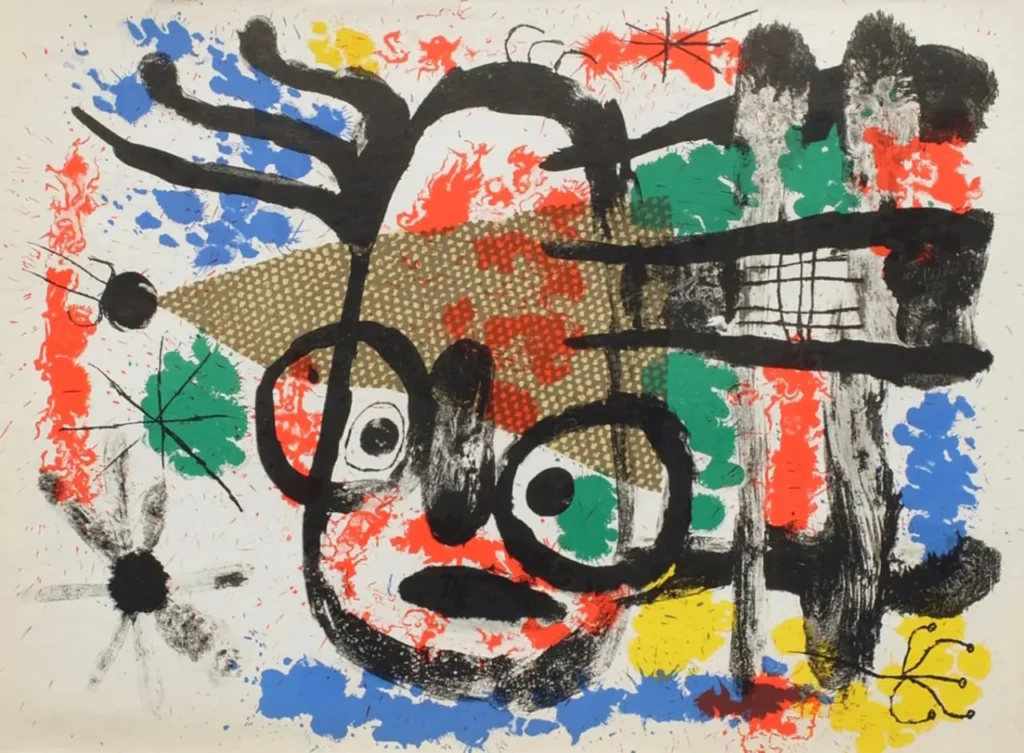
( Image Source – hedonism.gallery )
These works, held by institutions such as the Museum of Modern Art and the Fundació Joan Miró, demonstrate how animal imagery could survive and thrive in abstract modern art.
5. The Owl by Franz Marc
Franz Marc, a leading figure of German Expressionism, believed animals expressed spiritual truths more purely than humans. His owl paintings use intense color and simplified forms to convey emotion rather than biology.
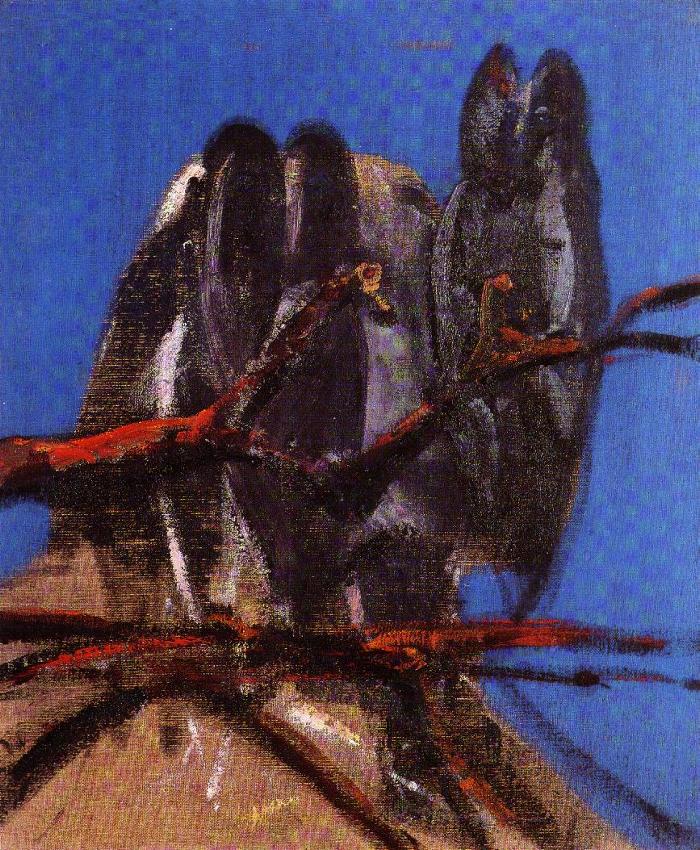
Painted before his death in World War I, Marc’s owls reflect the psychological tension of the early twentieth century, where animals became emotional symbols within a rapidly changing world.
6. Snowy Owl by Archibald Thorburn
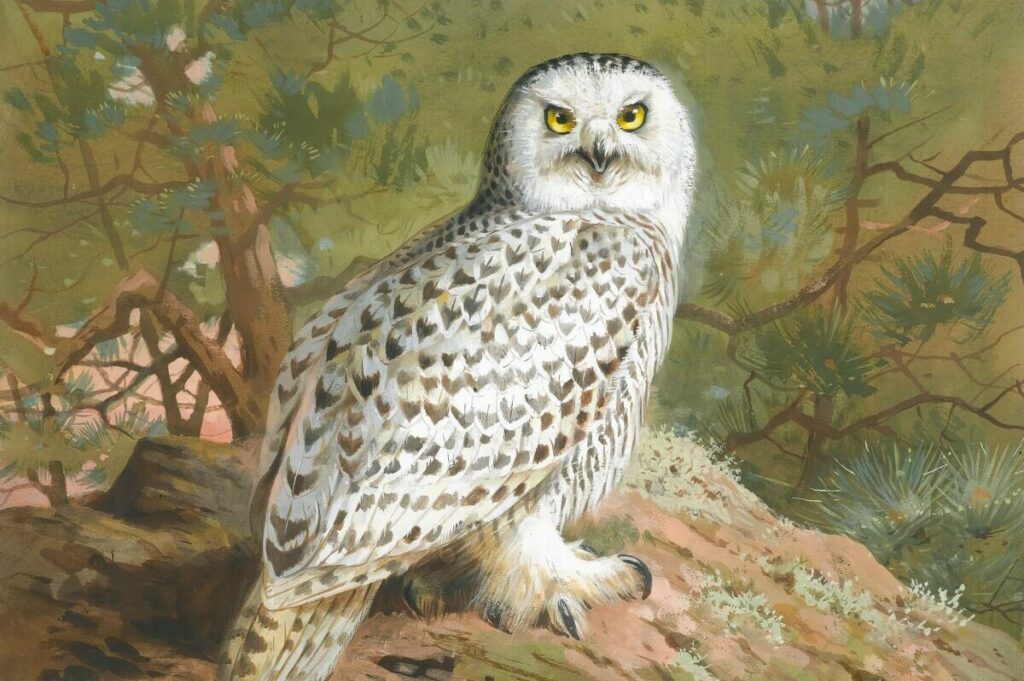
Archibald Thorburn’s snowy owl paintings are considered landmarks of wildlife art. Working before modern photography, Thorburn combined careful field observation with artistic composition. His owls appear alert, grounded, and anatomically precise, often placed within realistic landscapes. These works, preserved in British natural history and art collections, influenced generations of bird artists and naturalists.
7. Great Horned Owl by John James Audubon
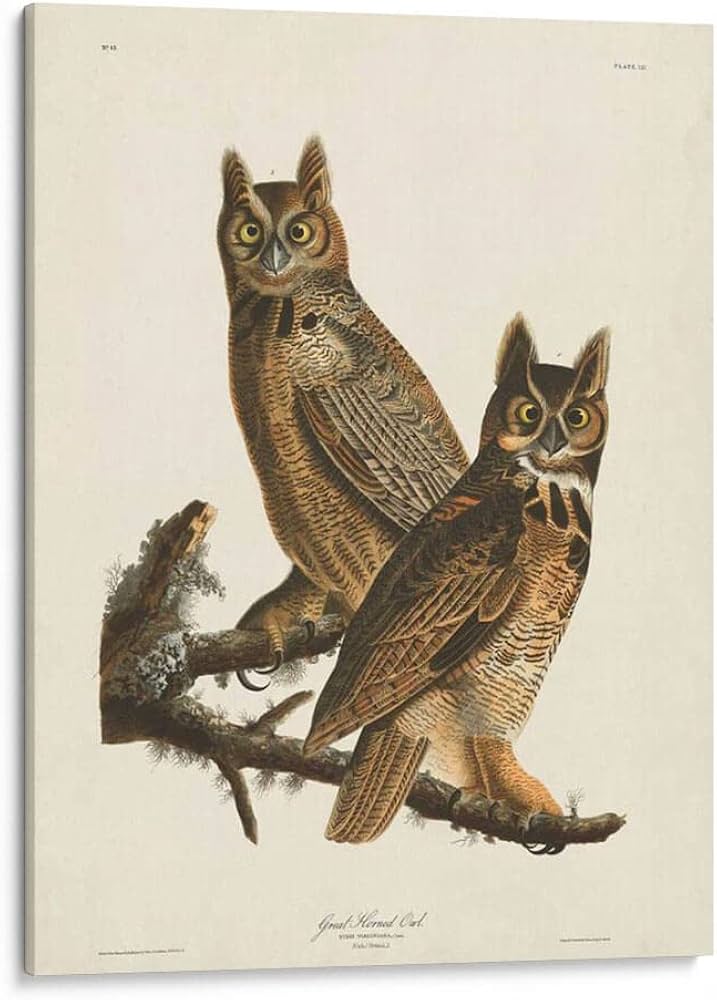
John James Audubon is best known for his printed plates, but his process began with original paintings. His Great Horned Owl studies capture movement and structure while maintaining scientific accuracy. These works, held in American museum collections, helped establish standards for natural history illustration during the nineteenth century, blending drama with documentation.
8. Owl by Kenojuak Ashevak
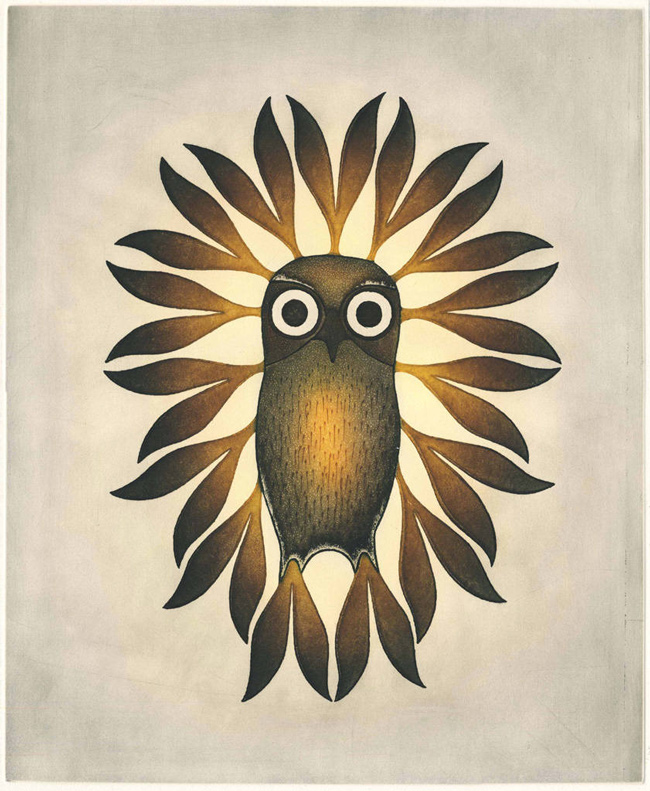
Kenojuak Ashevak, one of the most celebrated Inuit artists, depicted owls as powerful and balanced forms. Her owl paintings and prints rely on symmetry, bold color, and cultural meaning rooted in Inuit traditions. Held by the National Gallery of Canada and other institutions, her work introduced Inuit perspectives into global contemporary art, presenting the owl as both familiar and deeply symbolic.
9. Owl by Remedios Varo
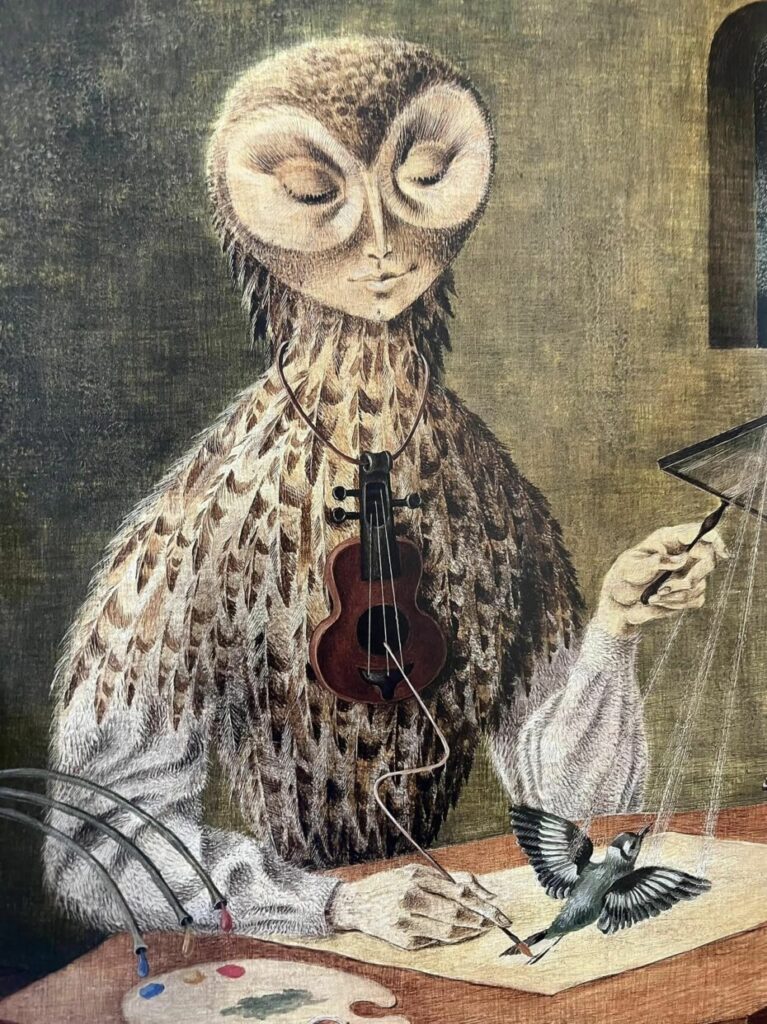
In the surrealist paintings of Remedios Varo, owls often appear as companions or observers within strange, dreamlike scenes. Painted after her relocation to Mexico, these works combine scientific curiosity with mysticism. Museums holding Varo’s paintings show how she used animals, including owls, to explore knowledge, transformation, and the boundaries of reality.
10. Owl by Walton Ford
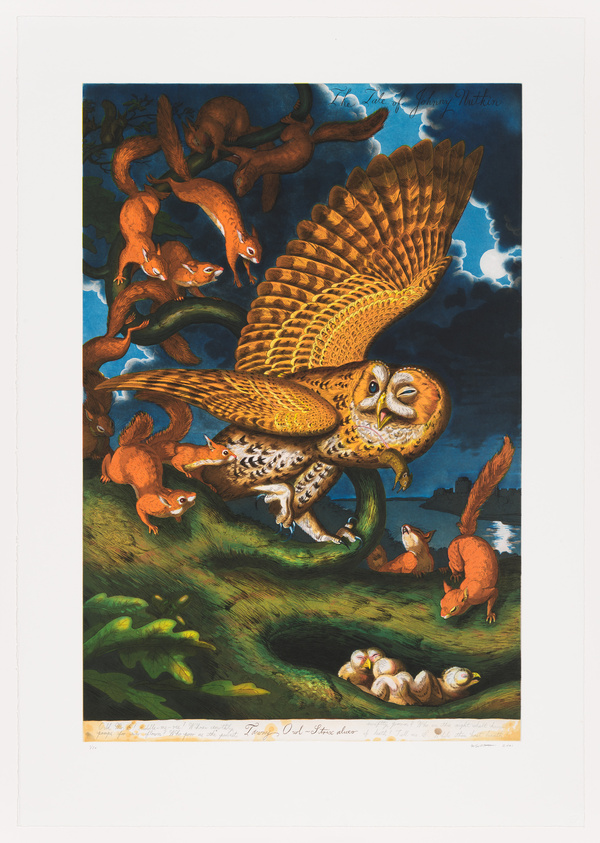
Walton Ford’s large-scale contemporary paintings draw inspiration from nineteenth-century natural history illustration while addressing modern themes. His owls are rendered in meticulous detail but often placed in unsettling or dramatic contexts. Exhibited in major galleries and museums, Ford’s work challenges viewers to reconsider humanity’s historical relationship with nature and domination over wildlife.