
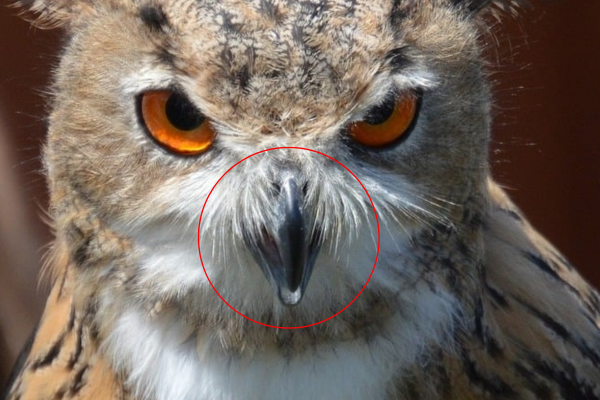
No-owls do not have a strong sense of smell. Studies of owl brain anatomy show they have small, under-developed olfactory bulbs, meaning scent detection plays almost no role in their lives. Instead, owls rely heavily on their exceptional hearing and powerful low-light vision, which allow them to hunt accurately without needing scent.
How Do Owls Hunt Without Using Scent?
Scientific research shows that an owl’s sense of smell is limited because of its small olfactory bulbs. But even without strong olfaction, owls are highly effective predators thanks to two major advantages.
They Depend on Highly Accurate Hearing
Owls have some of the most advanced hearing adaptations in the bird world:
- Many species have asymmetrical ears, helping them pinpoint sounds from above or below.
- Their facial disc channels sound directly toward the ear openings.
This allows owls to identify and strike prey even when the target is completely hidden from sight.
They Rely on Exceptional Low-Light Vision:
Owls have large eyes packed with rod cells, giving them superior night vision. This allows them to:
- Detect the faintest movement
- Navigate through darkness
- Hunt efficiently at night
Together, their vision and hearing fully compensate for their weak sense of smell.
Can Owls Detect Strong Odors Like Skunks?
Owls have poor olfactory sensitivity, meaning strong smells don’t affect them much if at all. That includes the famously intense smell of skunks. Instead of relying on scent, owls depend far more on their hearing and specialized Owl Ears, which allow them to locate prey with extreme accuracy even in complete darkness.
This lack of smell is one reason the Great Horned Owl is a well-documented predator of skunks. While most predators take one sniff of a skunk and immediately decide they’re not hungry anymore, owls simply… don’t register the odor.
In one study the owl was even observed holding a hog-nosed skunk in its claws-marking a clear documented case of skunk predation.
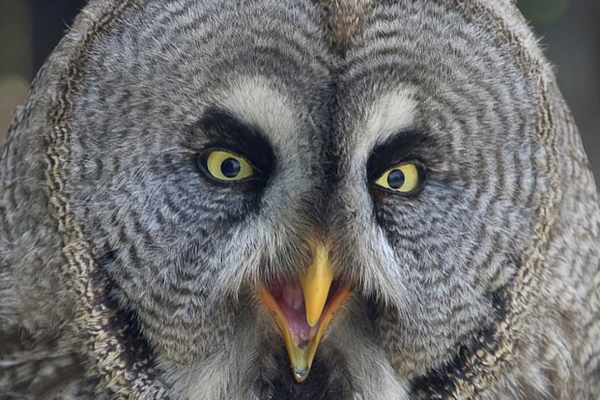
Why Skunk Odor Doesn’t Affect Owl Hunting Behavior:
Because owls rely on hearing and vision, not smell, a skunk’s defensive odor doesn’t discourage them. Their limited olfactory ability means they’re not repelled by the scent before or after a hunt.
Which Owl Species Commonly Prey on Skunks
The Great Horned Owl is the species most often observed hunting skunks, according to documented wildlife studies and field observations.
Which Birds Have a Better Sense of Smell Than Owls?
Compared to owls, several bird species have far more developed olfactory systems, with larger olfactory bulbs and more olfactory receptors.
How These Birds Use Smell for Survival and Hunting
- Turkey vultures can detect gases produced by decaying animals from impressive distances.
- Kiwis use their forward-facing nostrils to find insects and worms beneath leaf litter.
- Seabirds like albatrosses and petrels smell fish oils and marine scents to locate feeding areas across the ocean.
These birds use scent as a major survival tool-something owls simply do not do.
Species That Rely on Scent More Than Sight
Some birds prioritize smell over vision when foraging:
- Turkey vultures often locate food by scent first.
- Kiwis frequently forage in darkness, guided mainly by smell.
- Certain petrels navigate open-ocean environments using airborne scent cues.
These examples highlight the contrast between owls and birds that evolved strong olfactory systems.