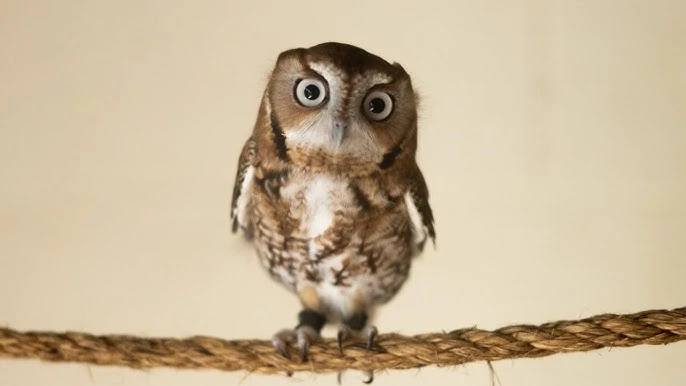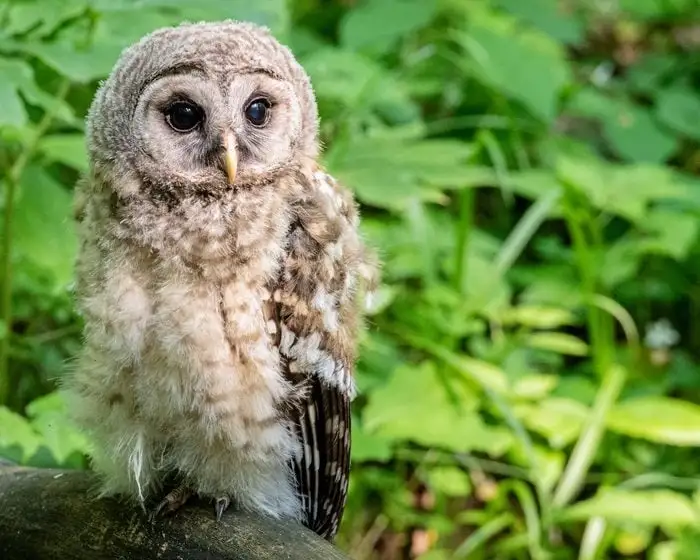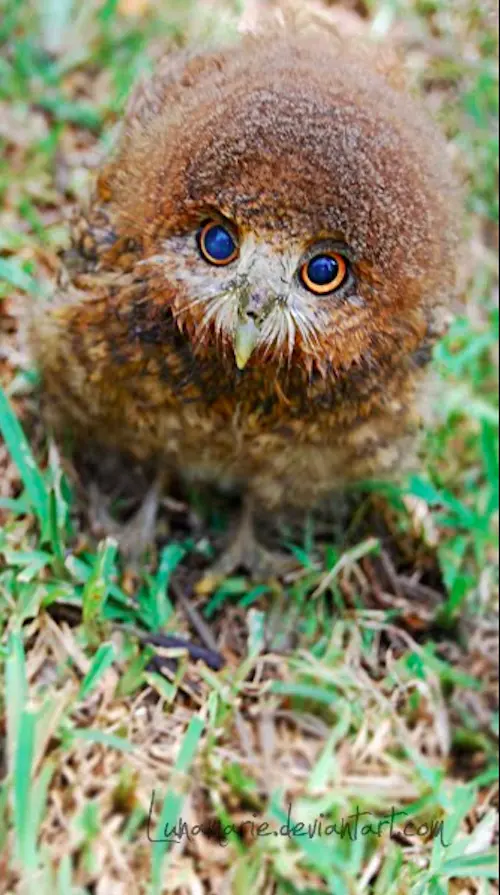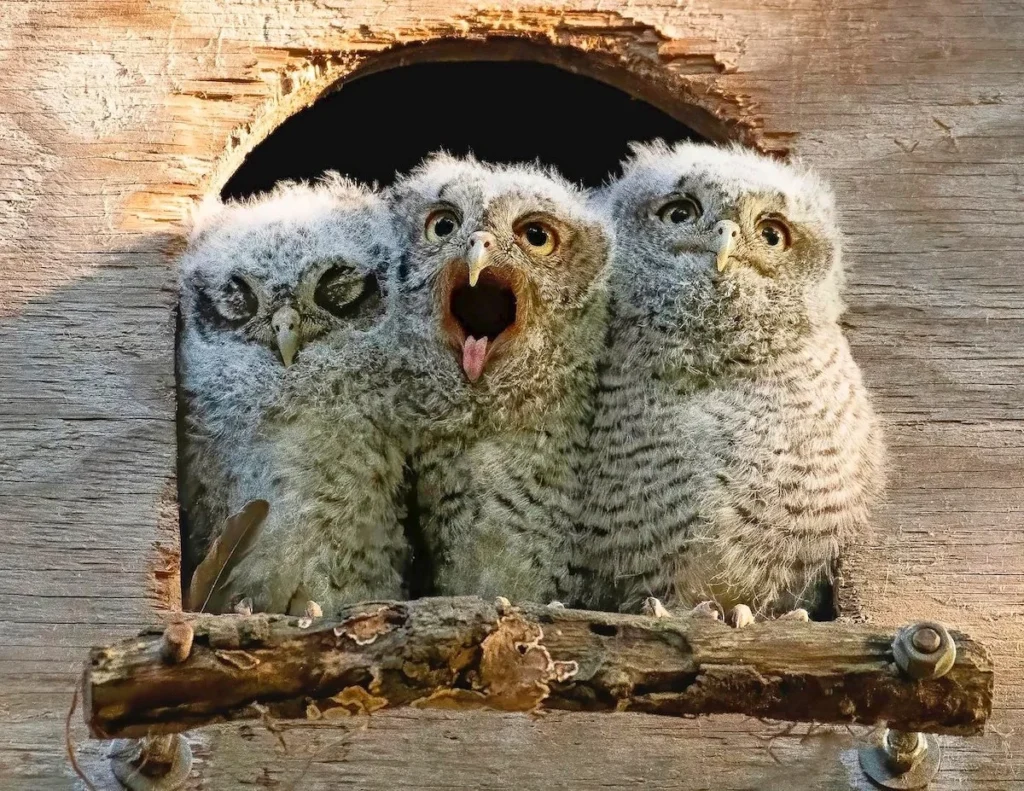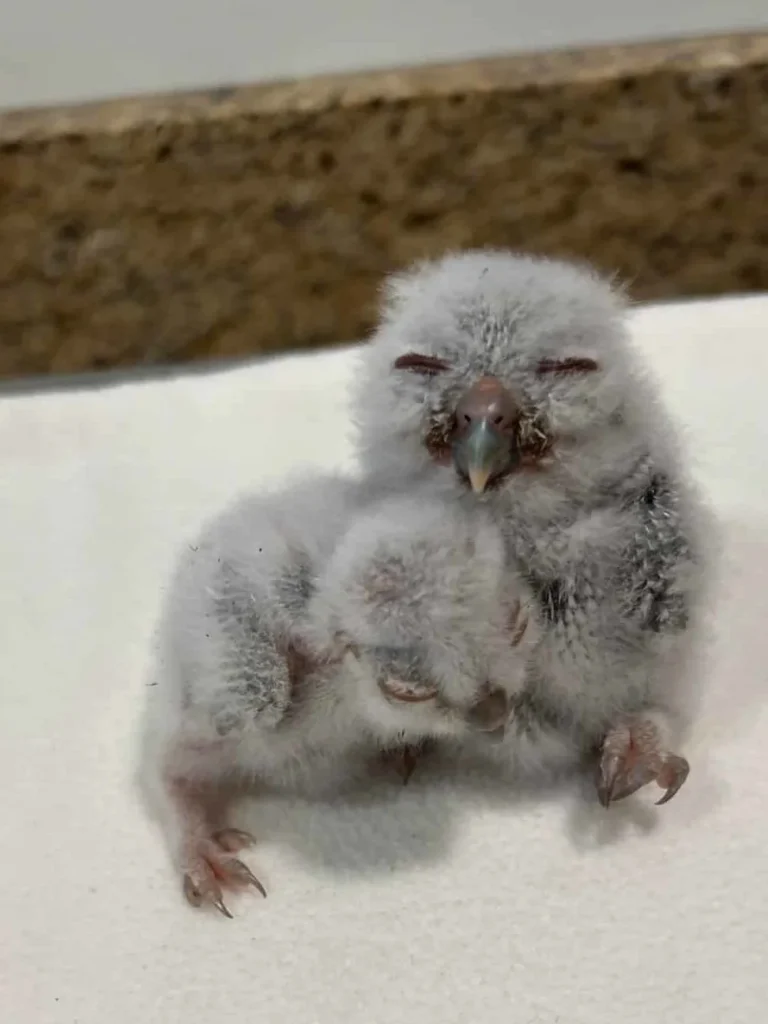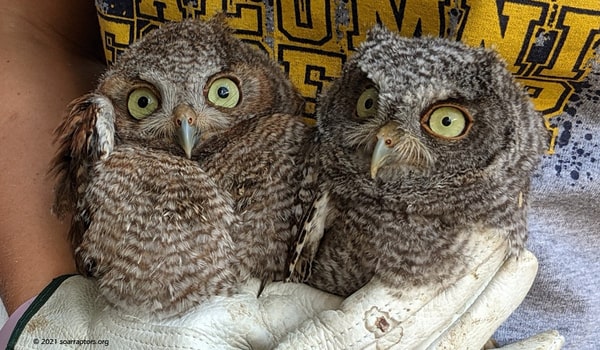
Baby screech owls are tiny, fluffy, and completely helpless when they hatch, entirely dependent on their parents for warmth, food, and protection during the first 30 days the most dangerous period of their lives. They grow inside tree-cavity nests where the male hunts through the night and delivers prey, while the female tears the food into small pieces to feed the chicks. At this vulnerable stage, they rely on instinctive defenses such as freezing or appearing to “play dead” when threatened.
Around four weeks old they begin branching and learning to fly, which is why people often find them on the ground even though their parents are still nearby and actively caring for them. Wildlife experts warn never to take a healthy baby screech owl, as removing one from the wild can cause imprinting, injury, and lifelong dependence and in many regions, keeping a native owl without permits is illegal. Only injured or truly orphaned chicks should be rescued under licensed professional guidance.
Table of Contents
The First 30 Days of Life: How Baby Screech Owls Beat the Odds
The first month of life decides whether a baby screech owl survives to become a fledgling. After hatching inside natural tree cavities or abandoned woodpecker holes the most common nesting sites for Eastern Screech Owls according to the Cornell Lab of Ornithology the chicks stay hidden deep within the cavity for nearly 26–30 days.
During this time, the female remains inside the nest, brooding and protecting the young while the male hunts repeatedly through the night to bring prey such as insects, small mammals, and small birds. The female tears the food into small pieces to ensure the chicks can swallow it safely, a behavior widely documented in cavity-nesting owl species.
The young grow rapidly during these weeks: they open their eyes, develop feathers over down, and begin strengthening leg and wing muscles. Yet despite this growth, they remain highly vulnerable to predators like raccoons, snakes, and larger owls, which is why the cavity structure and depth are critical for survival.
Many do not survive this stage due to natural predation pressure and environmental hazards, making parental care and nest safety essential factors in whether a chick reaches fledging age.
Why Screech Owl Chicks Fake Death to Avoid Predators- A Survival Instinct Explained
Reports from wildlife rehabilitators and observers note that when threatened or handled, some young screech owls may become motionless, lie still, and appear unresponsive a reaction similar to tonic immobility seen in other bird species. While this behavior is not extensively studied in screech owl nestlings in peer-reviewed literature, rehabilitators commonly describe it as a last-resort anti-predator instinct intended to reduce movement and avoid detection.
It is more accurate to describe it as a defensive freezing response rather than intentional “playing dead.” This response varies among individuals and should be interpreted cautiously, but it aligns with the broader survival strategies seen in many juvenile birds and small mammals.
How Owl Parents Raise Their Young: Night-Shift Feeding Strategies Revealed
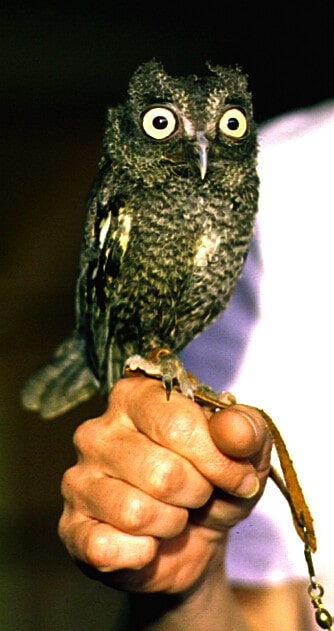
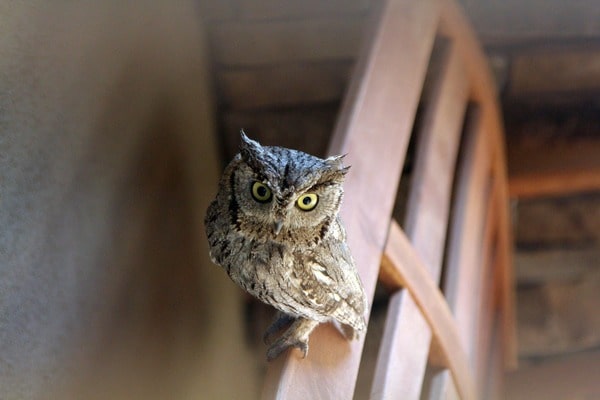
Screech owl parents operate with remarkable precision and coordination. The female performs most of the brooding and chick-level care inside the cavity during the early stage, especially while the young are unable to thermoregulate. Meanwhile, the male hunts throughout the night, returning repeatedly with prey to sustain the rapidly developing brood.
As the chicks grow and require more food, the female eventually begins leaving the cavity to assist in hunting, and both parents share the feeding workload. This demanding nocturnal routine ensures that the young develop the necessary strength and energy reserves to reach fledging age.
How Baby Screech Owls Learn to Fly: Fledging Behaviors and Training
Baby screech owls begin the journey toward flight about four weeks after hatching, when they enter a developmental phase called branching. At this stage, they don’t fly immediately instead, they leave the safety of the nest cavity and start exploring nearby branches.
This early movement is essential for building strength and coordination, and it’s completely normal for young owls to appear clumsy or to end up on the ground while learning. Many people mistake this as abandonment, but the parents remain nearby, watching closely and continuing to feed the young while they train their wings and balance.
Key Fledging Behaviors
- Branching comes before real flight: chicks climb and hop between branches rather than flying straight away.
- Wing exercises: they rapidly flap their wings to build muscle and test lift without leaving the perch.
- Ground falls are common: and not usually a sign of danger unless the bird is injured.
- Parents continue feeding: even after the young exit the nest cavity.
- Training period lasts weeks: full flight skills develop gradually over time.
- Stay near the nest area for up to two months: continuing to learn hunting and navigation behaviors before independence.
Over the following weeks, their wing muscles strengthen, coordination improves, and short glides eventually become sustained flight. Even after they can fly, young screech owls rely heavily on their parents for food and survival skills especially for learning how to hunt live prey efficiently.
Can You Rescue a Baby Screech Owl? What Wildlife Experts Actually Recommend
Wildlife experts strongly advise against picking up a baby screech owl unless it is clearly injured, in direct danger, or confirmed orphaned. If the bird is alert and uninjured, the safest action is to observe from a distance, because the parents are usually nearby and still caring for it. If the owl is in immediate danger (for example, in the road), the recommended step is to place it on a nearby branch or elevated surface and allow the family to reunite naturally.
Contacting a licensed wildlife rehabilitator is the standard guidance in situations where injury or abandonment is suspected. Attempts to feed or give water can cause serious harm and should not be done without professional direction.
What Happens When Baby Screech Owls Leave the Nest Too Early
If a chick falls from the nest before the branching stage and cannot climb to safety, the risk of injury or predation increases significantly. Early falls can damage wings or legs and may interrupt imprinting and feeding schedules. Without intervention, these owls often fail to survive because they cannot regulate body temperature, hunt, or escape predators on their own. Professionals may attempt nest replacement or reunification if the parents are still active, which is always more successful than removing the young from the wild.
What Happens If You Keep a Baby Screech Owl as a Pet?-Legal & Ethical Facts
Owls including screech owls are wild predators with specialized needs, and attempting to keep a baby screech owl as a pet often leads not to companionship but to suffering for both the bird and the person. In many places (especially in North America and other regions with bird-protection laws), native owls are legally protected: under Migratory Bird Treaty Act (MBTA) it’s illegal to capture, keep, or trade a native owl without a special permit from wildlife authorities.Even possessing feathers, eggs, nests or live owls from native species without authorization is prohibited under the law.
Besides the legal bar, the biological and ethical challenges of owning a baby screech owl make the idea deeply problematic. Like other birds of prey, screech owls require a very specific diet (whole prey- small mammals, birds or insects), specialized housing (large aviaries or mews with proper perches and room to fly), and opportunities to practise hunting- none of which a typical home can provide.
Because of this, wildlife rehabilitation centers, raptor experts, and conservation organizations nearly always recommend that healthy wild owls remain in the wild. Here’s a breakdown of the key reasons:
Legal Protection: Native screech owls fall under MBTA protections (or equivalent wildlife laws in many countries), which often forbid private individuals from keeping them.
Wild Instincts & Needs: Owls are nocturnal hunters with sharp talons and curved beaks their natural behavior, diet and activity patterns are incompatible with normal domestic life.
Specialized Care Requirements: They need large outdoor aviaries (not small cages), proper perches, space for flight, correct whole-prey diet without which health problems like malnutrition or foot/wing injuries may arise.
Behavioral Stress & Poor Welfare: Owls don’t become pets in the traditional sense. They don’t enjoy “cuddling”, socializing like flock birds, or typical household life; captivity can cause chronic stress, behavioral issues, or injury.
Imprinting & Life-long Dependency: A chick raised by humans may identify people as its “parents”, preventing it from developing natural hunting skills and survival instincts condemning it to a dependent, captive life.
Ethical & Conservation Concerns: Removing wild owls from their natural environment harms local ecosystems, and encourages illegal wildlife trade undermining conservation efforts.
For just these reasons, most wildlife professionals consider screech owls and owls in general as unsuitable, unethical, and often unlawful companions for private ownership. Rehabilitation, if absolutely needed (injury, orphaning), should be done only by licensed experts; otherwise, leave these wild creatures where they belong in nature.
Cute Baby Screech Owl Images: