

People have wondered for ages whether seeing an owl means something bad is about to happen. But once you look closer, the idea starts to fall apart. Most old beliefs about owls came from moments of fear, mystery, and the simple fact that these birds move and sound unlike anything else at night. When you’re living in a world without electricity or science, a silent bird appearing out of the dark does feel like a message-even if it isn’t one.
What’s interesting is that not every culture saw owls as a “warning.” Some saw them as wise protectors, guides, or even symbols of good fortune. The meaning depended entirely on where you lived and what stories your community grew up with.
Today, science tells a very different story:
Owls aren’t bad luck. They’re just animals doing exactly what nature designed them to do.
If one visits your home or crosses your path, it’s usually because there’s food nearby, a safe place to perch, or a territory they already use. Nothing mystical-just natural life.
This article walks you through how the superstition started, why it stayed alive for so long, and what the facts actually show, so by the end, you’ll see owls less as “omens” and more as fascinating, misunderstood neighbors of the night.
How Owls Ended Up Blamed for Bad Luck in the First Place
Long before people had lights, science or even a clear sense of what caused everyday events, the night was a place filled with imagination and uncertainty. When the world went quiet and most creatures slept, owls began their day. They appeared without warning, moved silently, and watched with eyes that looked strangely similar to ours. To someone living centuries ago, that kind of encounter in the middle of the night felt less like meeting a bird and more like crossing paths with something that did not belong to this world.
Because life was fragile and unpredictable, it was natural for people to connect unusual moments with whatever hardship followed. If a family lost someone soon after hearing an owl, the bird became part of the story. In ancient Rome, for instance, a hooting owl was sometimes taken as a sign that death was near. In parts of Africa and the Middle East, the sight of an owl after dark was linked with restless spirits. Rural communities in India occasionally treated owls as signs of coming loss, especially during harvest seasons when families were already anxious about their crops. None of these ideas came out of nowhere. They grew from fear, from limited knowledge and from trying to make sense of a world that often felt beyond human control.
Yet these beliefs were never unanimous. In other places, the same bird carried a completely different meaning. The ancient Greeks associated owls with Athena, the goddess of wisdom, and believed the bird brought protection. Several Native American tribes viewed owls as guides or as animals with deep knowledge of the night. This contrast shows something important. The owl itself did not change from one culture to another. What changed were the stories people used to explain the things they did not fully understand.
When you look closely at those early beliefs, you can see how they formed. Owls appeared suddenly and only when people felt most vulnerable. Their eyes reflected moonlight in a way that felt unsettling. Their calls, especially from species like the barn owl, could easily be mistaken for a cry or a warning. And when events took a bad turn, humans did what humans have always done. They looked back at the last strange thing they noticed and attached meaning to it, even when the connection was only coincidence fueling questions such as What Does A White Owl Mean in folklore and belief systems.
The Strange Nighttime Behaviors That Made People Think Owls Were Omens
If owls had been daytime birds, their entire reputation might have been different. But the night has always carried a kind of weight. Sounds feel louder. Movements seem sharper. Small details take on meanings they never would in daylight. And in that quiet, shadowed world, owls became creatures that felt almost larger than themselves.
Their silence is often the first thing people notice. Owls fly on feathers designed to muffle the sound of their wings, a natural adaptation that helps them hunt without alerting their prey. To a person living in a remote village centuries ago, a bird that could move through the air without making a single sound felt uncanny. It was easy to imagine something supernatural behind that ability, especially when an owl appeared suddenly above a field or outside a window.
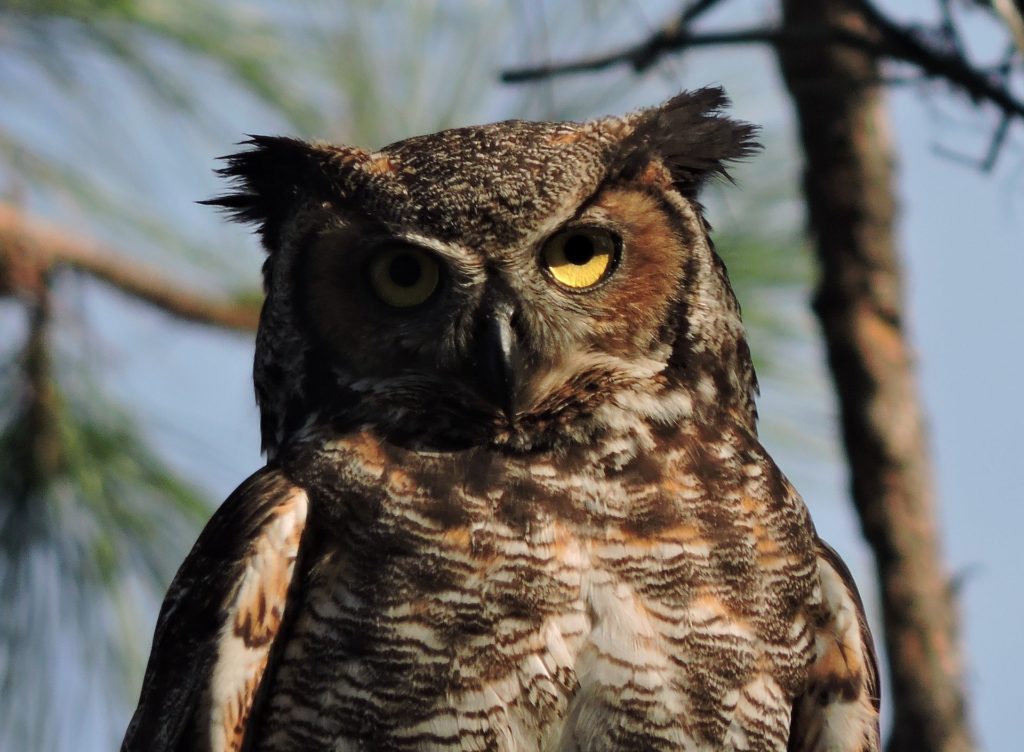
Then there are the eyes. Large, rounded and forward-facing, they reflect even the smallest bit of light. In the dark, that glow can seem as if the owl is watching with an understanding far too human for comfort. Of course, those eyes evolved for better night vision and depth perception, but past generations interpreted them as a kind of warning. The stare of an owl perched on a branch could linger in someone’s mind long after the moment passed.
Their voices added to the mystery. Many owl species do not hoot in the way people expect. Barn owls produce high, rasping screeches. Screech owls can make trilling or wailing sounds. In places without artificial noise or machinery, those cries would travel across open land and shake the stillness of the night. For communities trying to understand illness, death or sudden change, it was natural to connect these eerie sounds with whatever hardship followed.
When all these behaviors came together, the myths practically wrote themselves. A silent shape drifting across the stars. Eyes glowing from a rooftop. A call that could be mistaken for a cry. People were not being irrational. They were trying to interpret nature using the knowledge they had at the time. And without the science we have today, the owl became a story, an omen, a sign that something unseen was at work.

Scientists Don’t Call Owls Bad Luck, So Why Do People Still Believe It
Modern research in fields such as ornithology and anthropology has looked closely at owls, their behavior and the way humans interpret them. Nothing in scientific study supports the idea that owls influence events, bring misfortune or signal anything about the future. They are hunters of the night, shaped by evolution to survive quietly and efficiently, and their appearance has no effect on someone’s luck. In science, an owl is simply an owl.
Yet the belief persists, and not because people lack information. It lingers because stories have a way of settling into families and communities. If someone grows up hearing their grandparents whisper that an owl near the house is a sign of something unsettling, that idea tends to stay in the back of the mind long after childhood. Beliefs built on emotion rarely disappear just because facts say otherwise. They become part of how people make sense of uncertainty.
There is also the nature of human attention. Owls appear at unusual moments and in unusual places, often when people are already uneasy or facing something stressful. A single sighting can feel meaningful simply because it stands out. When something unfortunate happens afterward, even if the two events are unrelated, it is almost instinctive for people to connect them. Our minds look for patterns even where none truly exist.
Old stories are also being retold in new ways. Social media, films and folklore videos often present owls as mysterious or symbolic, reinforcing ideas that have been carried for centuries. And because many people rarely see owls in their daily lives, each sighting still feels special or strange enough to spark questions. The rarity of the moment makes the meaning feel bigger than it is.
When all of this comes together, it becomes clear why the superstition survives. It is not about the owl at all. It is about the human desire to understand the unknown, to look for meaning and to hold on to stories that make the world feel a little more connected than it really is.
So Are Owls Bad Luck or Just Misunderstood? A Look at the Bigger Picture
When you set the old stories aside and look at owls for what they truly are, the picture becomes much clearer. These birds are not carriers of fate or warnings about the future. They are highly skilled hunters with unique adaptations that help keep ecosystems healthy. By feeding on rodents and other small animals, they naturally control pests that can damage crops or spread disease. In many places, the presence of owls actually signals that the environment is balanced, that there is enough food, and that the habitat is thriving. Far from being a symbol of misfortune, an owl nearby can be a quiet reminder that nature is working as it should.
Whether someone interprets an owl as a sign of good luck, bad luck or nothing at all usually depends on the stories they grew up with. Cultural beliefs can shape the way people view these birds long before they ever see one in person. But the owl itself is not trying to send a message. It is not watching over someone’s decisions or predicting what will happen next. It is simply living its life, hunting, resting and raising its young, the same way it has done for thousands of years.
If an owl visits a backyard or flies across a road at night, it usually means something very ordinary. It may be tracking prey like mice or insects. It may be exploring a territory that provides safety and food. It may be perching on a high spot because it offers a good view of the ground below. These are natural behaviors, not symbolic ones, and they have nothing to do with luck, fortune or fate.
When you understand this, the mystery surrounding owls begins to feel different. Instead of seeing them as omens, you start to see them as remarkable creatures that have been misunderstood for generations. Their presence becomes something to appreciate rather than fear, a small reminder of how much beauty and complexity exists in the world after dark.