
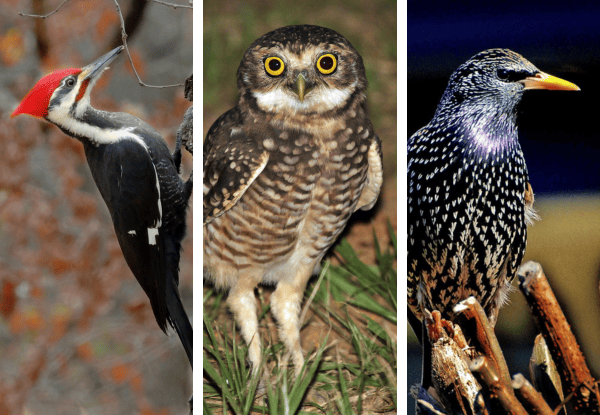
When an owl shows up, the mood changes almost instantly. One minute everything feels normal, and the next there is noise, movement, and a kind of nervous energy in the air. Most birds do not wait around to see what the owl will do. They have learned over time that owls hunt quietly and strike fast, so even a quick sighting is enough to react.
You will hear sharp warning calls, see small birds scatter, and sometimes watch crows or jays gang up and try to push the owl out. That behavior, called mobbing, is something birdwatchers see all the time. And honestly, our own birdwatching moments say the same thing. Whenever an owl is nearby, the whole forest feels a little tense, like everyone knows something serious just arrived.
It may look like panic, but it is really just survival kicking in at the right time.
1. Crows
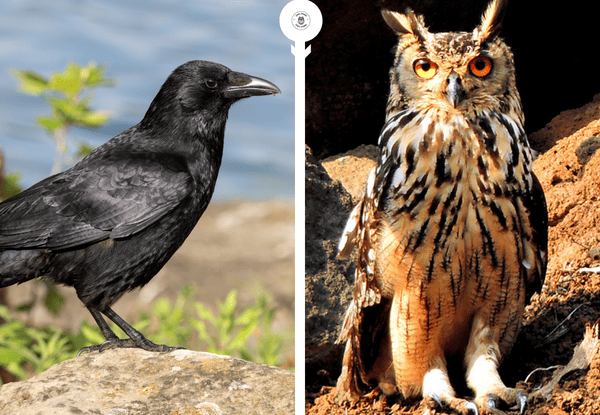
Crows don’t panic quietly. They turn it into a full event.
The moment they spot an owl, they start calling loudly and pull in other crows from nearby. Instead of leaving, they often mob the owl, diving at it again and again until it moves.
This is not random bravery. Studies have shown crows can recognize predators and even remember them. So when they react, it is personal and strategic.
2. Blue Jays
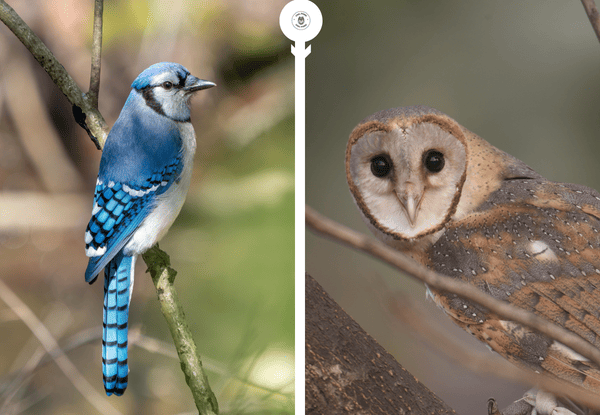
Blue jays are like the neighborhood alarm system.
They are often the first to spot an owl and will immediately start making sharp, repeated calls. Other birds actually pay attention to these warnings. Sometimes jays will also join in mobbing, especially during the day when an owl is easier to harass.
3. Blackbirds
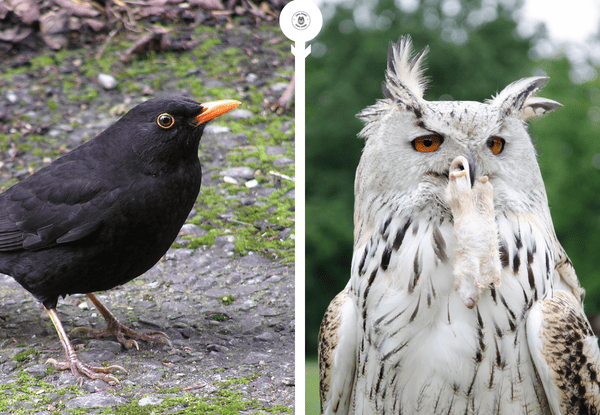
Blackbirds do not like surprises, especially the kind that eats birds.
When an owl is nearby, they either scatter quickly or join group harassment, depending on the situation. During nesting season, they can get surprisingly bold, defending their space even against a predator.
4. Sparrows
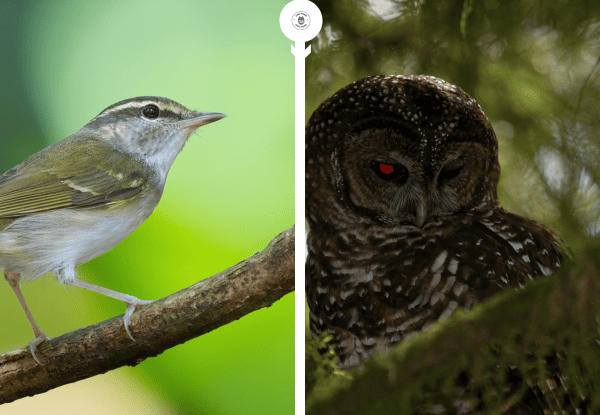
Sparrows believe in one simple rule. Do not argue, just leave.
They react almost instantly, bursting into flight as a group. That sudden explosion of movement is not panic for no reason. It makes it much harder for a predator to focus on one target.
5. Robins
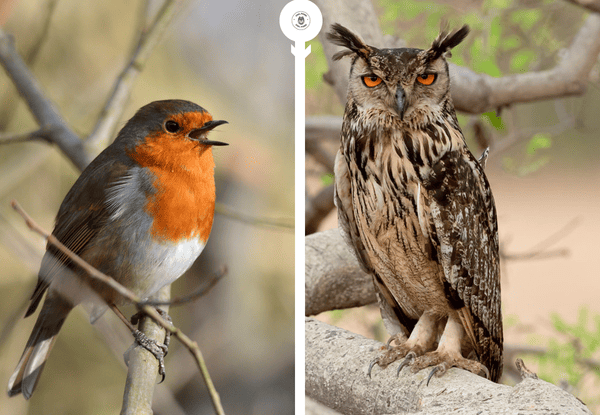
Robins might seem calm most of the time, but they switch modes fast.
They give short, sharp alarm calls and either move to cover or leave the area. In daylight, they sometimes join other birds in mobbing, especially if the owl is exposed.
6. Chickadees
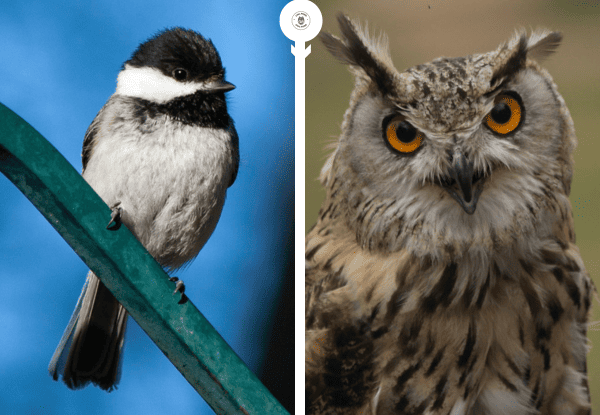
Chickadees are small, but they are incredibly aware of what is going on.
They use different alarm calls depending on the level of danger. When an owl is involved, their calls become more urgent, and other birds actually use that information to react.
7. Starlings
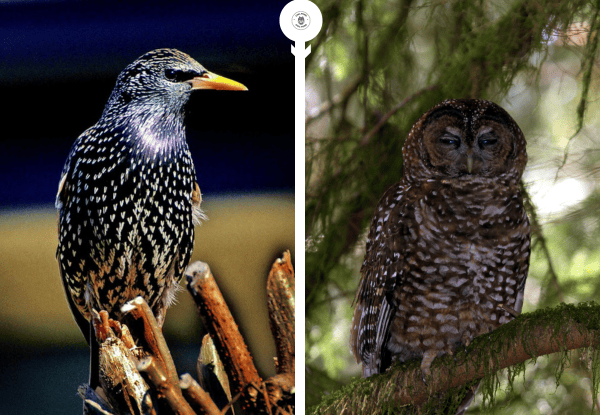
Starlings don’t panic alone. They panic together.
If you have ever seen a flock suddenly twist and take off all at once, that is often a response to a predator. These tight group movements help confuse attackers like owls and reduce individual risk.
8. Pigeons
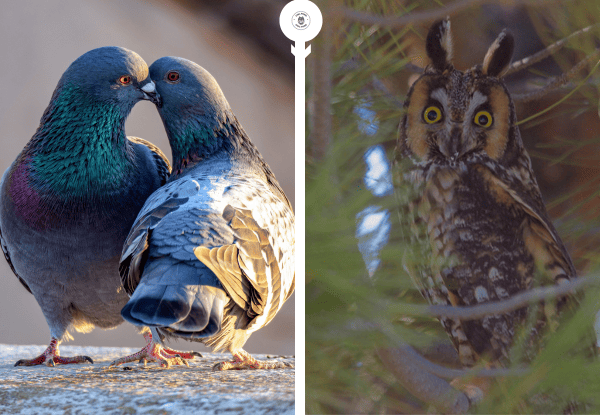
Pigeons are not interested in drama.
They respond fast and leave. Usually in a tight group, with quick turns that make them harder to catch. Urban pigeons especially are very tuned in to predator threats, including owls.
9. Finches
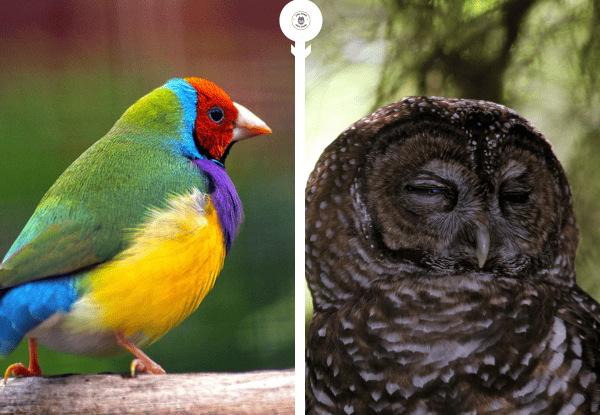
Finches tend to go quiet before they go anywhere.
That short silence is actually part of their response. Then they move quickly, often heading for cover rather than open escape.
10. Woodpeckers
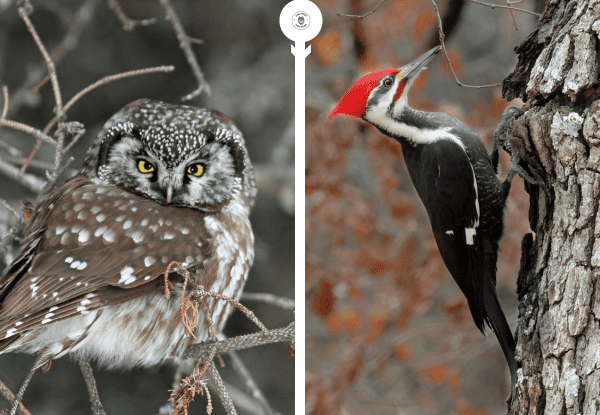
Woodpeckers do something interesting. They pause.
When they detect danger, they often freeze for a moment to avoid being noticed. But if the owl gets too close, they do not hesitate to fly off fast.
11. Warblers
Warblers are small and know exactly where they stand in the food chain.
They rely on staying hidden. If an owl is around, they either disappear into dense cover or quietly move away without drawing attention.
12. Magpies
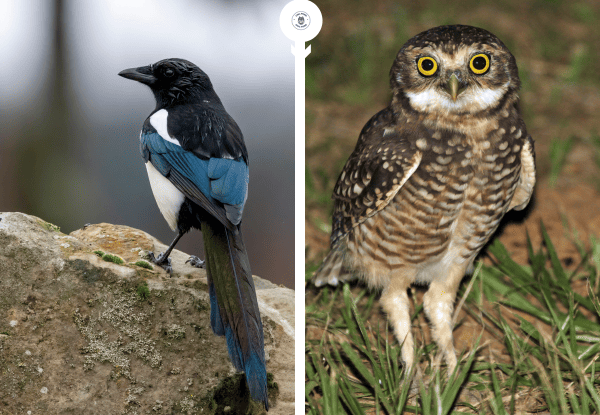
Magpies react a lot like crows, just with their own style.
They are bold, noisy, and not afraid to gang up on an owl. Their calls can even bring in other birds, turning one owl sighting into a full group response.
Famous Historical Figures Who Kept Owls as Pets
Owls have fascinated humans for centuries. Discover well-known historical figures who kept owls as companions and the surprising stories behind them.
Read Full Story →Owls in Mississippi: 9 Must-See Species With Pictures
Discover the most common owls found in Mississippi, where to spot them, and how to identify each species in the wild.
Read More →
1 thought on “12 Birds That Immediately React When an Owl Is Nearby”