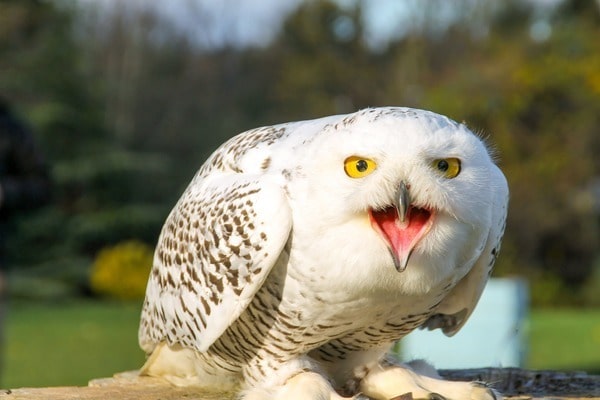
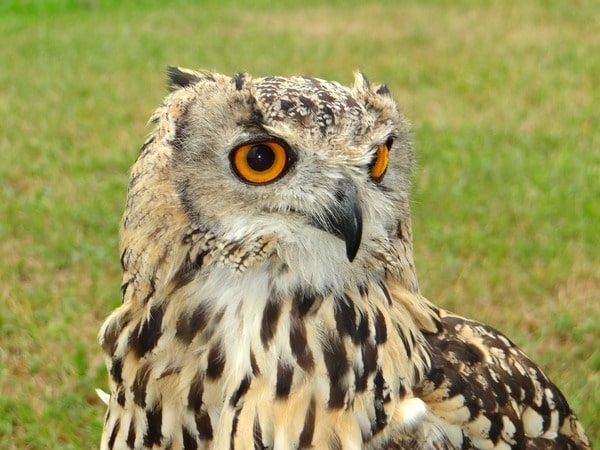
An Owl’s beak is small, sharply curved, and made of keratin, much like a hawk’s or falcon’s. But it isn’t the part of the owl that does the killing. Every owl, from tiny scops owls to large eagle owls, captures and subdues prey with its talons. The beak comes into play after that, when the real work of eating begins.
Owls don’t chew their food. Once prey is secured, the beak is used to tear flesh, strip away fur or feathers, and break food into pieces that can be swallowed whole. Its cutting edges are sharp rather than heavy, built for control instead of force. This design allows owls to handle a wide range of prey without damaging the skull or interfering with the facial disc that helps them hunt in low light.
When you look beyond hunting, the beak becomes even more important. Adult owls rely on it to prepare food for their chicks, carefully tearing prey into smaller portions that young birds can swallow safely. In the wild, a damaged beak can mean an owl slowly starves, even if it can still catch prey. The beak may not look impressive, but an owl’s survival depends on it every day.
Owl Beak Anatomy Diagram Explained
An owl’s beak is small, sharply curved, and built for precision rather than force. At first glance it may seem underwhelming compared to the talons, but anatomically it plays a carefully defined role. The beak is made of keratin and is firmly anchored to the skull, allowing controlled movements during feeding without placing excessive strain on the head.
The upper mandible curves downward into a narrow cutting edge. This shape is ideal for slicing soft tissue and separating meat from fur or feathers. Unlike birds that crack seeds or crush shells, owls do not rely on pressure. Instead, the beak functions like a blade, working in short, deliberate motions. The lower mandible provides stability, holding prey in place while the upper mandible does the cutting. This arrangement allows owls to feed efficiently without damaging the skull or jaw joints.
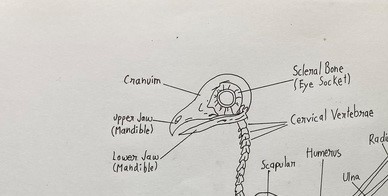
Another important feature is the beak’s compact size. Owls depend on precise head balance for hunting, especially in low light. A larger or heavier beak would shift the center of mass forward and interfere with both vision and hearing. By keeping the beak short and close to the face, owls preserve the alignment of the eyes, ears, and facial disc, which is essential for locating prey accurately.
The beak does not operate in isolation. Feeding involves coordinated movements of the head and neck, supported by strong cervical vertebrae. Instead of tearing forcefully with the beak alone, owls use controlled head motions to assist in pulling food apart. This reduces wear on the beak and allows repeated feeding over long periods.
Keratin covering the beak grows continuously and wears down naturally as the owl feeds. This self-renewing surface helps maintain a sharp cutting edge throughout the bird’s life. When the beak is damaged or malformed, even a skilled hunter can struggle to eat, highlighting how critical this structure is.
Seen as a whole, the owl’s beak is a finely tuned feeding tool. It is not designed to overpower prey, but to process food cleanly, efficiently, and in balance with the owl’s sensory and skeletal systems.
Beak’s Role in Feeding Owl Chicks
Inside an owl’s nest, the beak becomes far more important than it ever appears during hunting. Newly hatched owl chicks are unable to tear food or swallow large pieces, and their digestive systems are still developing. At this stage, survival depends almost entirely on how effectively the parents use their beaks to prepare each meal.
Adult owls do not simply drop prey into the nest. Instead, they use the beak to tear flesh into small, soft portions that chicks can swallow safely. This process is slow and controlled, especially during the first days of life. Parents carefully remove fur, feathers, and other indigestible material before offering food, reducing the risk of choking or digestive blockage. The beak allows adults to handle prey with precision, even when feeding multiple chicks in low light.
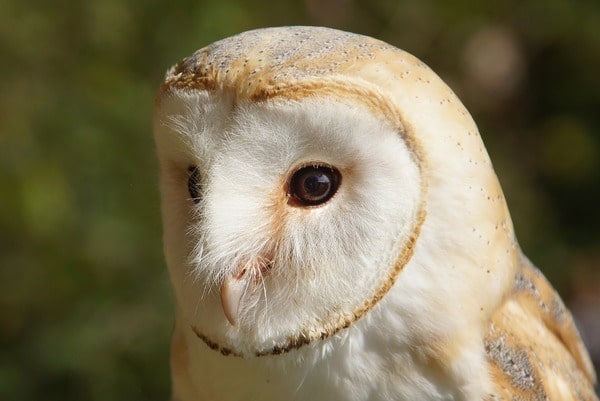
As the chicks grow, feeding behavior changes gradually rather than abruptly. Parents begin offering larger pieces of food, encouraging young owls to stretch their gape and practice swallowing. This transition helps chicks develop the coordination they will need later when feeding independently. Throughout this period, the adult’s beak remains essential for adjusting portion size and responding to each chick’s developmental stage.
The beak is also critical for safe food transfer. Owl chicks beg energetically and move unpredictably, and a poorly controlled feeding motion could easily cause injury. The curved shape and sharp cutting edges of the beak allow adults to hold and release food accurately without harming their young. This level of control is especially important in crowded nests, where siblings compete for food.
In the wild, the importance of the beak becomes clear when it is damaged. An adult owl may still be able to capture prey using its talons, but without a fully functional beak, it may struggle to prepare food for its chicks. In such cases, nesting attempts often fail. For young owls, the beak is not just a feeding tool used by the parent-it is a lifeline that determines whether they grow strong enough to leave the nest.