
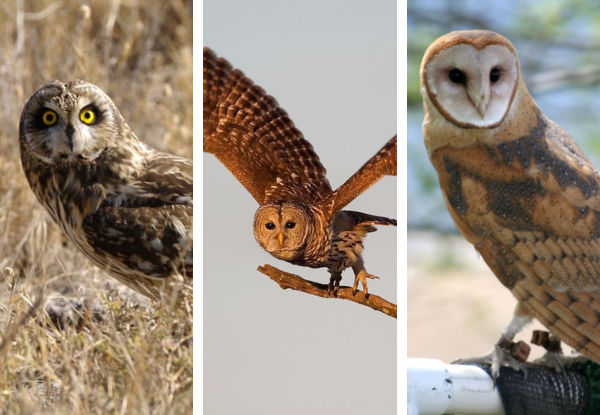
Kentucky is home to nine species of owls, which means that after sunset the state becomes far busier than most people realize. While we are heading indoors, these nocturnal hunters are just starting their work shift. Some species live here year round, while others appear only during migration or in certain winters when food shortages farther north push them south. From the hardwood forests of Appalachia to open farmland and river valleys, owls have found ways to thrive across the Bluegrass State.
The voices most Kentuckians hear at night usually belong to the Great Horned Owl, Barred Owl, and Eastern Screech Owl. The Barred Owl’s famous “who cooks for you” call sounds almost conversational, though it is actually a territorial hoot used to communicate with mates and rivals. Other species such as the Barn Owl, Long eared Owl, Short eared Owl, and Northern Saw whet Owl are present but far more secretive. In rare winter irruption years, Arctic breeders like the Snowy Owl may briefly visit open fields.
Together, these nine owls quietly help control rodent populations and keep ecosystems in balance.
1. Great Horned Owl
If Kentucky’s owls had a ruler, this would be it. The Great Horned Owl is widespread across the entire state and is one of the most adaptable raptors in North America. It occupies hardwood forests, river corridors, farmland, swamps, and suburban neighborhoods.
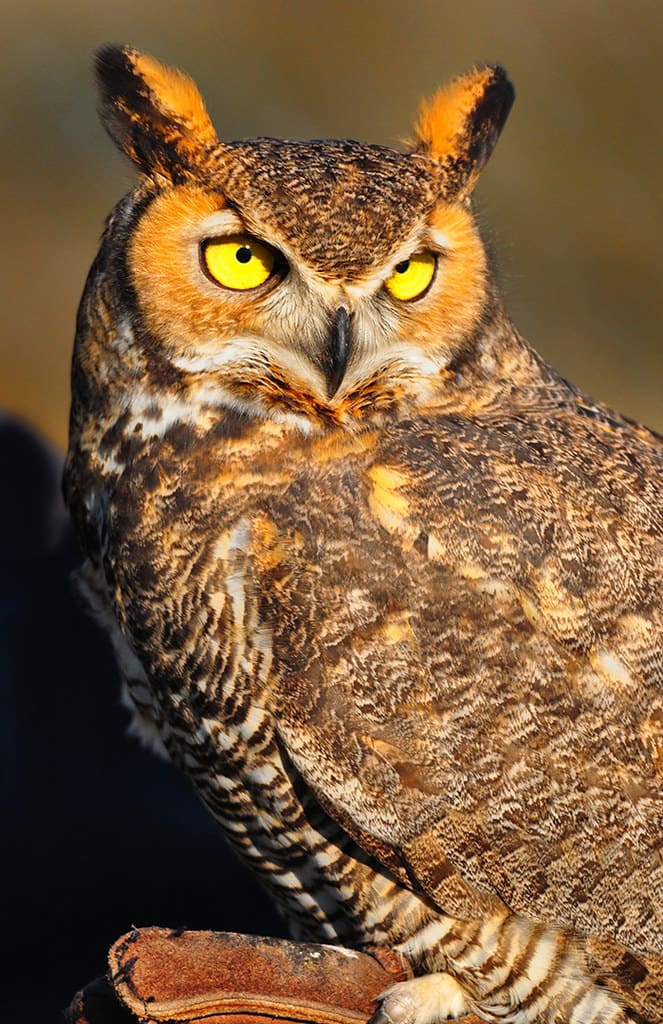
One of the most fascinating facts about this species is its breeding timing. In Kentucky, nesting often begins in mid to late winter, sometimes as early as January. While most birds are waiting for warmer temperatures, Great Horned Owls are already incubating eggs. They do not build their own nests. Instead, they reuse abandoned stick nests built by hawks, crows, or squirrels.
Their hunting ability is formidable. With a wingspan approaching five feet and gripping strength strong enough to dispatch prey quickly, they take rabbits, squirrels, skunks, and even other raptors. They are among the few predators that regularly prey on skunks, largely because their limited sense of smell reduces the impact of defensive spray.
Their deep, resonant hooting carries far on cold winter nights and serves both territorial and pair bonding functions.
2. Barred Owl
In Kentucky’s mature woodlands, especially near water, the Barred Owl is often the voice of the forest. It is common year round and strongly associated with large tracts of deciduous forest and swampy areas.
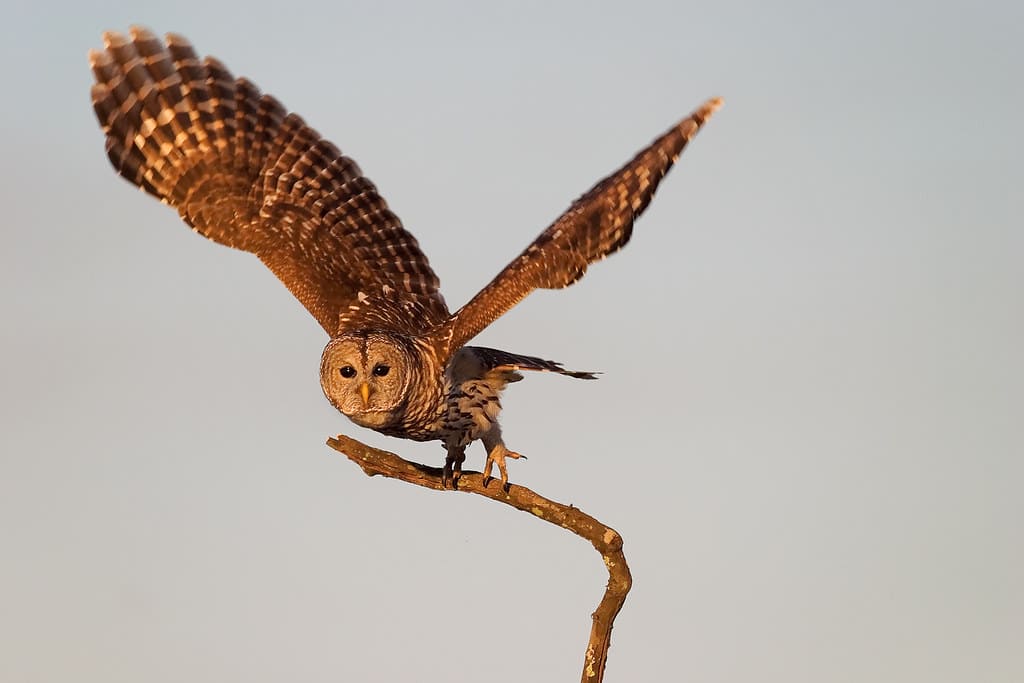
Its well known call, often interpreted as “Who cooks for you,” is a territorial hoot used by both males and females. Unlike some owl species that remain strictly nocturnal, Barred Owls may call during the day, especially before storms or during the breeding season.
They nest in natural tree cavities, particularly in older forests where large hollow trees are available. Their diet reflects their forest habitat. They hunt small mammals, amphibians, reptiles, and occasionally crayfish along wet forest floors.
Barred Owls have expanded their range westward over the last century in North America, but in Kentucky they are long established and remain one of the most reliably observed species.
3. Eastern Screech-Owl
The Eastern Screech Owl proves that size is not everything. Standing only about eight inches tall, it is one of Kentucky’s most common owls, though many residents never realize it lives nearby.
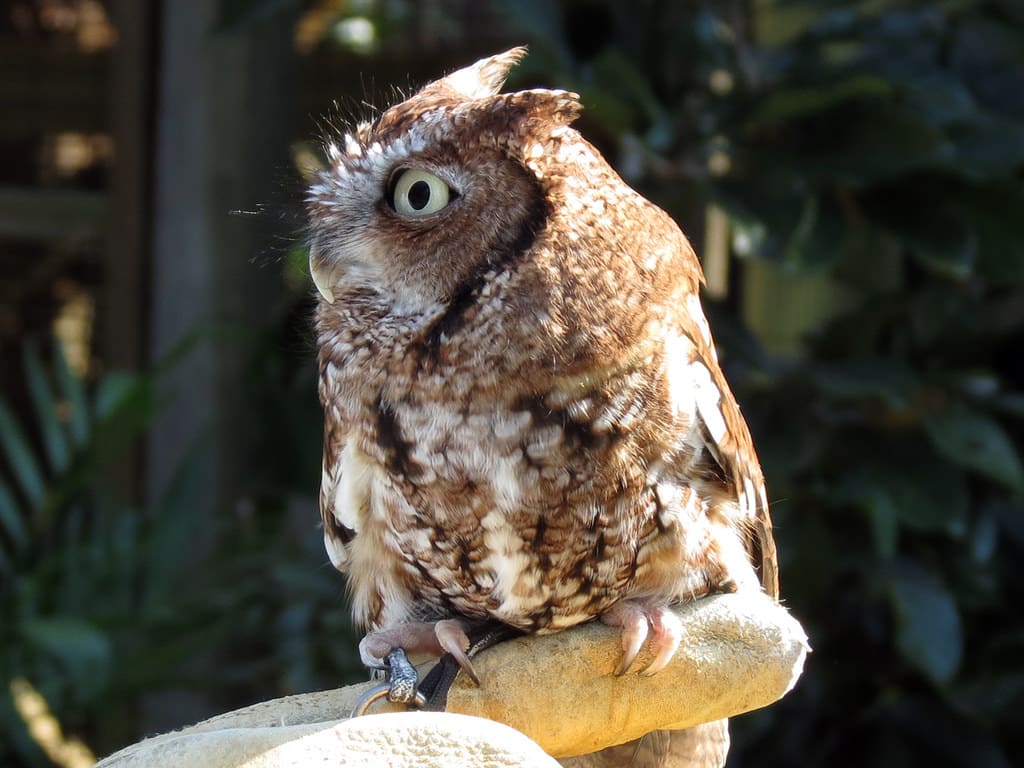
It favors wooded neighborhoods, orchards, forest edges, and parks. Rather than producing a harsh scream, this owl emits soft trills and descending whinnies. The name “screech” is misleading and has probably disappointed many first time listeners expecting something dramatic.
Two color morphs occur in Kentucky, gray and reddish brown, and both may exist within the same local population. This variation helps with camouflage against tree bark.
Eastern Screech Owls nest in tree cavities and readily use nest boxes. Their diet is diverse and includes insects, mice, small birds, and even earthworms. Their adaptability to suburban environments has allowed them to remain stable across much of their range.
4. Barn Owl
The Barn Owl looks very different from Kentucky’s forest owls. With its pale plumage and heart shaped facial disc, it is unmistakable. Historically associated with farmland, it hunts primarily over open fields at night.
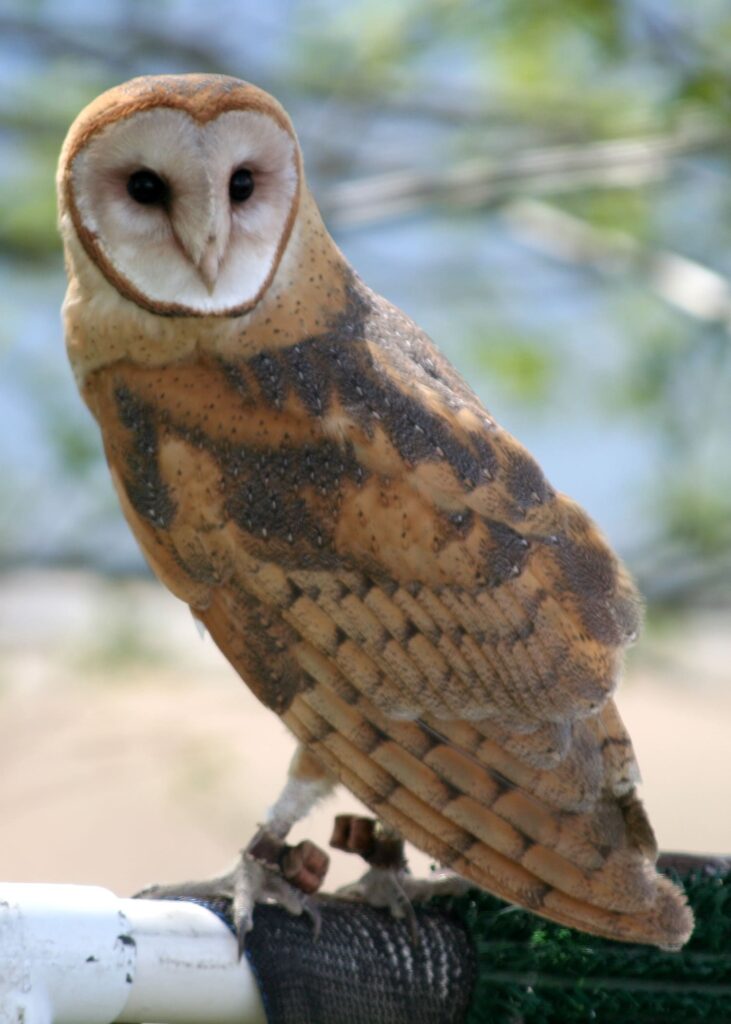
Its facial structure is highly specialized. The heart shaped disc helps funnel sound to asymmetrically placed ears, allowing it to pinpoint prey by sound alone, even in total darkness. Research has shown that Barn Owls can locate small mammals beneath vegetation using auditory cues.
In Kentucky, Barn Owls are far less common than forest species. They nest in barns, silos, and occasionally hollow trees when available. Because they depend on large expanses of open grassland and agricultural habitat, changes in farming practices and loss of nesting structures have influenced local populations.
Unlike the deep hoot of other owls, Barn Owls produce raspy screeches and hissing calls, which can surprise anyone hearing one unexpectedly at night.
5. Northern Saw-whet Owl
The Northern Saw whet Owl is one of the smallest owls recorded in Kentucky and is primarily a migrant and winter visitor. It breeds farther north but passes through the state during fall migration and may overwinter in dense forest cover.
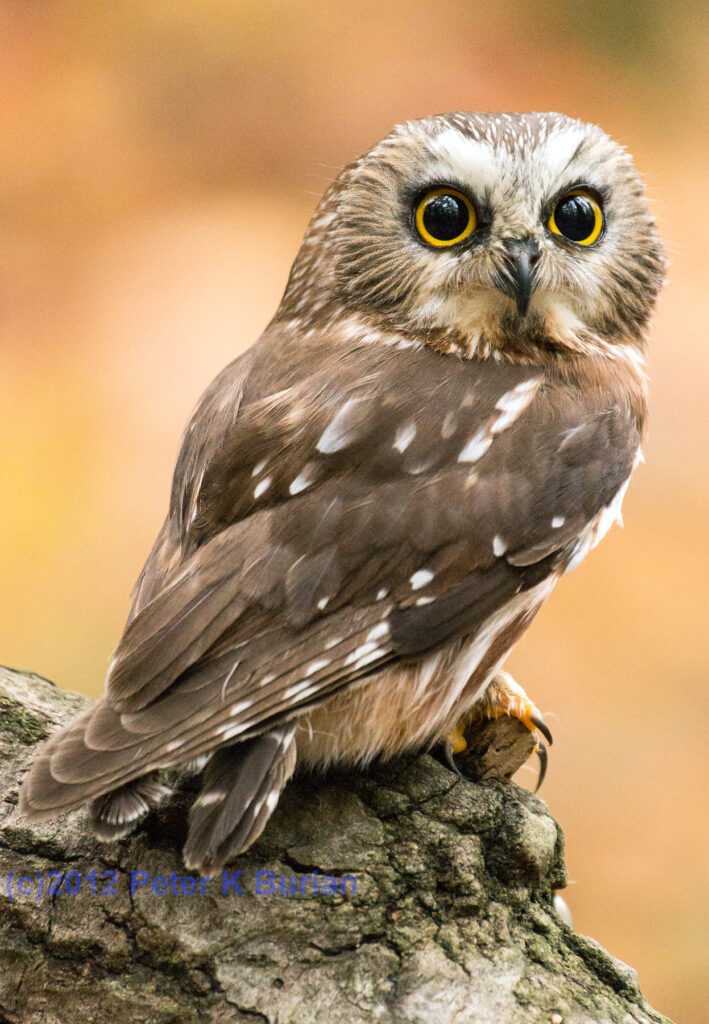
Its name comes from a repetitive call that resembles the sound of a saw being sharpened. Despite its small size, it is an efficient predator of mice and other small mammals.
Because it roosts quietly in thick vegetation during the day, it is rarely seen unless specifically searched for. Banding studies across eastern North America have revealed that many individuals migrate southward each autumn, even though their movements often go unnoticed by the general public.
6. Long-eared Owl
The Long eared Owl is slender, secretive, and primarily a winter visitor in Kentucky. It prefers dense stands of trees for daytime roosting but hunts over adjacent open fields at night.
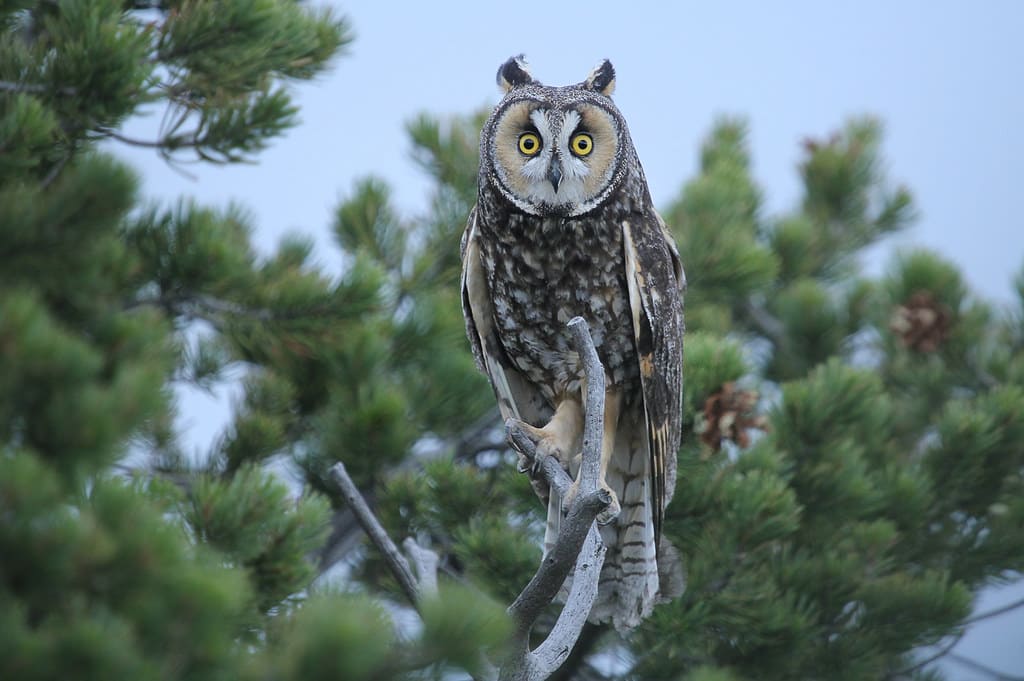
During winter, multiple individuals may roost communally in sheltered groves. Their vertical posture and streaked plumage provide excellent camouflage among branches.
They do not build their own nests and instead use abandoned stick nests during breeding season farther north. In Kentucky, sightings increase during colder months when birds move south from boreal breeding areas.
7. Short-eared Owl
Unlike most owls, the Short eared Owl is often active at dusk and even during daylight hours. In Kentucky it is mainly a winter visitor found in open grasslands, agricultural fields, and reclaimed mining lands.
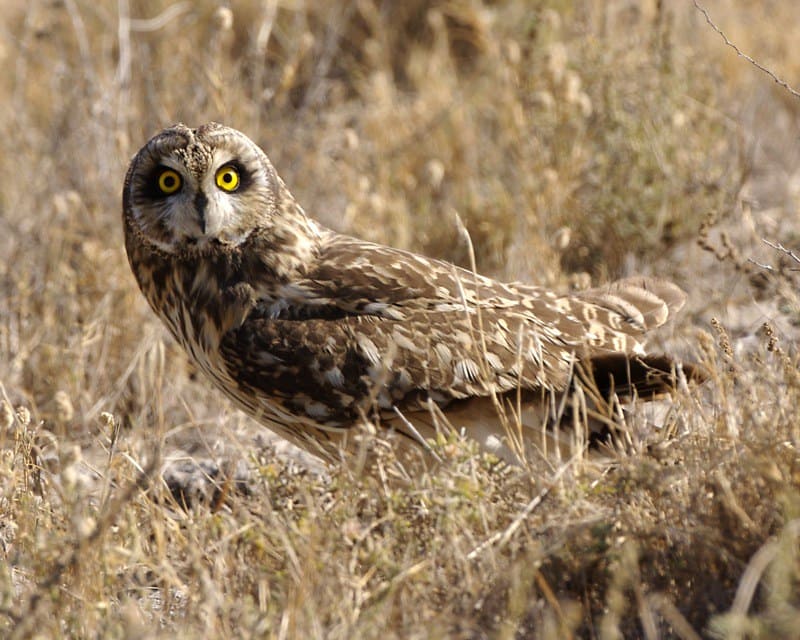
Its flight style is buoyant and moth like as it quarters low over fields searching for voles. The species nests on the ground within grasslands in its breeding range, which makes it dependent on open habitat.
Because it hunts before full darkness, this is one of the easier owls to observe in winter, provided suitable habitat exists.
8. Snowy Owl
The Snowy Owl breeds in the Arctic tundra and appears in Kentucky only during occasional winter irruption years. These movements are tied to population cycles of lemmings, their primary prey in the north.
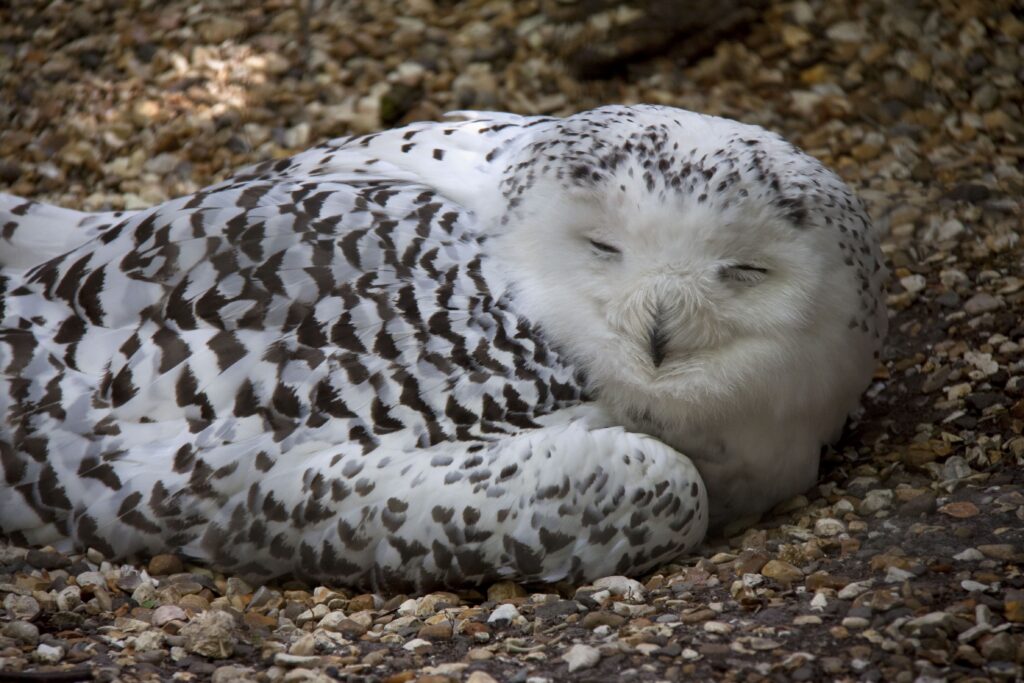
When lemming numbers decline, some Snowy Owls move farther south than usual. In Kentucky they are typically found in large open areas such as agricultural fields or airports, habitats that resemble tundra landscapes.
Unlike most owls in the state, Snowy Owls are frequently active during the day. Their presence in Kentucky is irregular and often generates significant attention among birdwatchers.
9. Northern Hawk Owl
The Northern Hawk Owl is an extremely rare visitor to Kentucky. It normally inhabits boreal forests of Canada and is known for hunting during daylight hours.
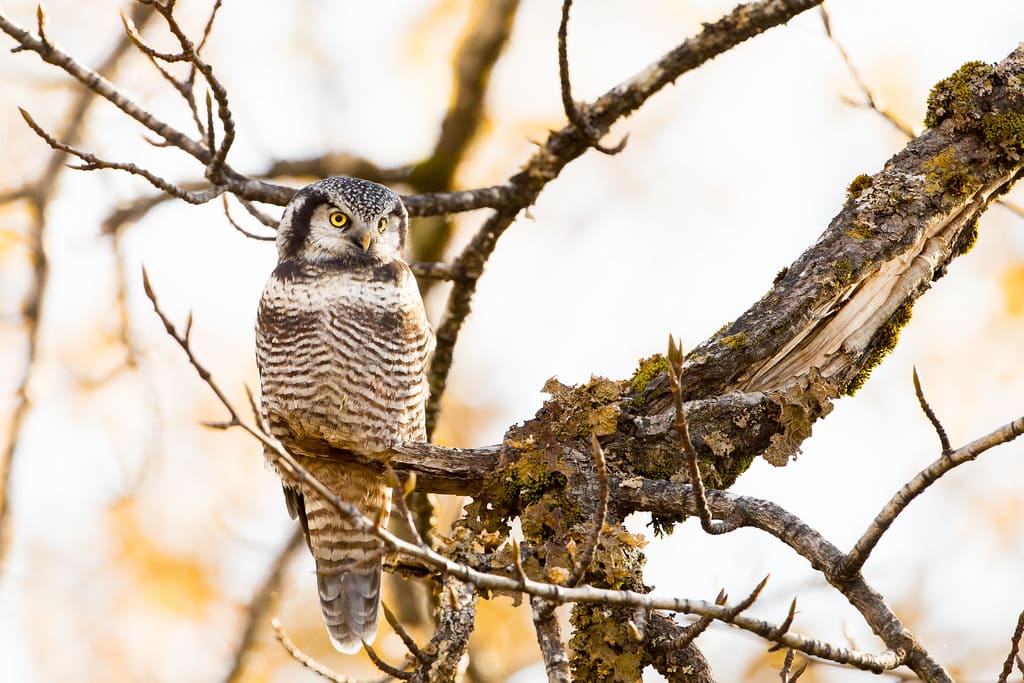
With its long tail and hawk like posture, it behaves differently from most owls. Records in Kentucky are exceptional and usually associated with irruption events that push individuals southward.
When one does appear, it represents a significant movement far beyond its typical range.