
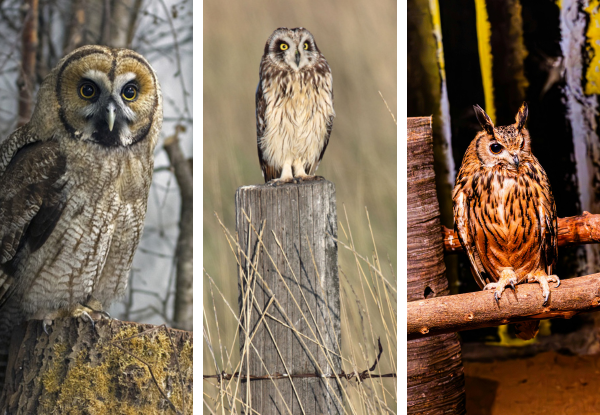
People often talk about “Vermont owls” as if they are all the same, but the state’s owl list includes 10 species that appear in very different ways. Some owls, like the Great Horned Owl and Barred Owl, are present year-round and are the ones most residents are likely to hear calling at night. Others live much quieter lives. Northern Saw-whet Owls and Long-eared Owls are regular parts of Vermont’s owl records, yet many people never see one because they are small, secretive, and active when few are watching.
A few species are not expected every year. Snowy Owls, Northern Hawk Owls, and Great Gray Owls reach Vermont only during certain winters, usually when conditions farther north push them south. These owls can suddenly appear in open fields or along roadsides, then disappear just as quickly.
Taken together, Vermont’s owls include common residents, seldom-seen breeders, and rare winter visitors. Most go unnoticed, heard more often than seen, quietly occupying forests, wetlands, open land, and the edges of towns across the state.
1. Great Horned Owl
If there is one owl that truly belongs to Vermont year-round, it is the Great Horned Owl. This species does not migrate out of the state and continues its normal routine through winter, spring, summer, and fall. Reports come from all kinds of places, from forest interiors to open farmland and wooded areas near towns, which explains why it shows up so often in local bird records.
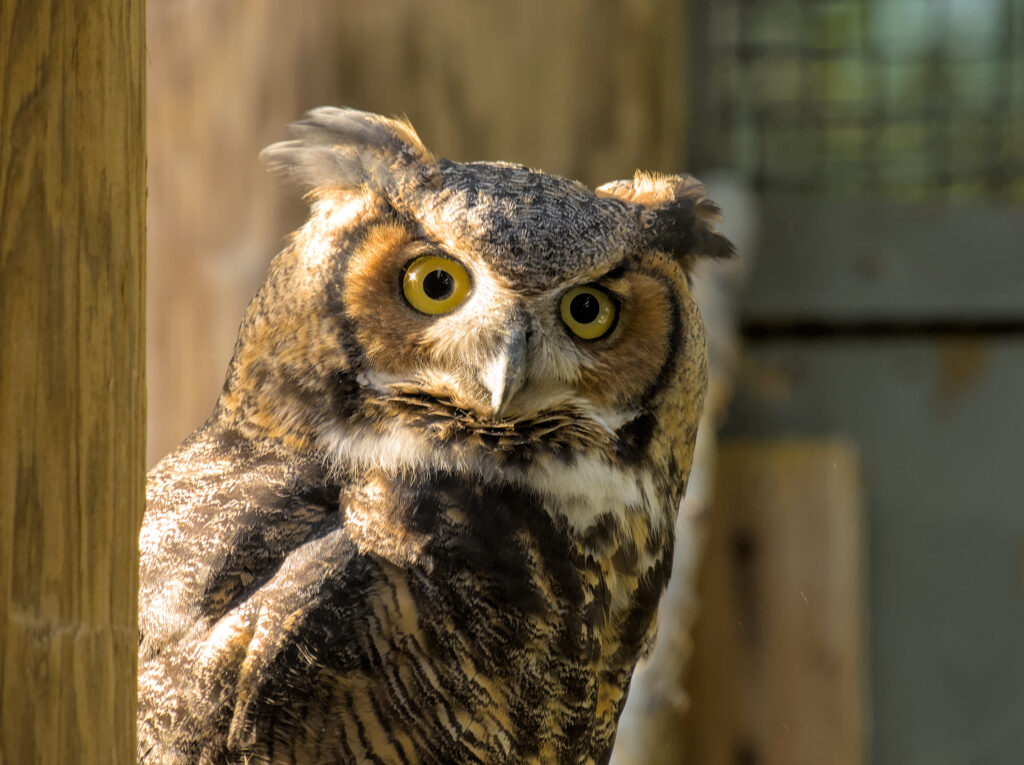
Many people first become aware of Great Horned Owls in the middle of winter, when most birds are quiet. That is because this owl begins its breeding season unusually early. Long before spring arrives, its low, booming hoots can be heard at night, sometimes echoing across frozen landscapes. The owl itself often remains hidden, but the voice carries far.
Great Horned Owls do not bother building nests from scratch. Instead, they take advantage of what is already available. Old hawk or crow nests are commonly reused, and in some cases the owls choose natural ledges or large tree cavities. This approach allows them to settle in quickly and begin nesting earlier than most birds, a pattern that has remained consistent in Vermont for decades.
2. Barred Owl
Barred Owls are not rare in Vermont, but they are rarely seen. Most people who know they are around know it because they have heard them. The calls carry a long way at night, especially in wooded areas near water, and they tend to come from places where you cannot quite see what is making the sound.
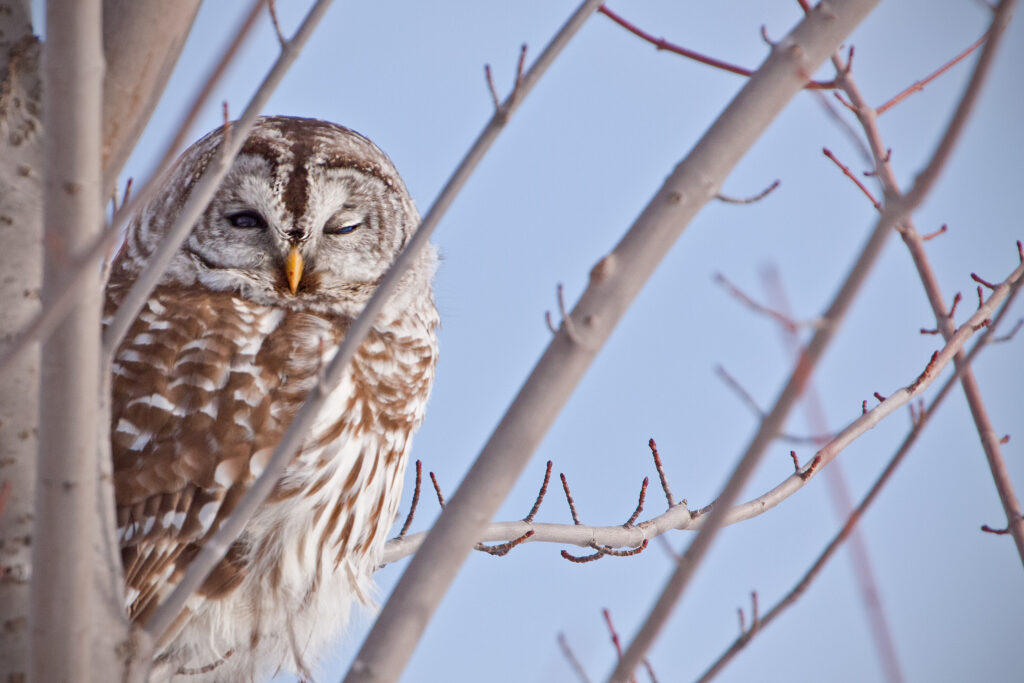
The call itself is what causes the confusion. It has a steady, rolling rhythm that does not sound much like a bird if you are not expecting it. People often describe it as someone calling from the woods, which has led to more than a few uneasy moments on quiet nights. By the time someone steps outside to look, the owl is usually silent again.
Barred Owls stay in Vermont all year. They do most of their hunting at night, but they are not strictly nocturnal, and daylight sightings do happen. Even then, the owl often sits still in the trees, blending in well enough that it goes unnoticed unless you know exactly where to look. For many residents, this owl is a familiar voice long before it becomes a familiar sight.
3. Eastern Screech-Owl
The Eastern Screech-Owl is one of the easiest owls in Vermont to miss, even though it often lives closer to people than most other species. Despite its name, it does not screech at all. Its calls are softer sounds, trills and wavering whinnies that blend into the background, especially at night when there is already a lot of ambient noise.
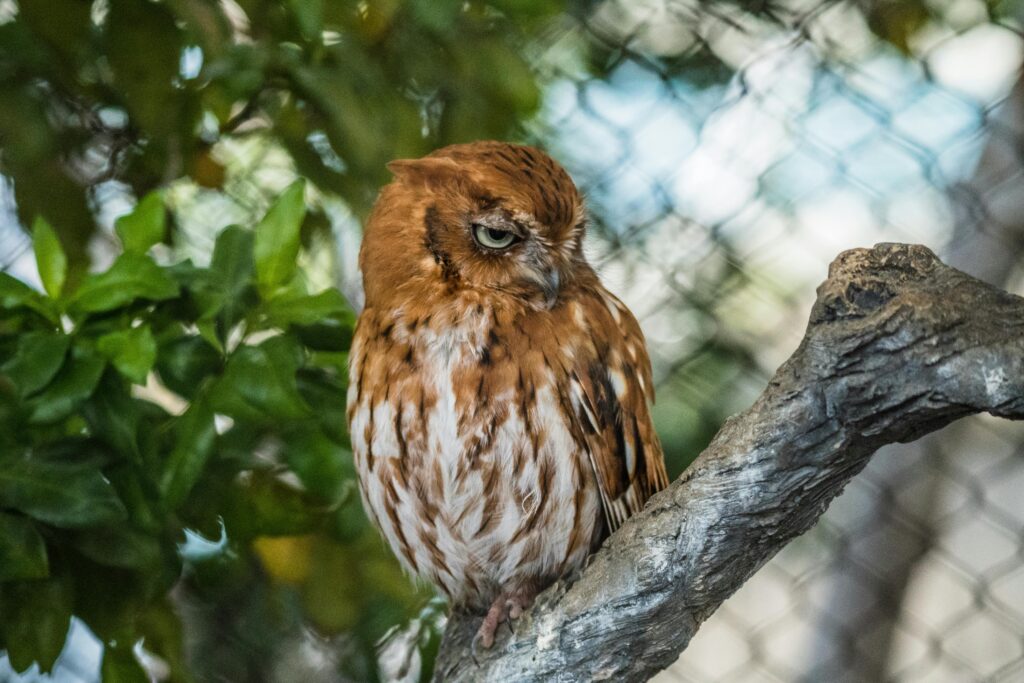
This owl is present in Vermont throughout the year, but it tends to be more common at lower elevations where suitable tree cover and cavities are available. It frequently uses natural holes in trees, and it will also accept nest boxes, which is one of the few reasons people occasionally discover it living nearby.
Size plays a big role in why the Eastern Screech-Owl is overlooked. It is the smallest owl that regularly occurs in Vermont, and it spends daylight hours tucked into cavities or pressed tightly against tree trunks. Even when one is present, it often goes unnoticed unless it calls or is found accidentally. For many people, this owl remains part of the landscape without ever becoming visible.
4. Northern Saw-whet Owl
The Northern Saw-whet Owl is one of those species that can live in Vermont for years without most people ever realizing it. It occurs in the state as both a breeding bird and a migrant, yet actual sightings are uncommon. The reason is not rarity as much as behavior. This owl spends daylight hours tucked tightly into dense cover, often low to the ground, where it stays completely still.
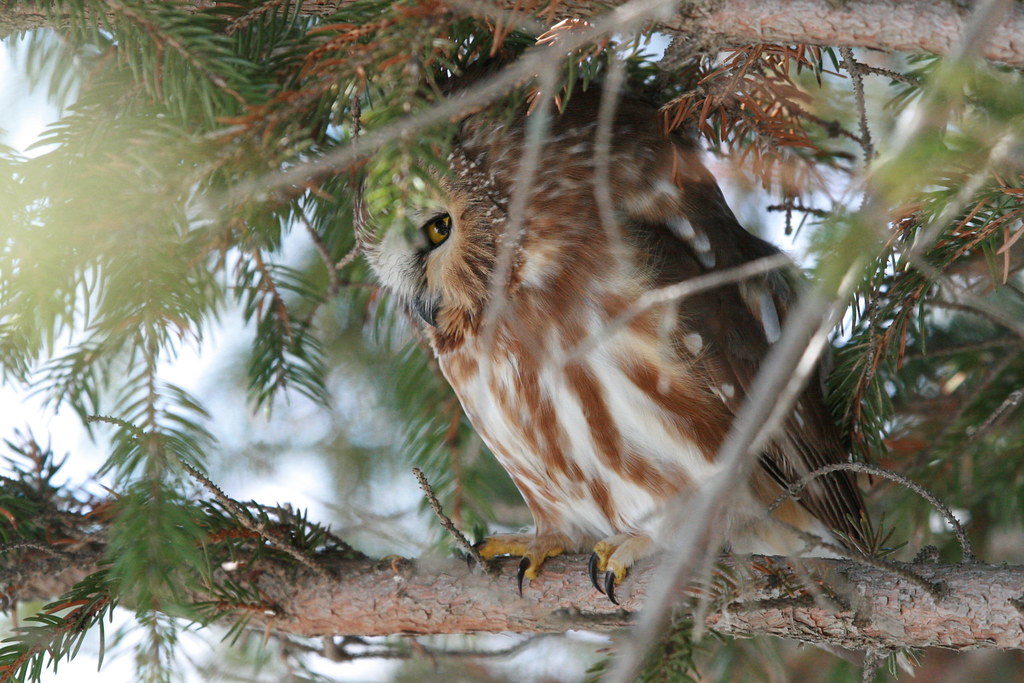
Even experienced birders can walk past a Northern Saw-whet Owl without noticing it. When roosting, it relies on camouflage rather than movement, choosing thick foliage or young conifers where its small size works in its favor. Because of this, records often come from chance discoveries or from focused surveys rather than casual observation.
The species becomes easier to detect during migration periods, when individuals move through the region and call more frequently at night. These soft, repetitive calls are often the first clue that one is nearby. Although the Northern Saw-whet Owl is a regular part of Vermont’s owl community, it remains one of the least visible, known more from records and sounds than from direct encounters.
5. Long-eared Owl
Long-eared Owls are present in Vermont, but they are among the least likely owls to be noticed. Even in places where they are known to occur, most people never see one. This is partly because their numbers are low, but mostly because of how they behave during the day. When not active, they choose dense trees and sit motionless, blending in so well that they can be invisible from just a few steps away.
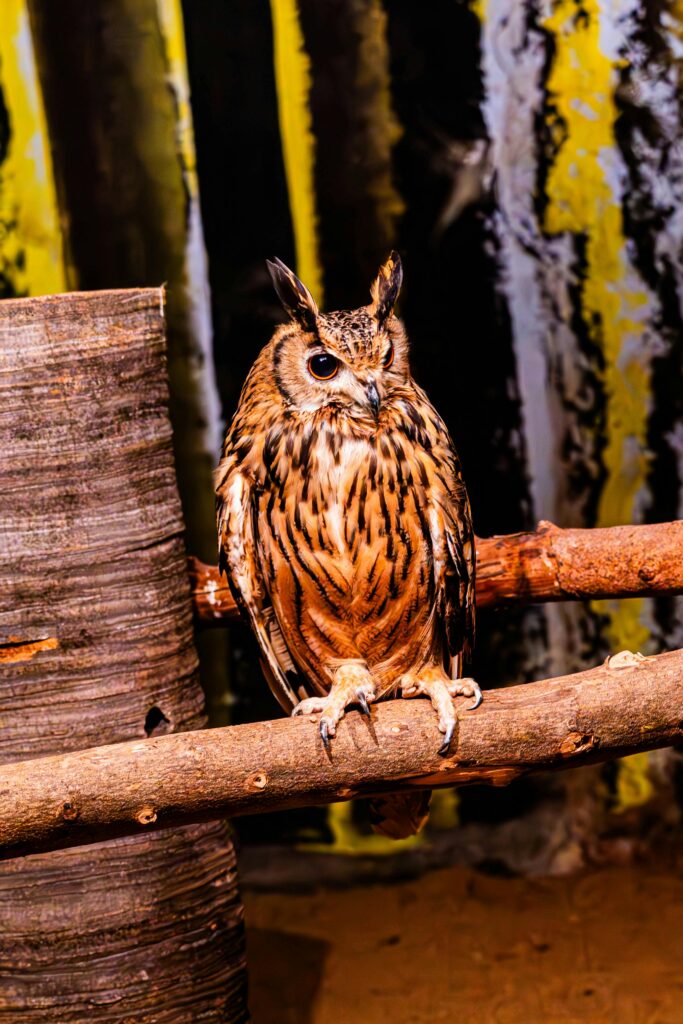
During winter, Long-eared Owls sometimes roost together, with several individuals using the same cluster of trees. Even then, the owls are easy to miss. They perch close to tree trunks, often in conifers, and rely on camouflage rather than height or distance to stay hidden. Many confirmed sightings come only after someone already knows exactly where to look.
At night, these owls leave their roosts to hunt, moving quietly and staying out of sight. Because they are mostly active after dark and remain so well concealed during the day, their presence in Vermont is better documented through careful surveys than casual observation. For most residents, the Long-eared Owl remains an owl that exists on record rather than one they expect to encounter.
6. Short-eared Owl
The Short-eared Owl stands out from most other owls recorded in Vermont because it is often active during daylight. This alone makes it feel different to people who expect owls to appear only after dark. When it is present, it is usually noticed in open areas where it flies low over the ground with slow, buoyant wingbeats, sometimes in full view of anyone nearby.
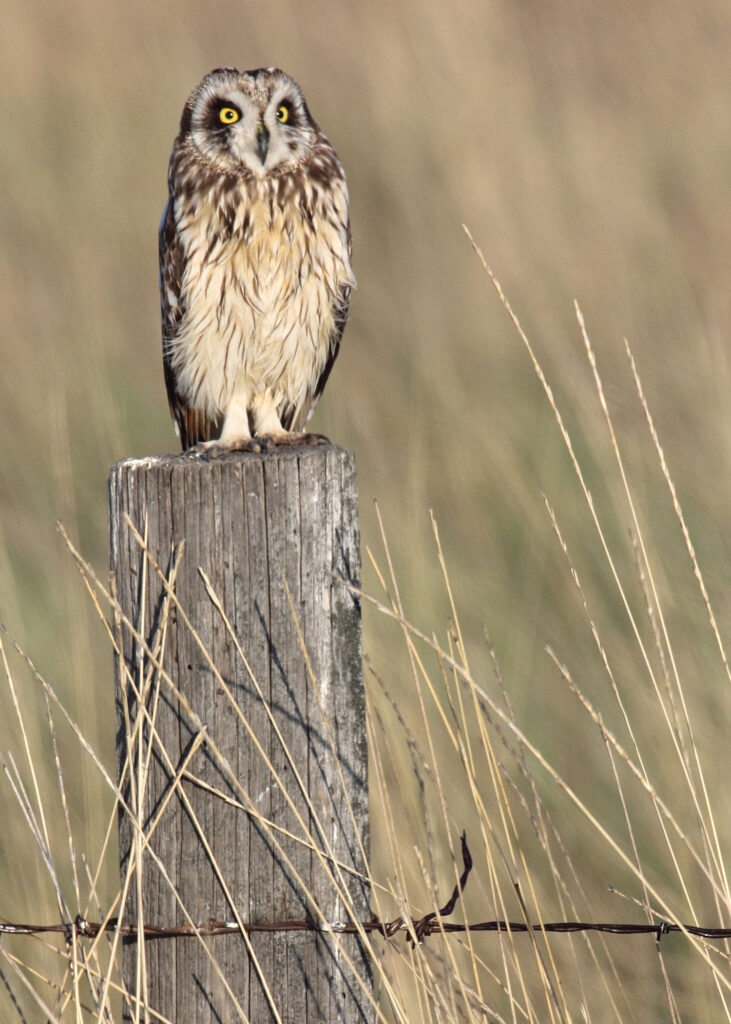
In Vermont, the Short-eared Owl is considered uncommon and unevenly distributed. It does not occupy the same locations year after year, and some seasons pass with very few reports at all. When it does appear, sightings tend to be clustered in specific open landscapes rather than spread evenly across the state. This irregular pattern means that many birders see one only once, if at all.
Although it hunts mainly by day or at dusk, the Short-eared Owl still behaves like a cautious owl. It rarely perches in obvious places and often disappears as quickly as it appears. For people lucky enough to encounter one, the experience feels brief and unexpected, which has helped give the species its reputation as one of Vermont’s more unpredictable owls.
7. Boreal Owl
The Boreal Owl is one of the most rarely detected owl species recorded in Vermont. Its presence is confirmed through a small number of observations rather than frequent sightings, and many people who spend years birding in the state never encounter one. Even when it is present, it tends to pass unnoticed.
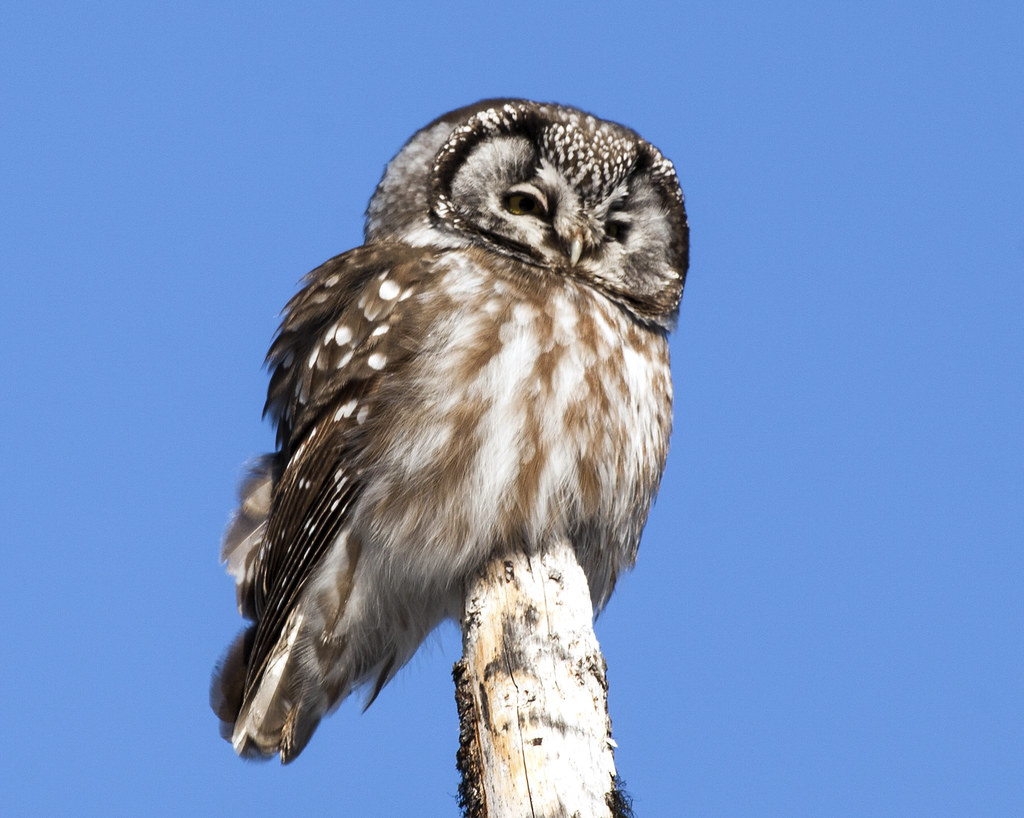
This owl is mainly associated with higher-elevation forested areas, where it remains active at night and difficult to locate. During the day, it stays hidden and quiet, relying on cover rather than movement. Because it calls infrequently and occupies areas that see relatively little nighttime activity, opportunities to detect it are limited.
Most Vermont records of Boreal Owls come from targeted surveys or isolated observations rather than chance encounters. The species is not widespread within the state, and its appearances are considered uncommon and irregular. As a result, the Boreal Owl occupies a unique place among Vermont’s owls. It is part of the official record, yet remains largely unknown to anyone who has not spent time searching deliberately for it.
8. Snowy Owl
Snowy Owls do not live in Vermont year-round, but their appearances are among the most memorable owl events in the state. They arrive only during certain winters, when movements from farther north bring them south into the region. In some years they are absent altogether, while in others a handful may be seen across different parts of the state.
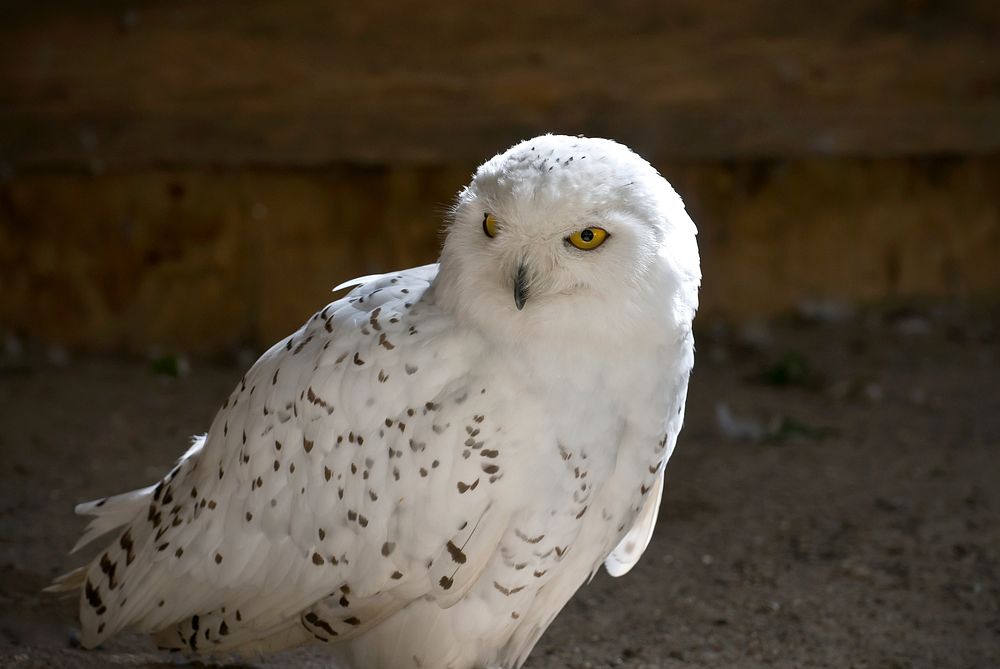
When Snowy Owls do appear, they tend to choose wide, open areas. Fields, shorelines, and large open spaces such as airport grounds are where most Vermont sightings occur. Unlike many owls, they are often visible during the day, sitting out in the open rather than hidden in trees. This makes them easy to notice, even for people who are not actively looking for birds.
Because of their size, pale coloring, and daytime behavior, Snowy Owls attract immediate attention. A single bird can draw large crowds once its location becomes known. Despite this visibility, their presence is temporary. After the winter season ends, Snowy Owls move on, leaving behind only a brief record of their time in Vermont until the next irruption year.
9. Northern Hawk Owl
The Northern Hawk Owl is one of the rarest owls to appear in Vermont, and it reaches the state only during occasional winter movements from farther north. Many winters pass without a single report, which makes each appearance feel notable rather than routine.
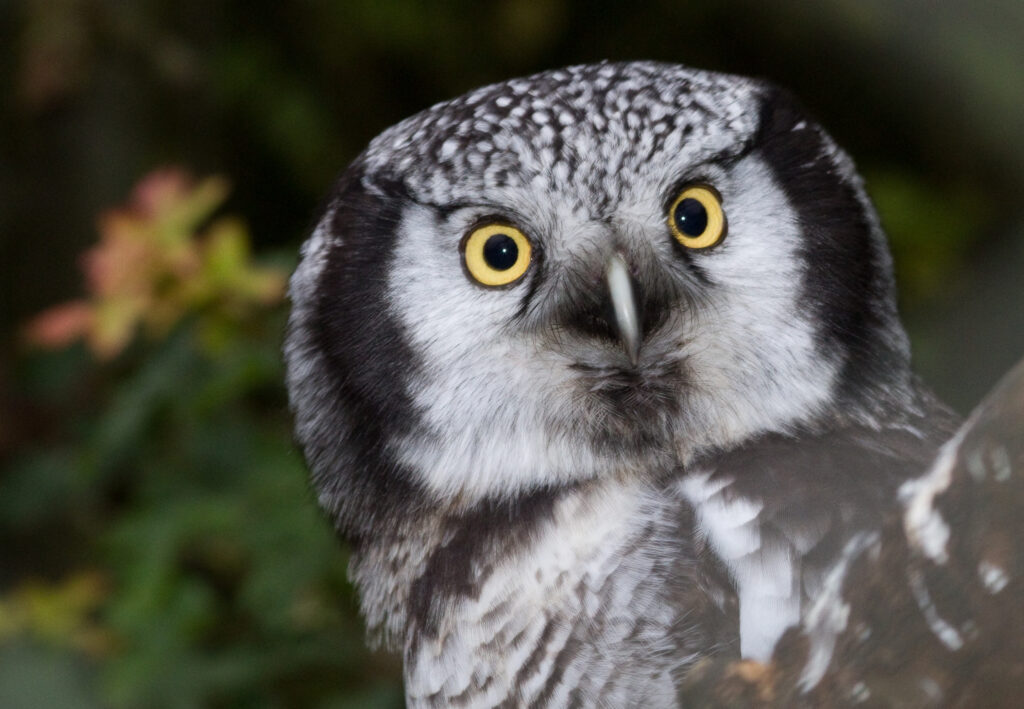
What sets this owl apart is how it behaves when it does show up. Unlike most owls, the Northern Hawk Owl hunts during daylight and often perches in exposed locations. It may sit on the top of a tree or utility pole, scanning the ground below in a way that feels more like a hawk than an owl. This behavior is the reason it is often noticed quickly once present.
Vermont sightings usually come from open areas or places where forest meets open land. Even then, encounters are brief. The owl may remain in one area for a short time before moving on, leaving behind only a small number of records. For those who do encounter one, the Northern Hawk Owl often becomes a memorable sight, not because it is common, but because it behaves so differently from the owls people expect to see.
10. Great Gray Owl
The Great Gray Owl is the largest owl ever recorded in Vermont, yet it is also one of the least likely to be encountered. It does not live in the state year-round and does not breed here. Instead, it appears only during certain winters, when movements from farther north bring a small number of individuals into the region.
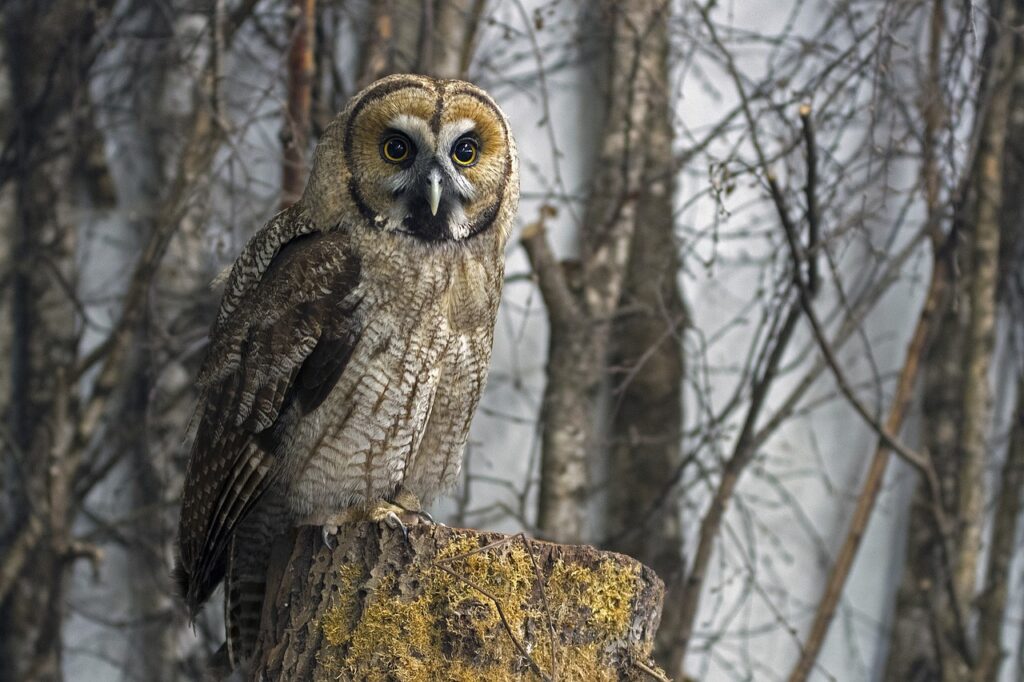
When Great Gray Owls do reach Vermont, their presence is usually noticed quickly. Their size alone makes them stand out, and they are often seen in open areas or along forest edges rather than deep in the woods. Even so, sightings remain uncommon and tend to cluster in particular years rather than occurring regularly.
Most records of Great Gray Owls in Vermont come from well-documented irruption winters, when multiple reports appear within a short time span. Outside of those periods, years may pass without any confirmed observations at all. For this reason, the species remains part of Vermont’s official owl record but not part of its everyday wildlife experience. Seeing one is considered an exceptional event, even among people who spend a great deal of time looking for owls.