
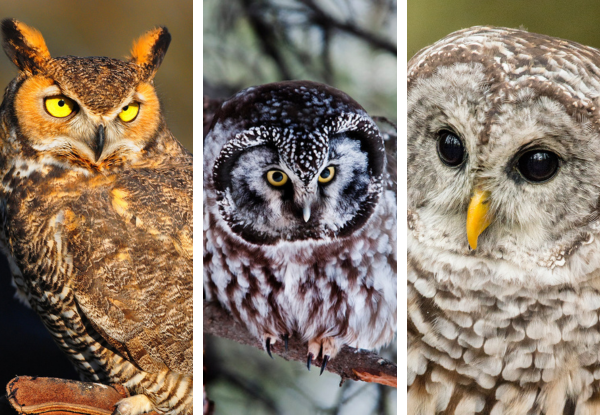
Michigan has 12 owl species recorded within the state, but most residents encounter only a small fraction of them. This difference between what exists on paper and what people actually see often leads to confusion. Some owls live in Michigan year round, others appear only during certain seasons, and a few are rare visitors whose presence depends on weather, prey cycles, and long term habitat conditions.
The state’s unusual position between the Great Lakes, northern forests, wetlands, farmland, and open plains makes it suitable for a wide range of owl species. Forest dwelling owls dominate the landscape, especially in mature woodlands and swamp forests, while open country species are far less common due to habitat loss. A small number of owls arrive from the far north during severe winters when food becomes scarce in their usual range.
This article explores all 12 owl species documented in Michigan, explaining where each one lives, how often it is observed, and why some species are familiar while others remain largely unknown. The focus is on reality rather than assumption, helping readers understand which owls are part of everyday Michigan wildlife and which ones appear only under exceptional circumstances.
1. Great Horned Owl
If there is one owl that truly defines Michigan, it is the Great Horned Owl. This species is found across the entire state, from the Upper Peninsula’s forests to southern farmland and even the edges of cities. Its success comes from flexibility. Unlike many owls that depend on a narrow habitat, the Great Horned Owl can live almost anywhere that offers trees for nesting and open space for hunting.
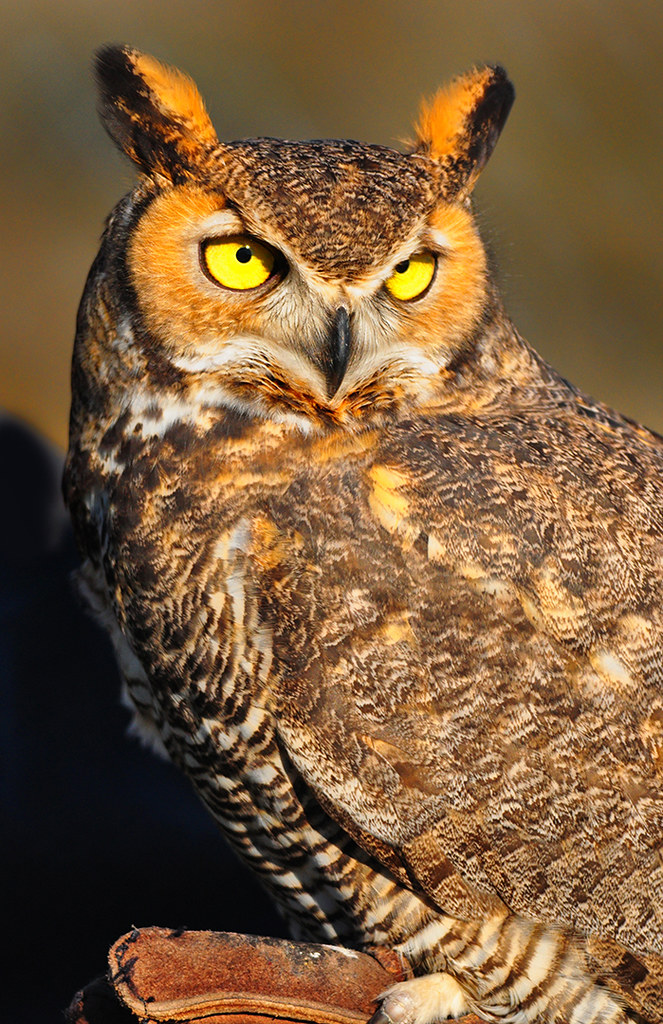
Most people know this owl by sound rather than sight. Its deep, echoing hoots are often heard on cold winter nights when few other birds are vocal. That timing is not accidental. Great Horned Owls begin nesting earlier than almost any other bird in Michigan, often in midwinter, long before spring arrives. They do not build their own nests. Instead, they take over abandoned nests made by hawks, crows, or herons, which allows them to raise young before prey becomes abundant.
Because they hunt a wide range of animals and tolerate human presence, Great Horned Owls remain active year round and are the owl Michiganders are most likely to encounter, even if they never realize it.
2. Barred Owl
The Barred Owl is closely tied to Michigan’s forest history. A century ago, it was far less common, but as large areas of forest recovered after widespread logging in the late nineteenth and early twentieth centuries, this owl quietly expanded its range. Today, it is firmly established across northern and central Michigan, especially where forests are mature and uninterrupted.
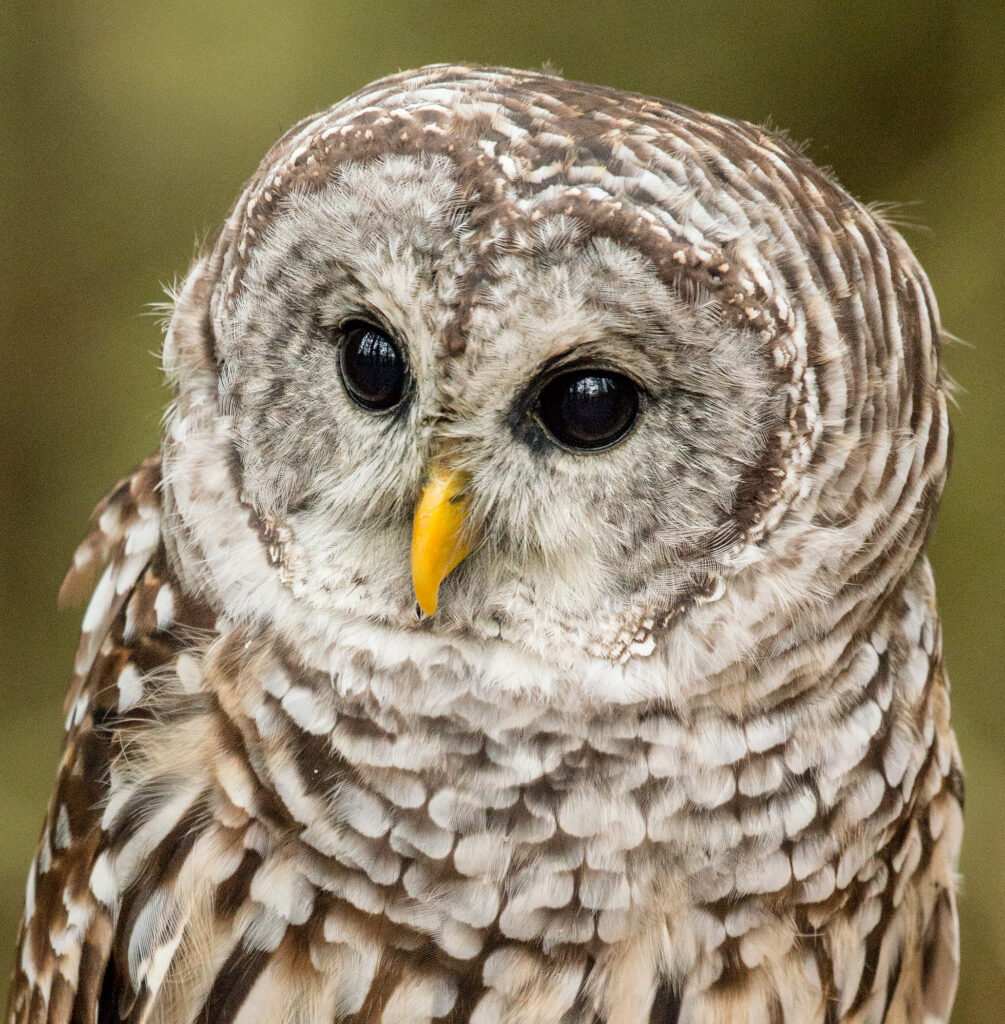
Unlike owls that tolerate fragmented landscapes, Barred Owls prefer large, continuous tracts of woodland. They are particularly drawn to wet environments such as swamp forests, river bottoms, and wooded wetlands, where tree cover is dense and prey is abundant. These damp, shadowed habitats provide both protection and reliable hunting opportunities.
Barred Owls are also among the most vocal owls in the state. Their loud, expressive calls carry through the forest day and night, often giving away their presence long before they are seen. Many people recognize their distinctive hooting without knowing the bird responsible. Because they rely heavily on intact forest structure, the presence of Barred Owls is often a sign of healthy woodland ecosystems, making them an important indicator species within Michigan’s forested landscapes.
3. Eastern Screech Owl
The Eastern Screech Owl is one of Michigan’s most common owls, yet it is also one of the easiest to overlook. Despite its name, this owl does not screech at all. Its calls are soft, musical trills and descending whinnies that blend easily into the background of nighttime sounds. Many people live near one for years without realizing it is there.
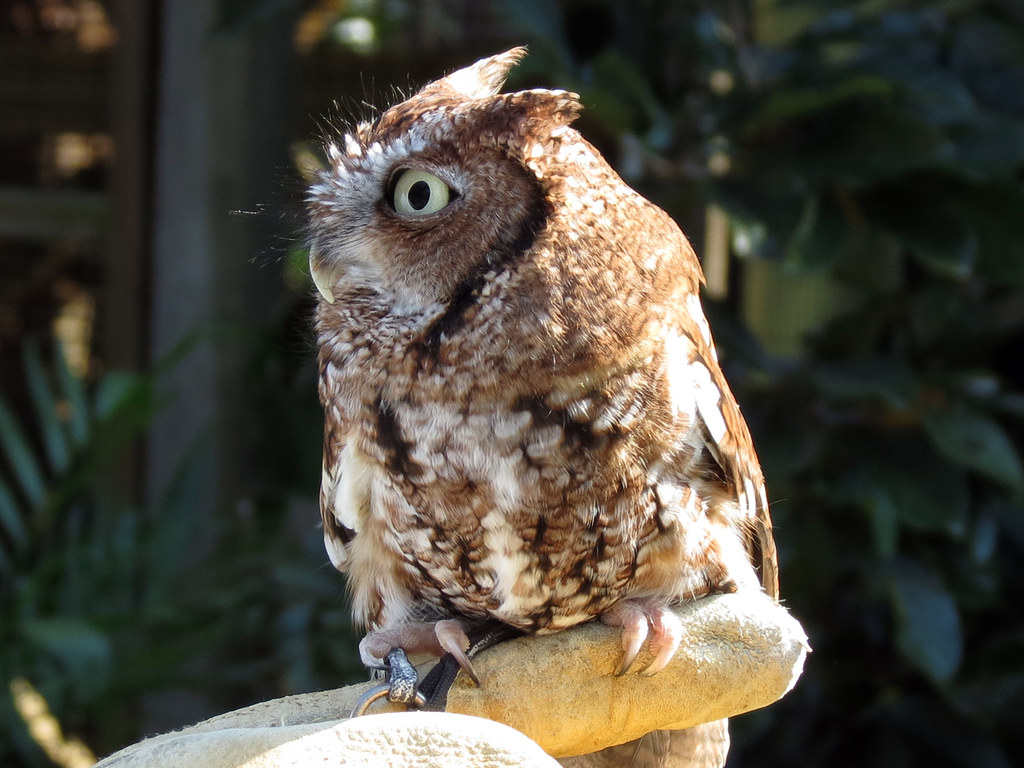
This small owl is most widespread in southern and central Michigan, where woodlots, parks, and suburban neighborhoods provide a mix of trees and open hunting space. Unlike larger owls that require extensive forest, Eastern Screech Owls adapt well to human-altered landscapes as long as mature trees remain. They rely on natural tree cavities for nesting but readily use nest boxes, which has helped them persist even as old trees disappear.
Eastern Screech Owls remain active throughout the year and do not migrate. Their compact size allows them to hunt insects, small mammals, and birds, giving them flexibility across seasons. Their quiet presence and tolerance of people make them one of Michigan’s most successful owls, even if they are rarely seen.
4. Great Gray Owl
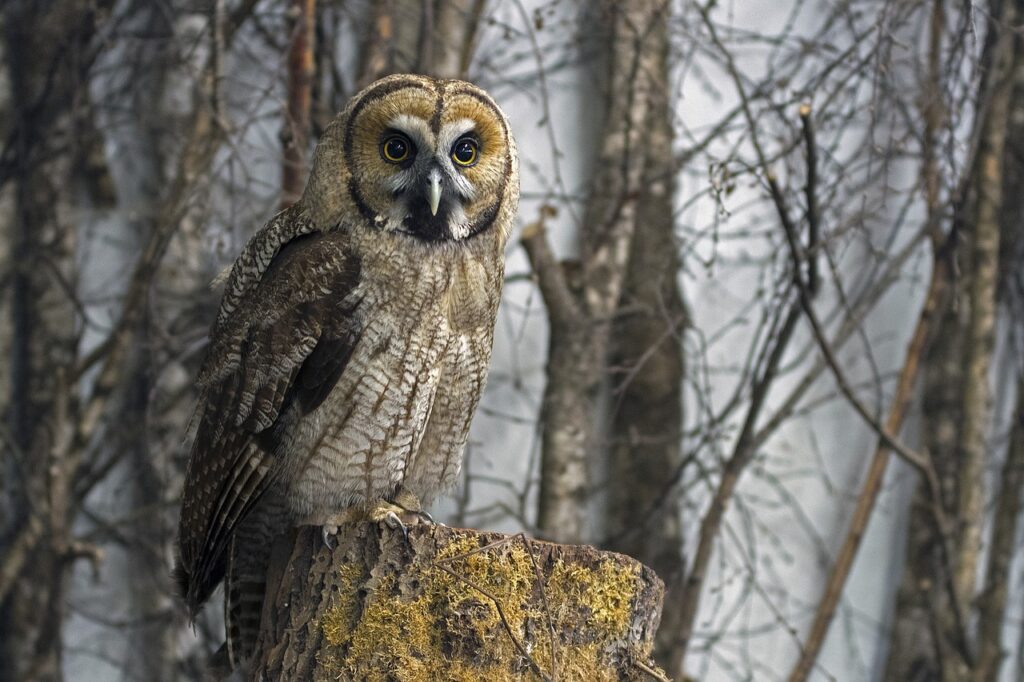
The Great Gray Owl is not truly a Michigan owl in the everyday sense. Its presence in the state is rare, irregular, and closely tied to events happening far to the north. In most years, this species remains deep within the boreal forests of Canada and Alaska, never approaching Michigan at all. When it does appear, it is almost always in the Upper Peninsula and almost always during winter.
These appearances occur during what ornithologists call irruption years. When vole populations crash in the Great Gray Owl’s core range, some individuals are forced to move south in search of food. Michigan sits just within reach of that movement, which explains why sightings are scattered, brief, and unpredictable. Even in years when Great Gray Owls do arrive, only a small number are recorded statewide.
Despite its massive size, the Great Gray Owl can be surprisingly difficult to spot. It hunts quietly over open areas bordered by forest and often disappears as suddenly as it arrives. For most Michigan residents, encountering one remains a once in a lifetime event rather than an expectation, shaped entirely by northern winters and prey cycles beyond the state’s borders.
5. Snowy Owl
Snowy Owls are among the most recognizable owls to appear in Michigan, yet they are not a regular part of the state’s wildlife. Their presence is limited entirely to winter, and even then, many winters pass without a single confirmed sighting. When Snowy Owls do arrive, it is usually because conditions far to the north have forced them south.
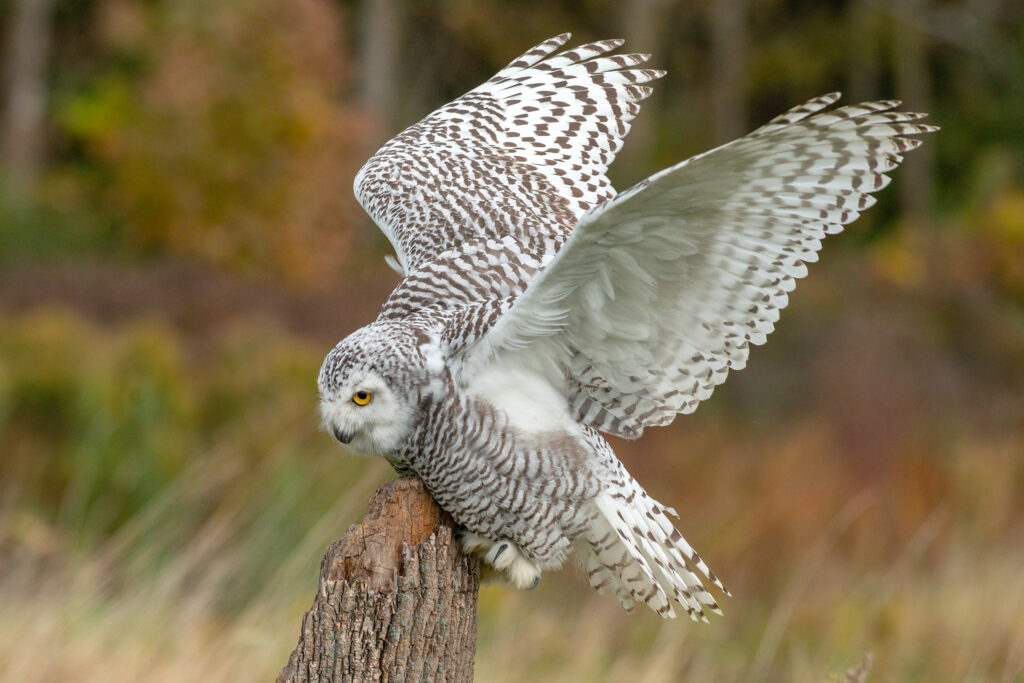
These movements are closely tied to lemming populations in the Arctic. In years when lemmings are scarce, Snowy Owls range widely in search of food, sometimes reaching the Great Lakes region. Michigan’s open landscapes, including shorelines, frozen fields, and large agricultural areas, resemble the tundra habitats they prefer and help explain where they are most often found.
Snowy Owls do not seek forests. Instead, they choose wide, open spaces where they can see prey from a distance and hunt during daylight as well as at night. Their appearance in Michigan is never guaranteed and should not be expected annually. Each sighting reflects a specific combination of Arctic conditions, prey availability, and winter weather rather than a stable population within the state.
6. Northern Saw-whet Owl
The Northern Saw-whet Owl is one of the most numerous owls in Michigan, yet almost no one sees it. Its small size, quiet behavior, and preference for dense cover allow it to pass through the state largely unnoticed. For decades, it was considered uncommon simply because it was rarely observed. That assumption changed once systematic banding studies began.
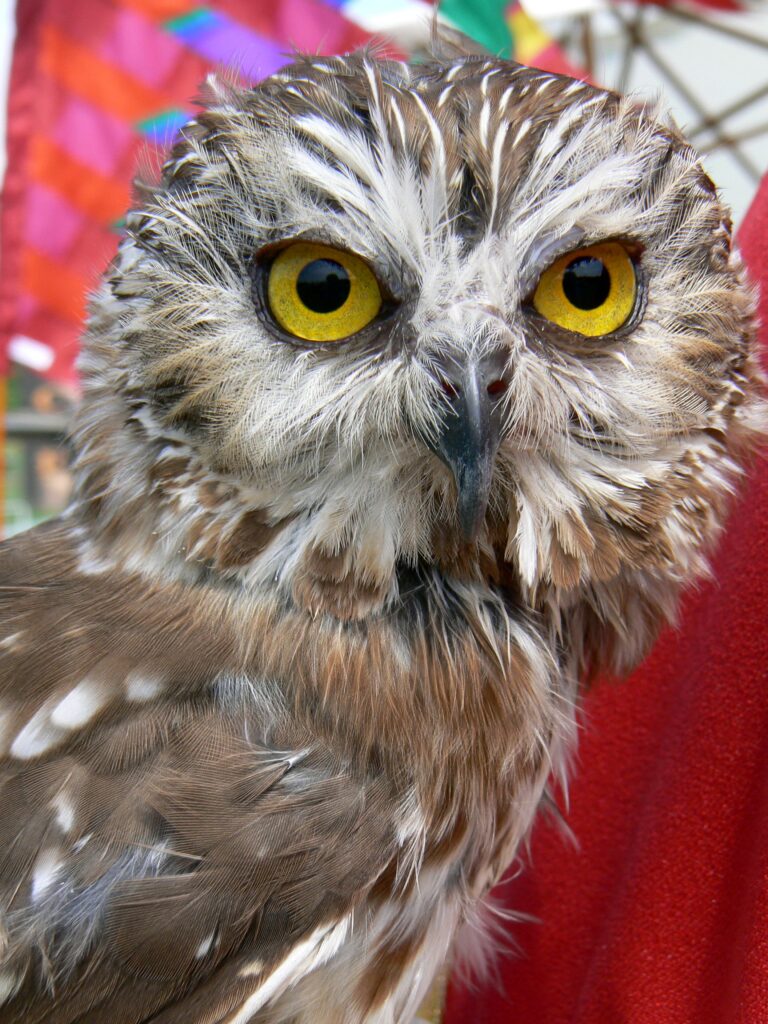
Each fall, thousands of Northern Saw-whet Owls migrate through Michigan under the cover of darkness. Banding stations across the state regularly document large numbers moving south, revealing a migration that takes place almost entirely while people are asleep. Some individuals continue farther south, while others remain in Michigan through the winter, especially in years with mild weather and adequate prey.
During the day, these owls roost deep within thick vegetation, where they sit motionless and rely on camouflage rather than flight. At night, they hunt quietly, feeding primarily on small mammals. Their tendency to remain hidden explains why even experienced birders can overlook them. In reality, the Northern Saw-whet Owl is one of Michigan’s most successful and widespread owls, despite rarely being seen.
7. Long-eared Owl
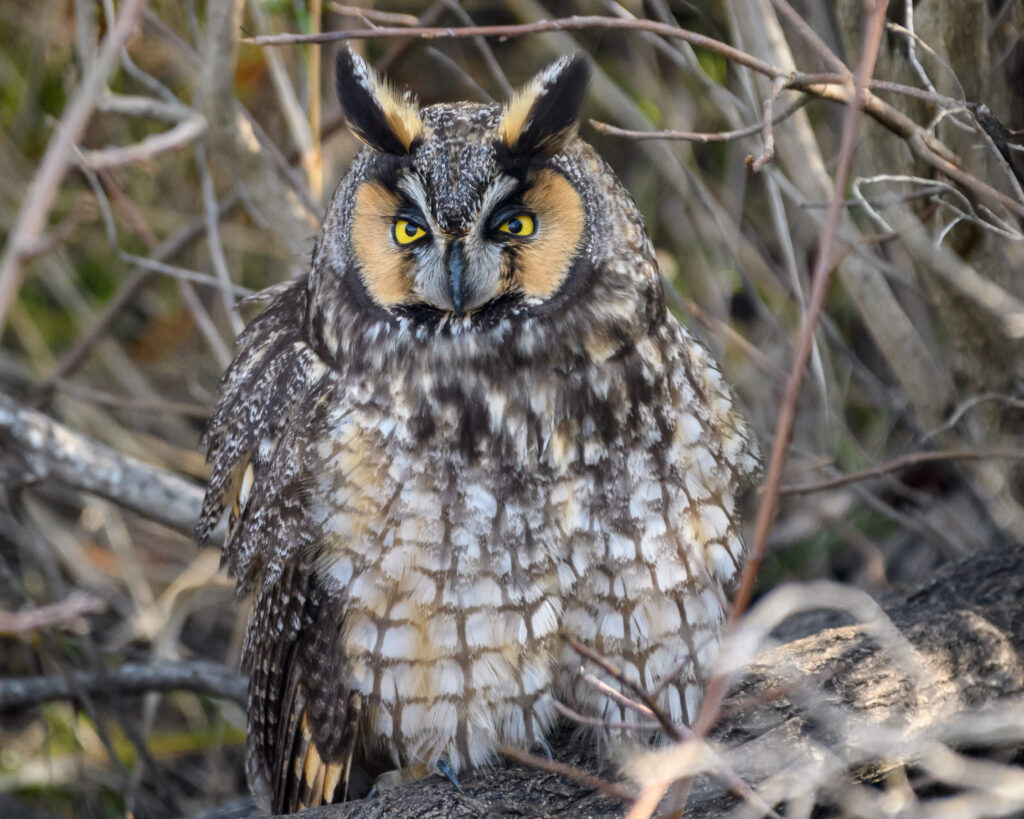
Long-eared Owls do live in Michigan, but most people never encounter one. Their scarcity is not due to rarity alone but to behavior. During the day, these owls roost quietly in dense stands of trees, often pressed close to trunks where their streaked plumage blends seamlessly into branches and shadows. Even when several individuals are present, they can be nearly invisible.
At night, Long-eared Owls leave cover to hunt over open fields, grasslands, and wet meadows. This contrast between dense daytime shelter and open nighttime hunting habitat shapes where they can survive. They do not build their own nests, instead relying on abandoned nests originally constructed by crows or other medium-sized birds. This dependence limits where they can breed successfully.
Across much of their range, including parts of Michigan, Long-eared Owls have shown signs of decline. Habitat fragmentation and the loss of open hunting areas appear to be key factors. Because they are so quiet and elusive, population changes can go unnoticed for years. When Long-eared Owls disappear from an area, it often reflects broader changes in landscape structure rather than a single cause.
8. Short-eared Owl
The Short-eared Owl tells a different story from most of Michigan’s owls. Instead of forests, it depends on wide open landscapes such as grasslands, marshes, and wet meadows. These habitats were once more common across the state, especially in southern Michigan, but have steadily declined due to drainage, development, and changes in land use. As a result, the Short-eared Owl has become uncommon in modern Michigan.
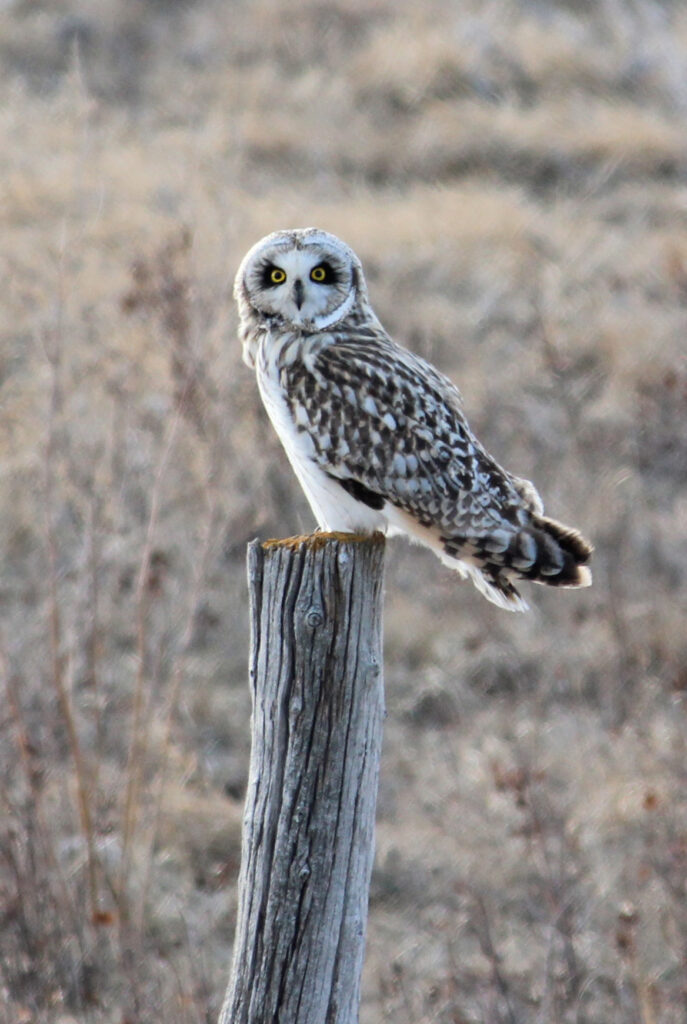
Unlike many owls, this species is often active during daylight, particularly in the late afternoon and early evening. When present, it can sometimes be seen flying low over fields with a buoyant, moth-like flight as it searches for small mammals. These behaviors make it more visible than many other owls, yet sightings remain rare because suitable habitat is limited.
Today, Short-eared Owls are most often found in large, undisturbed marshes and open fields, usually during migration or winter. Their presence is closely tied to the availability of intact open landscapes. When those habitats disappear, the owls disappear with them, making this species a clear indicator of grassland and wetland health in Michigan.
9. Northern Hawk Owl
The Northern Hawk Owl is one of the least predictable owls ever to appear in Michigan. In most years, it does not occur in the state at all. When it does, sightings are almost entirely confined to the Upper Peninsula and are tied to larger movements originating in the boreal forests of Canada. These appearances are brief and irregular, shaped by conditions far beyond Michigan’s borders.
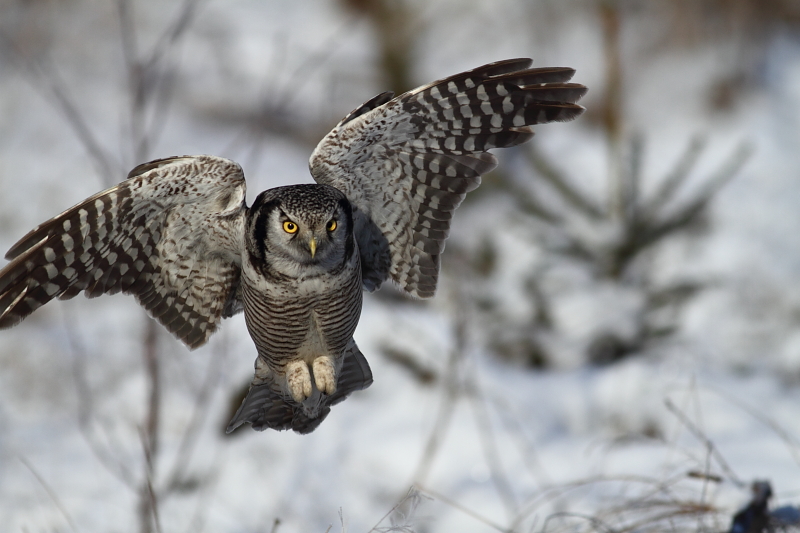
This species stands apart from most owls in both behavior and appearance. Northern Hawk Owls hunt primarily during daylight, often perching in exposed locations where they scan the landscape for prey. They favor open forest edges, burns, and sparsely wooded areas that allow long sightlines. This hunting style resembles that of hawks more than typical nocturnal owls, which is how the species earned its name.
Because Northern Hawk Owls depend on prey cycles in northern forests, their presence in Michigan reflects broader ecological shifts rather than local conditions. Even in irruption years, only a small number are recorded. For Michigan birders, encountering one is a rare and memorable event shaped by timing, geography, and chance rather than expectation.
10. Boreal Owl
The Boreal Owl sits at the outer edge of Michigan’s owl diversity. It is not a regular resident and is rarely seen, even by experienced observers. Most confirmed records come from the far northern parts of the state and almost always during winter. In many cases, the species is detected not through direct sightings but through sound recordings or brief, incidental encounters.
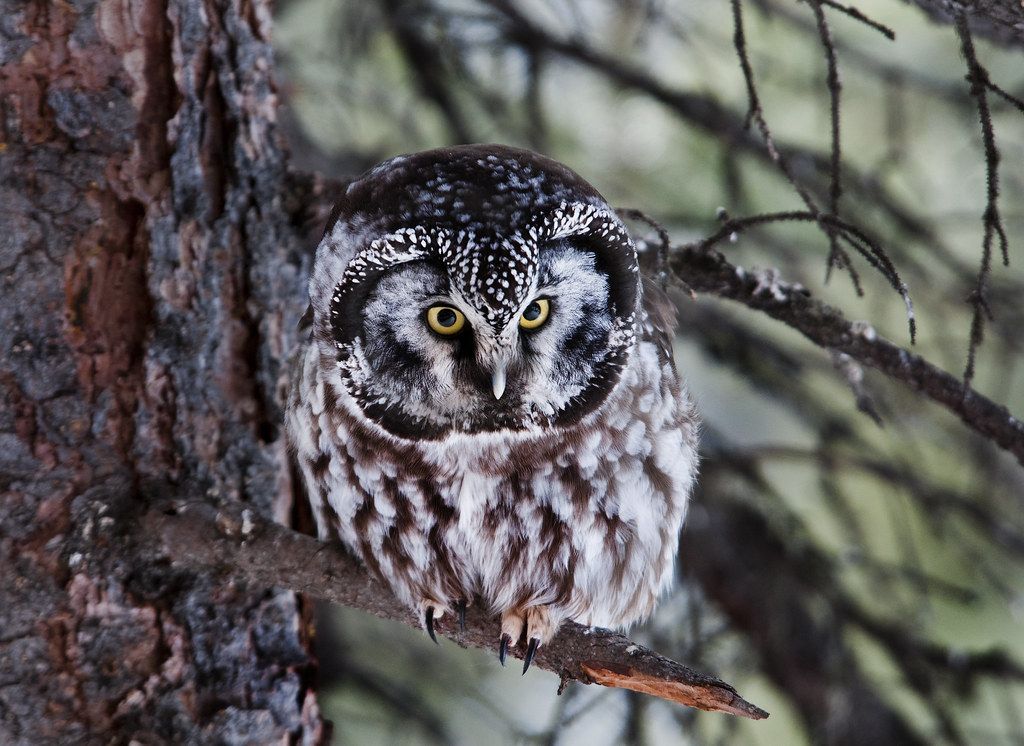
This owl is closely tied to boreal forests, where dense conifer stands and cold conditions dominate. Michigan lies well south of its primary range, which explains why appearances are so limited. When Boreal Owls do enter the state, they are likely responding to food shortages or environmental pressures farther north rather than conditions within Michigan itself.
Because Boreal Owls are nocturnal, quiet, and highly secretive, their true presence is difficult to measure. Even during years when they are recorded, the number of individuals is very small. For most people in Michigan, this species remains one that exists more in data and sound archives than in lived experience, reflecting how far the state sits from the core of its natural range.
11. Barn Owl
The Barn Owl is best understood as part of Michigan’s past rather than its present. Historical records show that this species once occurred in southern parts of the state, where open farmland and mild conditions provided suitable habitat. Over time, those conditions changed. Colder winters, the loss of traditional farm structures, and shifts in land use all reduced the environments Barn Owls depend on to survive and reproduce.
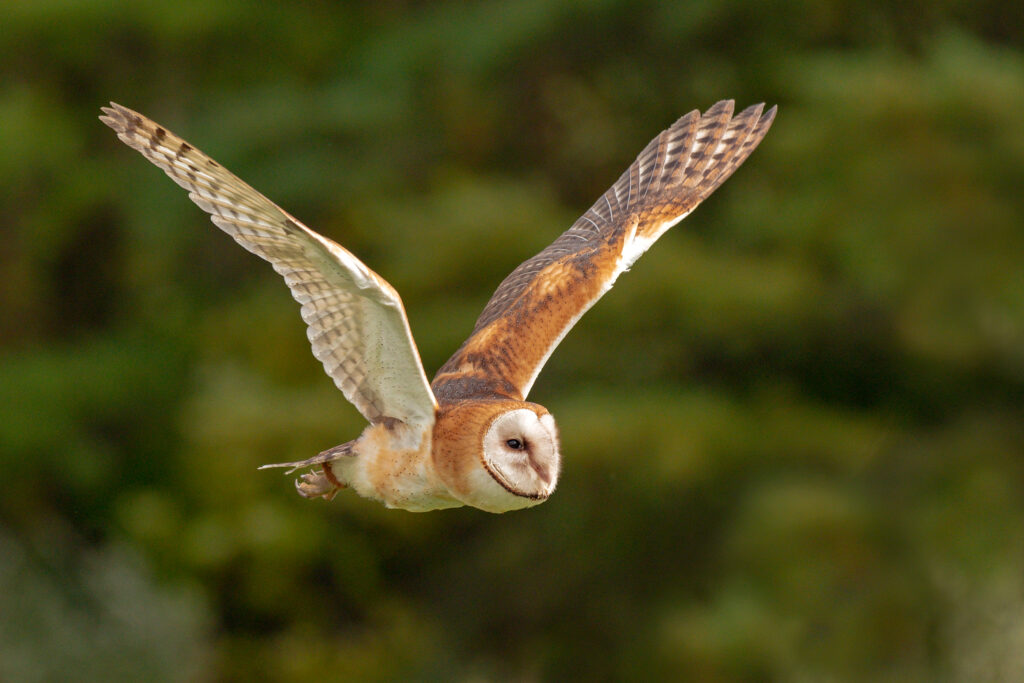
Today, Michigan no longer supports a stable breeding population of Barn Owls. Occasional sightings still occur, usually involving individuals wandering north from neighboring regions. These appearances are sporadic and do not indicate a return of the species as a resident. Most reports involve single birds and are short lived.
Barn Owls are especially sensitive to cold temperatures and rely on sheltered nesting sites to survive harsh winters. As older barns disappeared and winters remained unpredictable, the species gradually faded from Michigan’s landscape. While it remains an iconic owl, its presence in the state is now limited to rare and isolated records rather than ongoing populations.
12. Burrowing Owl
The Burrowing Owl belongs to Michigan’s natural history rather than its present-day wildlife. It is included in state records only because it once occurred here, not because it still does. Early accounts indicate that this species inhabited open prairie landscapes, which were far more extensive in Michigan before large-scale settlement and agricultural conversion.
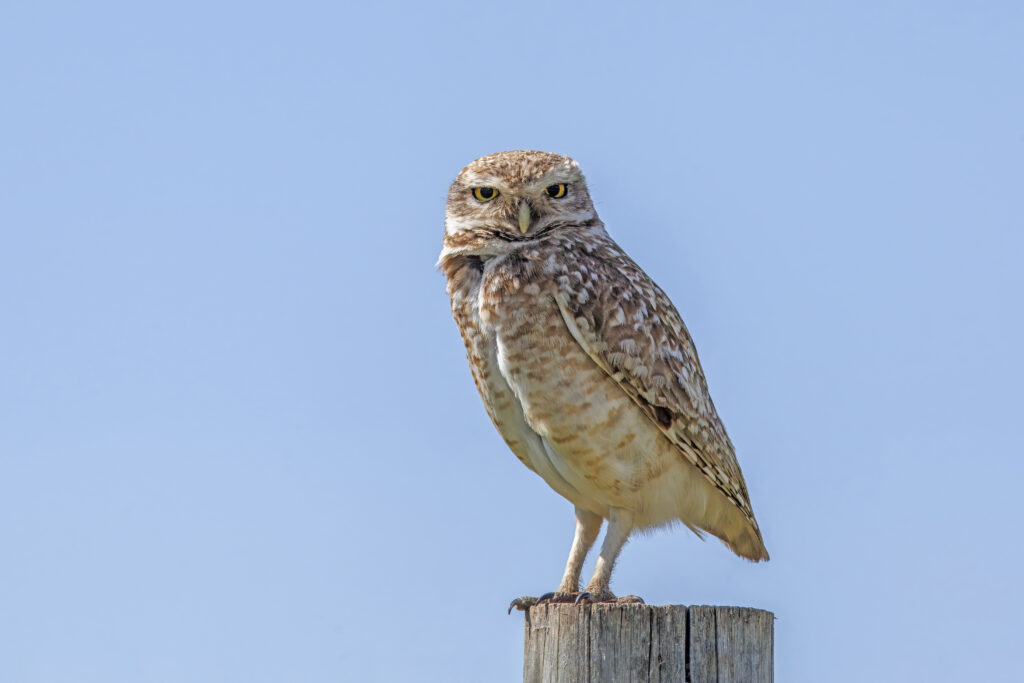
Burrowing Owls depend on flat, open terrain with underground burrows, often created by mammals, to nest and shelter. As Michigan’s native prairies were plowed, developed, and fragmented, these conditions disappeared. Unlike forest owls that benefited from regrowth after logging, Burrowing Owls lost nearly all suitable habitat within the state.
There is no modern population of Burrowing Owls in Michigan, and no recent records suggest natural recolonization. Any mention of this species today reflects historical presence rather than current occurrence. Its disappearance illustrates how completely prairie ecosystems were altered and serves as a reminder that some wildlife losses are permanent when entire habitats vanish rather than decline gradually.